THE CLASSIC COLLECTION✦A dead man’s diaryCLASSIC FREE BOOKS
A dead man’s diary
Coulson Kernahan
THE CLASSIC COLLECTION · 1916
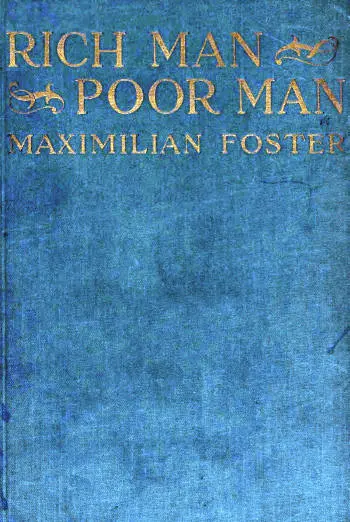
"Rich Man, Poor Man" by Maximilian Foster is a novel written in the early 20th century. The story explores themes of class, wealth, and personal connections, particularly focusing on the lives of Mr. Mapleson, a timid clerk in New York City, and Bab Wynne, a spirited young woman who is on the verge of discovering her true heritage. The interplay between these characters and their relationships will likely form a central part of the narrative as the plot unfolds. At the start of the novel, we meet Mr. Mapleson, an elderly clerk whose life appears mundane and lonely. On Christmas Eve, his character is established as he reflects on the loneliness and alienation he experiences, despite the joyful holiday spirit surrounding him. Meanwhile, the narrative shifts to Bab Wynne, who is depicted with a spirited demeanor that subtly suggests her yearning for a more exciting life, free from the confines of her boarding house existence. The initial chapters set the stage for a forthcoming transformation in their lives, hinting at the intertwining fates of the characters against the backdrop of societal expectations and personal dreams.
Introduction adapted from the source catalogue; source summaries may be automatically generated.
Free to read · English · 58,624 words · No account needed
MAKE TIME FOR A GOOD BOOK
On by default. Untick to stop anonymous reading totals. Each page counts after 10 seconds in view. How this works.
Anonymous counting is on unless you have switched it off.
"No, no, you've said enough!" said Bab. "I won't hear you!"
Mr. Mapleson's face fell.
"Why, why!" he exclaimed. "What is it?"
Bab went straight toward him, toward the stairs.
"I'm going," she said, and her voice was like steel. "I'm going," said Bab, saying it between her teeth, and over her shoulder she gave Varick at the same time a look. Its air of disdain Mr. Mapleson did not miss. Neither did he miss the break in her voice, a note of hurt, of outrage, and nervously he put out his hand to halt her. "No, don't stop me!" she said, and pushed his hand aside. "It's true! It's true what they told me about him! He's just what they said he was!"
Varick's face was like a mask. He did not speak; he made no effort, so much as by a look, even to answer her.
Again after a glance at him Mr. Mapleson stammered: "What is it? Why,
what is it?"
Bab answered with a laugh.
"Ask him!" she said; that was all. The next instant she had gone hurrying down the stairs. Then presently, far below, the street door slammed. At the sound, his eyes still on Varick's, Mr. Mapleson shuddered involuntarily.
"What is it?" once more he whispered. "Tell me what you've done."
Varick's face did not alter.
"I tried to save her," he said; "I did my best I asked her to marry me."
"To save her?" echoed the little man, and a gasp escaped him. "To save
her!"
Varick's face grew still harder.
"Mapleson, are you mad or what is it? My soul, man; whatever in the
world possessed you?"
Mr. Mapleson's jaw dropped suddenly. Again the last vestige of color fled from his furrowed face. He gaped at Varick like one bemused.
"What do you mean?" he whispered.
Varick said it then.
"I've found you out, Mapleson! You had those letters, didn't you? You gave those lawyers their proofs. It was you, wasn't it, who got together all those papers?"
Yes, it was Mr. Mapleson who had done all this, but still he did not speak. It was as if his tongue, paralyzed, cleaved to the roof of his mouth.
"Well," said Varick, "they were all forgeries! You forged them, John Mapleson. You cooked them all up yourself! Bab is no more Beeston's grandchild than I am!"
Mr. Mapleson did not even deny it.
"Hush!" he whispered, his voice appalled. "What if they should find out! Think what they'd do to her!"
Your reading position is saved on this browser. Take it to another device with a library code. Reading pages adapt to text, rather than matching a printed edition.
BEHIND THE BOOK
This eBook is for the use of anyone anywhere in the United States and most other parts of the world at no cost and with almost no restrictions whatsoever. You may copy it, give it away or re-use it under the terms of the Project Gutenberg License included with this eBook or online at www.gutenberg.org. If you are not located in the United States, you will have to check the laws of the country where you are located before using this eBook. Read the source licence.
The original source file, including credits and licence, is retained by this library. Request an original-format copy at no charge. Please include the book title and Project Gutenberg identifier #46945.
KEEP YOUR CURIOSITY GOING
Coulson Kernahan

Maurice Baring
Frances Wright
Cécile Tormay

Frederic Jesup Stimson

W. H. P. (William Henry Pope) Jarvis