THE CLASSIC COLLECTION✦A dead man’s diaryCLASSIC FREE BOOKS
A dead man’s diary
Coulson Kernahan
THE CLASSIC COLLECTION · 1916
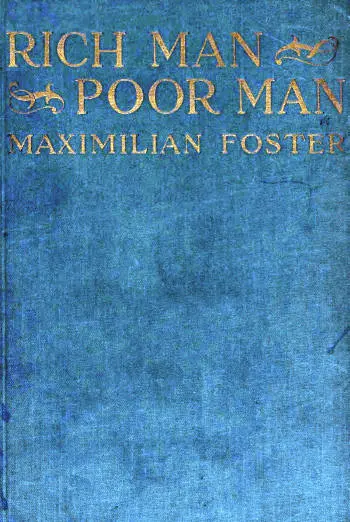
"Rich Man, Poor Man" by Maximilian Foster is a novel written in the early 20th century. The story explores themes of class, wealth, and personal connections, particularly focusing on the lives of Mr. Mapleson, a timid clerk in New York City, and Bab Wynne, a spirited young woman who is on the verge of discovering her true heritage. The interplay between these characters and their relationships will likely form a central part of the narrative as the plot unfolds. At the start of the novel, we meet Mr. Mapleson, an elderly clerk whose life appears mundane and lonely. On Christmas Eve, his character is established as he reflects on the loneliness and alienation he experiences, despite the joyful holiday spirit surrounding him. Meanwhile, the narrative shifts to Bab Wynne, who is depicted with a spirited demeanor that subtly suggests her yearning for a more exciting life, free from the confines of her boarding house existence. The initial chapters set the stage for a forthcoming transformation in their lives, hinting at the intertwining fates of the characters against the backdrop of societal expectations and personal dreams.
Introduction adapted from the source catalogue; source summaries may be automatically generated.
Free to read · English · 58,624 words · No account needed
MAKE TIME FOR A GOOD BOOK
On by default. Untick to stop anonymous reading totals. Each page counts after 10 seconds in view. How this works.
Anonymous counting is on unless you have switched it off.
A smile, lurking and sardonic, had crept into his face. Curiously, though, as Bab was to learn, it was at himself that Beeston smiled. The man, it appeared, had been trying to do a kindly turn; and this, the cause of his cynical amusement, seemed to have been no less than an effort to reward Mrs. Tilney and Mr. Mapleson for what they'd done for Bab. To his amazement, however, the two had declined, Mrs. Tilney refusing stiffly, not to say indignantly, the offer made by Beeston's lawyers, Mr. Mapleson, for his part, growing suddenly agitated.
Bab pricked up her ears. Mr. Mapleson's queerness long had been an old story with her. Of late, though, in her visits to Mrs. Tilney's, she had noted he had grown still more queer. Why was it? What had happened that made them all so queer? Why the last time she had gone there she had happened suddenly on Mr. Mapleson, and the little man was in tears! And then, too, that was but a part of it.
"Yes, ran up the stairs!" Beeston was saying, still speaking of Mr. Mapleson. "The lawyers tell me the man looked downright terrified!"
Bab spoke then. "Dad"--it was thus she called him--"dad," she demanded, "what's wrong? Why Is it that Mr. Varick never comes to our house? He used to, you know!"
Varick! At the name she saw a quick gleam spring in Beeston's eyes, and then, his brows thickening, he scowled. But Bab now had forgotten caution in her determination to know. Assuredly there must be some good reason why Varick had avoided her.
"Huh!" said Beeston abruptly. "What difference is it to you what that
fellow does?"
"Only that I like him, dad! That's enough, isn't it?" Bab answered deliberately; and Beeston, from under his shaggy brows, gave her another sharp stare.
"Oh, so you like him, eh?" he returned, his eyes lowering. "That's how the land lies, is it? And why do you like him, let me ask?"
"Why shouldn't I?" Bab retorted quietly. Then without calculating the consequences of what she said, she added: "So would you have liked him if he had been as kind, as pleasant as he always was to me!"
The statement seemed to hit Beeston as significant Again his eyes lit darkly and he gazed at her, his face sneering.
"Huh, I see!" he drawled. "Made love to you, I suppose, down in that boarding house! Eh? So that's it, is it?" At his brusqueness, the blunt, brutal frankness of his scorn, Bab felt all the blood in her body rush hotly into her face. Before she could answer him, however, Beeston spoke again.
Your reading position is saved on this browser. Take it to another device with a library code. Reading pages adapt to text, rather than matching a printed edition.
BEHIND THE BOOK
This eBook is for the use of anyone anywhere in the United States and most other parts of the world at no cost and with almost no restrictions whatsoever. You may copy it, give it away or re-use it under the terms of the Project Gutenberg License included with this eBook or online at www.gutenberg.org. If you are not located in the United States, you will have to check the laws of the country where you are located before using this eBook. Read the source licence.
The original source file, including credits and licence, is retained by this library. Request an original-format copy at no charge. Please include the book title and Project Gutenberg identifier #46945.
KEEP YOUR CURIOSITY GOING
Coulson Kernahan

Maurice Baring
Frances Wright
Cécile Tormay

Frederic Jesup Stimson

W. H. P. (William Henry Pope) Jarvis