THE CLASSIC COLLECTION✦A dead man’s diaryCLASSIC FREE BOOKS
A dead man’s diary
Coulson Kernahan
THE CLASSIC COLLECTION · 1916
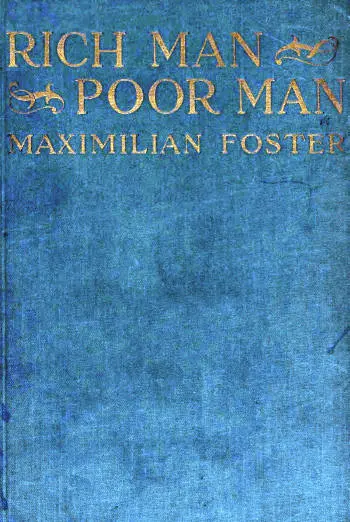
"Rich Man, Poor Man" by Maximilian Foster is a novel written in the early 20th century. The story explores themes of class, wealth, and personal connections, particularly focusing on the lives of Mr. Mapleson, a timid clerk in New York City, and Bab Wynne, a spirited young woman who is on the verge of discovering her true heritage. The interplay between these characters and their relationships will likely form a central part of the narrative as the plot unfolds. At the start of the novel, we meet Mr. Mapleson, an elderly clerk whose life appears mundane and lonely. On Christmas Eve, his character is established as he reflects on the loneliness and alienation he experiences, despite the joyful holiday spirit surrounding him. Meanwhile, the narrative shifts to Bab Wynne, who is depicted with a spirited demeanor that subtly suggests her yearning for a more exciting life, free from the confines of her boarding house existence. The initial chapters set the stage for a forthcoming transformation in their lives, hinting at the intertwining fates of the characters against the backdrop of societal expectations and personal dreams.
Introduction adapted from the source catalogue; source summaries may be automatically generated.
Free to read · English · 58,624 words · No account needed
MAKE TIME FOR A GOOD BOOK
On by default. Untick to stop anonymous reading totals. Each page counts after 10 seconds in view. How this works.
Anonymous counting is on unless you have switched it off.
There were many things that morning that she would have liked to ask about--her father, for example, his boyhood, what he'd been like, who his friends had been. All this and more! It appeared, however, that the topic held but scant interest for the Lloyds, for Lloyd the least of all. A few passing references, to be sure, were made to Bab's dead father; but in every instance these were as lacking in interest, in intimacy, as if uttered by a stranger. In her own affairs, she felt presently, their curiosity was far more robust.
Lloyd, reaching out, touched a near-by button.
"Breakfast, Lumley," he directed, indicating Bab to the manservant who entered. Then when she had seated herself Lloyd returned to his place on the hearthrug. While Mrs. Lloyd in her dragging, wearied voice addressed herself to Bab, her husband sedulously inspected his finger nails.
Curiously he seemed nervous, irritable too; but that he paid close heed to the talk Bab somehow felt sure. It did not add to her easiness. What was the matter? Why was their air so queer? Mrs. Lloyd, her manner on the surface blandly idle but her curiosity still evident, was questioning Bab about her life at Mrs. Tilney's, how she had gone there, why she had remained, when of a sudden Lloyd's increasing interest got the better of him.
"Look here," he remarked to Bab abruptly, "you know Varick, don't you--the chap there last night?"
Know Varick? The teacup she had raised to her lips hung suspended, and
for a moment she gazed over it at Lloyd, inwardly astonished at his
tone.
"Why, yes," she replied.
He shot a glance at Mrs. Lloyd.
"Varick's lived there a long time, too, hasn't he?" he demanded.
"Since last spring," answered Bab quietly.
"And you know him rather well, too, don't you?" persisted Lloyd.
Bab put down her teacup. Her uncle's voice not only was querulous; it had in it, for some reason, a note of mocking accusation. Varick, to be sure, was acquainted with the Lloyds; but the uncle's queries had behind them, she saw, more than a mere social interest. Nor was that all! While the man was plying her with his questions her aunt, she was conscious, was studying her with scrutinous attention. Phryne before the Areopagus could not have felt more challenged; and her wonder rising, her discomfort keeping pace with it, she was parrying her uncle's cross-examination when of a sudden there was an interruption.
"Good morning!" cried a cheerful voice. "Merry Christmas, everyone!"
Bab, as she looked round, breathed a sigh of relief.
Your reading position is saved on this browser. Take it to another device with a library code. Reading pages adapt to text, rather than matching a printed edition.
BEHIND THE BOOK
This eBook is for the use of anyone anywhere in the United States and most other parts of the world at no cost and with almost no restrictions whatsoever. You may copy it, give it away or re-use it under the terms of the Project Gutenberg License included with this eBook or online at www.gutenberg.org. If you are not located in the United States, you will have to check the laws of the country where you are located before using this eBook. Read the source licence.
The original source file, including credits and licence, is retained by this library. Request an original-format copy at no charge. Please include the book title and Project Gutenberg identifier #46945.
KEEP YOUR CURIOSITY GOING
Coulson Kernahan

Maurice Baring
Frances Wright
Cécile Tormay

Frederic Jesup Stimson

W. H. P. (William Henry Pope) Jarvis