THE CLASSIC COLLECTION✦A dead man’s diaryCLASSIC FREE BOOKS
A dead man’s diary
Coulson Kernahan
THE CLASSIC COLLECTION · 1916
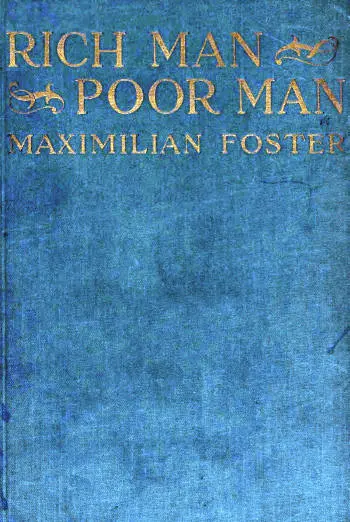
"Rich Man, Poor Man" by Maximilian Foster is a novel written in the early 20th century. The story explores themes of class, wealth, and personal connections, particularly focusing on the lives of Mr. Mapleson, a timid clerk in New York City, and Bab Wynne, a spirited young woman who is on the verge of discovering her true heritage. The interplay between these characters and their relationships will likely form a central part of the narrative as the plot unfolds. At the start of the novel, we meet Mr. Mapleson, an elderly clerk whose life appears mundane and lonely. On Christmas Eve, his character is established as he reflects on the loneliness and alienation he experiences, despite the joyful holiday spirit surrounding him. Meanwhile, the narrative shifts to Bab Wynne, who is depicted with a spirited demeanor that subtly suggests her yearning for a more exciting life, free from the confines of her boarding house existence. The initial chapters set the stage for a forthcoming transformation in their lives, hinting at the intertwining fates of the characters against the backdrop of societal expectations and personal dreams.
Introduction adapted from the source catalogue; source summaries may be automatically generated.
Free to read · English · 58,624 words · No account needed
MAKE TIME FOR A GOOD BOOK
On by default. Untick to stop anonymous reading totals. Each page counts after 10 seconds in view. How this works.
Anonymous counting is on unless you have switched it off.
Again Beeston spoke. The hand he had raised struck the coverlid a sudden blow, and the room rumbled with the echo of his voice.
"Get out, I say!" he repeated; and Lloyd, after a quick look at Bab, a glance the resentment of which she did not miss, withdrew abruptly.
Then old Beeston raised his hand, his forefinger beckoning.
"Vira," he said. "Vira!" And when his sister bent over him old Beeston growled thickly, his voice, if rough, still friendly: "Vira, you go too, old girl!"
So Bab found herself left alone with that grim, dark figure lying
there--her grandfather.
"Come closer!" rumbled Beeston. "I want to look at you!"
A pause followed. Her heart beating thickly, Bab drew nearer to the bed, and as she stood there gazing down at the swart, fierce face staring darkly up at hers, pity for an instant welled into her heart. This was her father's father, she told herself; and troubled, she began to see now that if this masterful, unconquerable man had ruined others' happiness in his life, he had ruined his own as well.
The knotted hand upon the counterpane reached out suddenly.
"They say you're my son's child," said Peter Beeston. "Well, are you?"
His voice carried in it a note of intimidation, of truculent disbelief, but now she felt no fear of him. The hand that held hers she could feel quiver too.
"Yes," she said.
Again a pause. He wet his lips, his tongue running on them dryly, eagerly; and then of a sudden his eyes left hers and went drifting toward the ceiling. His voice when again he spoke broke thickly.
"Tell me about him, about my son!" said Beeston.
Bab looked at him hesitantly. It was this that she had dreaded.
"What shall I tell you?" she asked.
Beeston's eyes still were on the ceiling.
"Dead, isn't he?" he demanded.
Yes, he was dead, as the man lying there long must have known; and her trouble growing, Bab stared silently at him. But the grim eyes gave no sign.
"You don't look like him!" said her grandfather suddenly, so abruptly that she started. "You must look like that woman, eh!"
Bab gazed at him steadily.
"You mean my mother, don't you?" she inquired. She had been prepared for this, and in her voice was a tone of quiet decisiveness she meant him clearly to see. "You mustn't speak like that," she said clearly. "My mother did you no wrong!"
She saw his eyes leap from the ceiling to her and back again. Then a smile, a grim effigy of merriment, dawned in his somber face. A growl followed it.
Your reading position is saved on this browser. Take it to another device with a library code. Reading pages adapt to text, rather than matching a printed edition.
BEHIND THE BOOK
This eBook is for the use of anyone anywhere in the United States and most other parts of the world at no cost and with almost no restrictions whatsoever. You may copy it, give it away or re-use it under the terms of the Project Gutenberg License included with this eBook or online at www.gutenberg.org. If you are not located in the United States, you will have to check the laws of the country where you are located before using this eBook. Read the source licence.
The original source file, including credits and licence, is retained by this library. Request an original-format copy at no charge. Please include the book title and Project Gutenberg identifier #46945.
KEEP YOUR CURIOSITY GOING
Coulson Kernahan

Maurice Baring
Frances Wright
Cécile Tormay

Frederic Jesup Stimson

W. H. P. (William Henry Pope) Jarvis