THE CLASSIC COLLECTION✦A dead man’s diaryCLASSIC FREE BOOKS
A dead man’s diary
Coulson Kernahan
THE CLASSIC COLLECTION · 1916
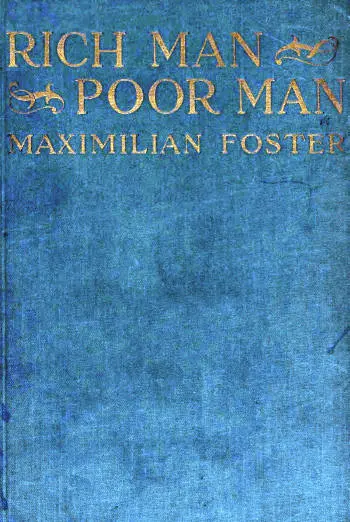
"Rich Man, Poor Man" by Maximilian Foster is a novel written in the early 20th century. The story explores themes of class, wealth, and personal connections, particularly focusing on the lives of Mr. Mapleson, a timid clerk in New York City, and Bab Wynne, a spirited young woman who is on the verge of discovering her true heritage. The interplay between these characters and their relationships will likely form a central part of the narrative as the plot unfolds. At the start of the novel, we meet Mr. Mapleson, an elderly clerk whose life appears mundane and lonely. On Christmas Eve, his character is established as he reflects on the loneliness and alienation he experiences, despite the joyful holiday spirit surrounding him. Meanwhile, the narrative shifts to Bab Wynne, who is depicted with a spirited demeanor that subtly suggests her yearning for a more exciting life, free from the confines of her boarding house existence. The initial chapters set the stage for a forthcoming transformation in their lives, hinting at the intertwining fates of the characters against the backdrop of societal expectations and personal dreams.
Introduction adapted from the source catalogue; source summaries may be automatically generated.
Free to read · English · 58,624 words · No account needed
MAKE TIME FOR A GOOD BOOK
On by default. Untick to stop anonymous reading totals. Each page counts after 10 seconds in view. How this works.
Anonymous counting is on unless you have switched it off.
"Could you wait?" he appealed. "It is a favor--a great favor!"
Varick regarded him with surprise. The little man was quivering. For the moment a fit of shyness more than usually awkward seemed painfully to convulse him. His eyes leaped about him everywhere. Nor was his speech less agitated.
"If you could wait," he faltered, "I have something to tell you."
Then his emotion, whatever the cause of it, got the better of him. "I beg of you do not go yet!" he piped; and he peered up at Varick, his eyes gleaming, his mouth working nervously.
A moment passed while Varick, his wonder growing, gazed down at the white face turned up to his. Then he laid his hand quietly on Mr. Mapleson's shoulder.
"Why, what's wrong, Mr. Mapleson?" he asked. "You're not in any
trouble, are you?"
Mr. Mapleson at the question looked blank.
"In trouble? I?"
"Yes. If I can help you----" Varick had begun, when the little man gave vent to a sudden exclamation.
"I'm in no trouble! Who said I was?" he cried; and Varick stared, gazing at him with renewed astonishment. If it wasn't for his own sake that Mr. Mapleson had begged him to stay in, for whose, then, was it? Varick at this point started with a sudden thought.
"Look here," he said sharply; "it isn't Bab, is it?"
The effect was immediate. Again Mr. Mapleson peered up at Varick, his face transfigured; and again, his manner impulsive, he touched the young man on the arm.
"She is very lovely, isn't she?" he said; "and she is very good and sweet; don't you think she is?"
There was no doubt of it, but still Varick did not reply. A vague understanding had begun to creep into his mind, and questioningly he gazed down into the little man's upturned face.
"Tell me," said Mr. Mapleson--and as he heard him Varick's eyes grew wide--"tell me," he faltered, "you do think her lovely? You do think her sweet and lovely, don't you?"
Varick nodded slowly.
"Why, yes," he said, "she is very lovely." And at that Mr. Mapleson gave vent to an eager exclamation.
His face gleaming, again he threw out both his hands.
"Oh!" he cried, "then if she were rich, if you knew her to be well-born, too, why--why----" Here Mr. Mapleson began awkwardly to falter--"Why, then you would--would----" There he paused. Moistening his lips, the little man quivered suddenly: "She could marry--marry anyone, don't you think?" he shrilled. "She could marry whom she chose; you think so, don't you?"
Your reading position is saved on this browser. Take it to another device with a library code. Reading pages adapt to text, rather than matching a printed edition.
BEHIND THE BOOK
This eBook is for the use of anyone anywhere in the United States and most other parts of the world at no cost and with almost no restrictions whatsoever. You may copy it, give it away or re-use it under the terms of the Project Gutenberg License included with this eBook or online at www.gutenberg.org. If you are not located in the United States, you will have to check the laws of the country where you are located before using this eBook. Read the source licence.
The original source file, including credits and licence, is retained by this library. Request an original-format copy at no charge. Please include the book title and Project Gutenberg identifier #46945.
KEEP YOUR CURIOSITY GOING
Coulson Kernahan

Maurice Baring
Frances Wright
Cécile Tormay

Frederic Jesup Stimson

W. H. P. (William Henry Pope) Jarvis