THE CLASSIC COLLECTION✦My diaries, being a personal narrative of events 1888-1914, Part 2 (1900-1914)CLASSIC FREE BOOKS
My diaries, being a personal narrative of events 1888-1914, Part 2 (1900-1914)
Wilfrid Scawen Blunt
THE CLASSIC COLLECTION · 1854
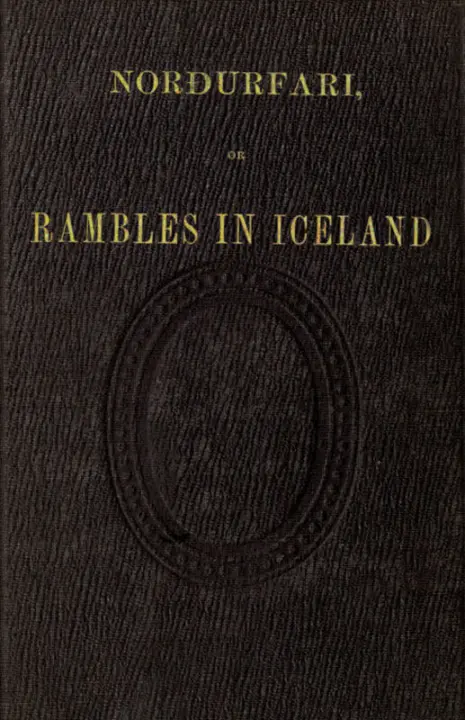
"Norðurfari; or, Rambles in Iceland" by Pliny Miles is a travel narrative written in the mid-19th century. The book chronicles the author's adventures as he journeys to Iceland, exploring its natural beauty, culture, and history, and provides a remarkable commentary on the people and landscapes he encounters. With a mix of personal reflection and historical insight, the narrative aims to depict the real Iceland, dispelling myths and misconceptions about the island. At the start of the narrative, Miles describes his voyage to Iceland aboard the schooner "Sölöven," detailing stops in Copenhagen and Elsinore before finally arriving in Reykjavik. He vividly recounts the ship's experiences, including challenges of the journey, interactions with fellow passengers, and a celebratory Fourth of July marked by cannon fire and spirited oration. The opening focuses on the excitement of travel, the camaraderie among passengers, and the author's first impressions of Iceland's unique geography and culture, setting the stage for deeper explorations to come.
Introduction adapted from the source catalogue; source summaries may be automatically generated.
Free to read · English · 86,267 words · No account needed
MAKE TIME FOR A GOOD BOOK
On by default. Untick to stop anonymous reading totals. Each page counts after 10 seconds in view. How this works.
Anonymous counting is on unless you have switched it off.
—————Fire that art slumbering there, Like some stern warrior in his rocky fort, After the vast invasion of the world! Hast not some flaming imp or messenger Of empyrean element, to whom In virtue of his nature are both known The secrets of the burning, central void below, And yon bright heaven, out of whose aëry fire Are wrought the forms of angels and the thrones? Festus.
VOLCANIC eruptions in Iceland have presented some remarkable features. There are volcanoes that are much higher than any in this country; but, in the amount of lava thrown out at one time, no eruption on record ever equaled that of Skaptar Jokull in 1783. A notice of this may not be considered out of place. In May, about a month before this eruption, a volcano rose up from the bottom of the sea, over seventy miles from land, to the southwest of Cape Reykianes, and more than a hundred and fifty miles from Skaptar Jokull. This was one of the most remarkable submarine eruptions ever recorded. It formed a large island, and ejected vast quantities of pumice, a light, volcanic substance that floated on the surface of the water. It covered the sea for more than a hundred and fifty miles, and in such immense quantities that ships were detained in their progress while sailing along the coast. The sea-birds paused and screamed in their wheeling flight, and the more adventurous took a ride on a new volcanic raft. His Danish Majesty, on hearing of a creation of new territory near his ancient possession of Iceland, sent a ship with orders for its immediate annexation. The commander took formal possession of it in the name of the king. But the end was not yet. The flag of Denmark had not waved above it for a twelve-month, before it sunk back into the ocean and disappeared forever. Soon after this eruption in the sea—from the first to the eighth of June—violent earthquakes were experienced in the vicinity of Skaptar Jokull, and clouds of smoke obscured the sun for some days. It was often so dark in the middle of the day, that a sheet of white paper could not be seen when held up before the eyes. An immense shower of ashes, sand, and sulphur filled the air, and completely covered the land. It poisoned the vegetation, destroying every green thing where it fell. Fortunately the wind carried it to the south, and it soon reached the ocean. Incredible as it may seem, this shower of ashes and sulphur was borne over the Northern Sea to the Faroe Isles, Shetland and Orkney, entirely over Great Britain, across to Holland, and far on to the continent of Europe, nearly two thousand miles from the place where it started. Around the mountain, for many miles, darting flames and lightning filled the air, and the sulphur flashed and burned far up into the heavens. The next effect produced, was the heat of the volcano melting the ice that had shrouded it for centuries; and this caused such a deluge, that the rivers, particularly the Skaptá, overflowed their banks, and submerged, washed up, and even carried away farms. On the 10th of June, ten days after the first symptoms of an eruption appeared, the torrent of lava burst forth, and poured down the side of the mountain. This followed so quickly after the flood of water, that in less than twenty-four hours the river was entirely dried up, and people walked across its bed, where, for years, it had only been passable in boats. While the fire was contending with the water, a terrible and deafening, roaring sound was heard, and immense quantities of steam filled the air. The fiery torrent poured down the bed of the river, often from 400 to 600 feet deep, and over two hundred in breadth. Lightning flashed through the heavens, thunder and concussions of the earth were constantly heard and felt, and the volcano kept up a continued and terrible roaring. In its course down the bed of the river, the lava came to an immense chasm or pit, into which for many hours it poured with a deafening noise. The stream of lava flowed first south, then east, destroying farms, houses, and churches, and burning up the thickets of wood near Kirkubær. Often great chasms in the earth would get filled with the melted lava, and then, as it cooled on top, the heat below would cause it to explode, and blow large masses of it high in the air. For three months the lava continued to flow, but it was not until the next February that the mountain ceased throwing out ashes, sand, flames, and hot stones. The effects of this eruption were more terrible than any thing of the kind that ever happened in Iceland. The showers of ashes, sand, and sulphur, completely destroyed every green thing for a long distance. Another most singular effect of this eruption, extended to the ocean. The fish that had always frequented the coast, were entirely driven away, and never returned. A terrible famine ensued. Within two years, over 190,000 sheep, 28,000 horses, and 11,000 cattle, died of starvation. About 10,000 inhabitants—one-fifth of the entire population of the island—perished from want and exposure. The amount of lava ejected from this volcano was probably greater than that of any eruption of the same duration, ever recorded. It covered a tract of country 500 square miles in extent; and had it lain of equal thickness over the entire surface, would have been over 300 feet deep. The lava would have filled the channels of fifty rivers as large as the Hudson from Albany to New York.
Your reading position is saved on this browser. Take it to another device with a library code. Reading pages adapt to text, rather than matching a printed edition.
BEHIND THE BOOK
This eBook is for the use of anyone anywhere in the United States and most other parts of the world at no cost and with almost no restrictions whatsoever. You may copy it, give it away or re-use it under the terms of the Project Gutenberg License included with this eBook or online at www.gutenberg.org. If you are not located in the United States, you will have to check the laws of the country where you are located before using this eBook. Read the source licence.
The original source file, including credits and licence, is retained by this library. Request an original-format copy at no charge. Please include the book title and Project Gutenberg identifier #61992.
KEEP YOUR CURIOSITY GOING
Wilfrid Scawen Blunt
Wilfrid Scawen Blunt

E. W. (Edgar Watson) Howe
Francis Greenleaf Allinson & Anne C. E. (Anne Crosby Emery) Allinson
Cyrenus Cole

John Martineau