THE CLASSIC COLLECTION✦My diaries, being a personal narrative of events 1888-1914, Part 2 (1900-1914)CLASSIC FREE BOOKS
My diaries, being a personal narrative of events 1888-1914, Part 2 (1900-1914)
Wilfrid Scawen Blunt
THE CLASSIC COLLECTION · 1854
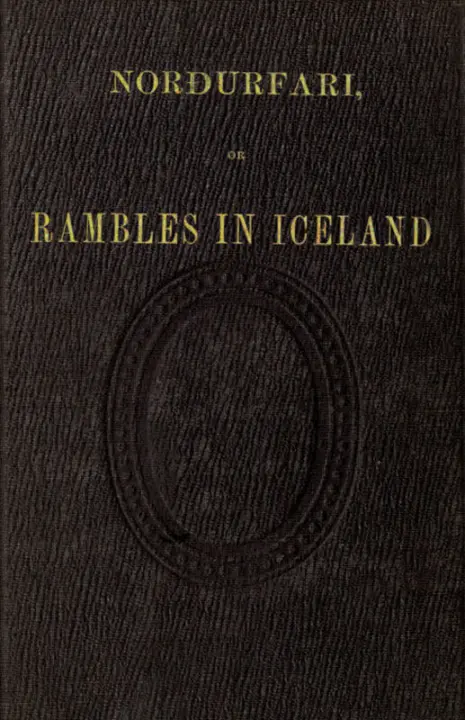
"Norðurfari; or, Rambles in Iceland" by Pliny Miles is a travel narrative written in the mid-19th century. The book chronicles the author's adventures as he journeys to Iceland, exploring its natural beauty, culture, and history, and provides a remarkable commentary on the people and landscapes he encounters. With a mix of personal reflection and historical insight, the narrative aims to depict the real Iceland, dispelling myths and misconceptions about the island. At the start of the narrative, Miles describes his voyage to Iceland aboard the schooner "Sölöven," detailing stops in Copenhagen and Elsinore before finally arriving in Reykjavik. He vividly recounts the ship's experiences, including challenges of the journey, interactions with fellow passengers, and a celebratory Fourth of July marked by cannon fire and spirited oration. The opening focuses on the excitement of travel, the camaraderie among passengers, and the author's first impressions of Iceland's unique geography and culture, setting the stage for deeper explorations to come.
Introduction adapted from the source catalogue; source summaries may be automatically generated.
Free to read · English · 86,267 words · No account needed
MAKE TIME FOR A GOOD BOOK
On by default. Untick to stop anonymous reading totals. Each page counts after 10 seconds in view. How this works.
Anonymous counting is on unless you have switched it off.
MONDAY, July 26th, 1852, I spent at the Geysers. They rise out of the ground near the base of a hill some three hundred feet in height. Most of the hot springs I have seen in Iceland are at the base of hills. The Geysers are on ground that is nearly level, sloping a little from the hill, and cover fifty acres or more. The springs are over one hundred in number, and of every size and form, some very large, others small, scarcely discharging any water at all. The Great Geyser—“the Geyser” par excellence—attracts by far the most attention, as from its great size, the quantity of water it discharges, and the magnitude and splendor of its eruptions, it stands unequaled in the world. It is on a little eminence that it has made for itself, a hollow rock or petrified mass that has been formed by a siliceous deposit from the water. On approaching the place, you readily see where the Great Geyser is, by its large quantity of steam. I walked up the margin of it, and there it was, perfectly quiescent, like a sleeping infant. It is shaped exactly like a tea-saucer, in appearance circular, though it is a little elliptical. By measurement, the larger diameter is fifty-six feet, and the smaller diameter forty-six feet. When I arrived I found this saucer or basin full of hot water, as clear as crystal. The temperature, by Fahrenheit’s thermometer, was 209° above zero, only three degrees below the boiling point. The basin itself is four feet deep, and in the centre there is a round hole or “pipe,” as it is called, running down into the earth like a well. At the top where it opens into the basin, this pipe is sixteen feet across, but a little below the surface it is said to be but ten feet in diameter. This pipe is round, smooth, and straight, and is said by Sir George Mackenzie and others who have measured it, to extend perpendicularly to a depth of 65 feet. The rocky bottom and sides of the basin and pipe are smooth and of a light color, nearly white. The quantity of steam that escaped from the surface was considerable, but not nearly so great as I should suppose would come from such a body of hot water. Such is the appearance of this most remarkable fountain while still, and certainly it does not look like a violent or dangerous pool. Without wishing to augur ill of it, certainly it is a great bore. When in an active state, the Geyser is altogether a different thing. When I arrived in the evening, the basin was not over half full of water, but the next morning it was full and running over, though the quantity of water that flows from it is not very great. A slight rising of the water, as if boiling, is seen in the middle of the basin directly over the pipe when in a quiescent state. Now arrived at the Geyser, we must wait its motion, for the eruptions occur at very irregular intervals, sometimes several times a day, and sometimes but once in two or three days. Knowing that it gave a warning—by firing signal-guns—before each eruption, I took the time to go about the grounds and see what there was to be seen. I gathered some fine mineralogical specimens, some beautiful samples of petrified peat, or turf, all roots and vegetable matter turned to stone. Fifteen or twenty yards west of the Geyser is a gully or ravine, with nearly perpendicular sides, and thirty or forty feet deep. I went down into this, and found a little rivulet of warm water in it, the banks being composed of volcanic matter and red earth. I heard a gurgling noise in the bank, and went up to it, and there was a little mud spring of blubbering clay, hot and steaming. While in this ravine, I heard a sudden noise of explosions like cannon two or three miles away, and yet it seemed to be near me, and under the Great Geyser. It was the subterranean explosions that always precede an eruption. I ran up to the Geyser, and saw the water in a violent state of agitation and boiling, with considerable air coming up out of the pipe to the surface. This was all; only a false alarm, and not an eruption. Off I went, on another exploring expedition about the grounds. I heard a violent gurgling up towards the foot of the hill to the west, and went to see the cause of it. About 150 yards from the Great Geyser I found a jet of steam coming out of a hole in the ground, and down out of sight I could hear mud boiling and sputtering violently. I noticed here what I had heard was a characteristic of the hot springs of Iceland, deposits of clay of different colors and of great beauty. It was moist, in a state somewhat like putty, and lying in layers, in several distinct colors. Red, blue, and white were the prevailing tints. It was most fine-grained and beautiful, and I could not help thinking would be of considerable value as paints, if it were collected. I gathered some of it, but in the absence of proper things to carry it in, and the long journey before me, I reluctantly left the samples behind. About 140 yards southwest of the Great Geyser I came upon two deep springs or pools of clear water, hissing hot and steaming. These pools appeared two springs of irregular outline, each from 10 to 15 feet across, and nearly or quite 30 feet deep. The water was so clear I could see directly to the bottom. A narrow, rocky boundary separated the two. This boundary, or rather partition, as well as the sides of the spring, was apparently a silicious deposit or petrifaction caused by the water itself. On going up near the margin, and walking round on every side, I noticed that the earth or rock overhung the springs on all sides, so I could see directly under, and the crust near the margin was very thin, giving it a most awful appearance. If one should approach too near the margin, and it should break off, down he would go to inevitable death in the seething cauldron. It is said, if a man is born to be hanged he can never be drowned. Of course a like immunity attends such a man if he is in danger of being boiled! I should rather meet the fate of Empedocles, and save my boots! A person might very easily run splash into these springs, or rather this double spring, for it is just even full of water, and on level ground. I did not see it till I was just on the margin. Some late traveler here said his guide repeatedly ran across the narrow rocky partition that separated the two. Had he fallen in, whatever might be the temperature of the future world that he would be destined to go to, he would never require another hot bath in this. The guide now showed me the Strokr, or what Sir John Stanley calls the New Geyser. It is a mere hole in the ground, like a well, without a basin or raised margin. It is nine feet in diameter at the top, and gradually grows smaller to about five feet in diameter. The Strokr—a word signifying agitator—is a most singular spring. I looked down into it, and saw the water boiling violently about twenty feet below the surface of the ground. It is situated 131 yards south of the Great Geyser. While looking at this, I heard a noise, and looking up saw a burst of water and steam a little way off, that the guide said was the Little Geyser. It is 106 yards south of the Strokr. I went to it, and found an irregular but voluminous burst of water, rising with considerable noise, eight or ten feet high. It played about five minutes, and stopped. I found that it played in a similar way at pretty regular intervals of about half an hour, throughout the day. About noon, some two hours after the first alarm, I heard again the signal-guns of the big Geyser. The discharges were near a dozen, following one another in quick succession, sounding like the firing of artillery at sea, at the distance of two or three miles. I ran up to the Geyser, and saw the water in a state of violent agitation, and soon it rose six or eight feet, in a column or mass, directly over the pipe. It, however, soon subsided, and the water in the basin, from being full and running over, sank down the pipe till the basin became nearly empty. I was doomed to disappointment this time, there being no more eruption than this. It was two or three hours before the basin got full of water again. About four o’clock I heard the reports again, and louder than before; the guide hallooed to me, and we ran up near the margin of the basin. The explosions continued, perhaps, two minutes, the water becoming greatly agitated, filling the basin to overflowing, and then, as if the earth was opening, the fountain burst forth with a shock that nearly threw me over. The water shot in one immense column from the whole size of the pipe, and rose perpendicularly, separating a little into different streams as it ascended. Such a spectacle no words can describe. Its height, as near as I could judge, was about 70 or 75 feet. The awful noise, as a renewal of the forces kept the water in play, seemed as if a thousand engines were discharging their steam-pipes up through a pool of boiling water. Great quantities of steam accompanied it, but not enough to hide the column of water. We stood in perfect safety within forty feet of the fountain all the time it was playing, which was about six or eight minutes. Well was it said that, had Louis XIV. of France seen the Geysers of Iceland, he never would have made the fountains of Versailles. Compare the work of man, when he makes a spurting jet from a pipe with a two inch bore, to a column of boiling water ten feet in diameter, and near a hundred feet high, and rushing up with the noise and actual force of a volcano! Fiddle-de-dee! As well put a boy’s pop-gun beside of one of Paixhan’s sixty-four pounders. I had thought that Niagara Falls was the greatest curiosity, and Fingal’s Cave, at Staffa, the most pleasing one that I had ever seen; but—though not at all alike—the great Geyser of Iceland, as a marvellous work of nature, eclipses them both. Give a Barnum the power of a Prospero, and let him gather together, in one place, the Mammoth Cave of Kentucky, Niagara Falls, the Natural Bridge in Virginia, Fingal’s Cave, and the Great Geyser, and get a fence built round them. Fury! What a show-shop he could open! Well, after all, it is a happy thing that the great curiosities of the world are pretty well distributed over the earth’s surface. The Geyser played lower and lower, and in the course of two or three minutes after it began to recede, had all sunk down into the pipe, leaving the basin quite empty, and the pipe also down for about ten feet. This was the first time I had an opportunity of looking into the pipe. The water was scarcely agitated at all, but slowly rising. In the course of two and a half hours the basin was again full and overflowing. According to the most reliable estimates, the maximum height of the eruptions of the Great Geyser is from 90 to 100 feet. Olafsen and Povelsen, two Icelandic writers who flourished near a hundred years ago, estimated the height to be 360 feet; evidently a great exaggeration. Some have attempted to prove by mathematics and the law of projectiles that water cannot by any force or power be thrown in a stream over 95 or 96 feet high. Fire-engines disprove this, but at any rate that seems to be about the height of the highest jets of the Great Geyser. Sir John Stanley, in 1789, calculated the height by a quadrant, of the highest eruption that he saw, at 96 feet. Dr. Hooker estimated it at 100, and Sir George Mackenzie at 90 feet. The first account of these remarkable fountains dates back about 600 years. To me, one of the most remarkable circumstances connected with Iceland is, the constant and regular supply of fire that keeps springs of water at a boiling heat, and sends forth fountains with a force beyond all human power, and with a constant and unceasing regularity, for hundreds, and, for aught we know to the contrary, for thousands of years. Whence is the supply of fuel? Why does it not all get consumed? But a child can ask a question that a man cannot answer. Some have attempted by drawings and illustrations to figure out a theory of pipes, cavities, and conduits under the earth, that, supplied with a constant stream of hot water, would produce the eruptions that we see. The great irregularity in time and in force seems to set at naught the wisest calculations. We can see the effect produced, and can look on and admire, but the springs of action are hid by the Almighty in the wonderful laboratory of nature.
Your reading position is saved on this browser. Take it to another device with a library code. Reading pages adapt to text, rather than matching a printed edition.
BEHIND THE BOOK
This eBook is for the use of anyone anywhere in the United States and most other parts of the world at no cost and with almost no restrictions whatsoever. You may copy it, give it away or re-use it under the terms of the Project Gutenberg License included with this eBook or online at www.gutenberg.org. If you are not located in the United States, you will have to check the laws of the country where you are located before using this eBook. Read the source licence.
The original source file, including credits and licence, is retained by this library. Request an original-format copy at no charge. Please include the book title and Project Gutenberg identifier #61992.
KEEP YOUR CURIOSITY GOING
Wilfrid Scawen Blunt
Wilfrid Scawen Blunt

E. W. (Edgar Watson) Howe
Francis Greenleaf Allinson & Anne C. E. (Anne Crosby Emery) Allinson
Cyrenus Cole

John Martineau