THE CLASSIC COLLECTION✦My diaries, being a personal narrative of events 1888-1914, Part 2 (1900-1914)CLASSIC FREE BOOKS
My diaries, being a personal narrative of events 1888-1914, Part 2 (1900-1914)
Wilfrid Scawen Blunt
THE CLASSIC COLLECTION · 1854
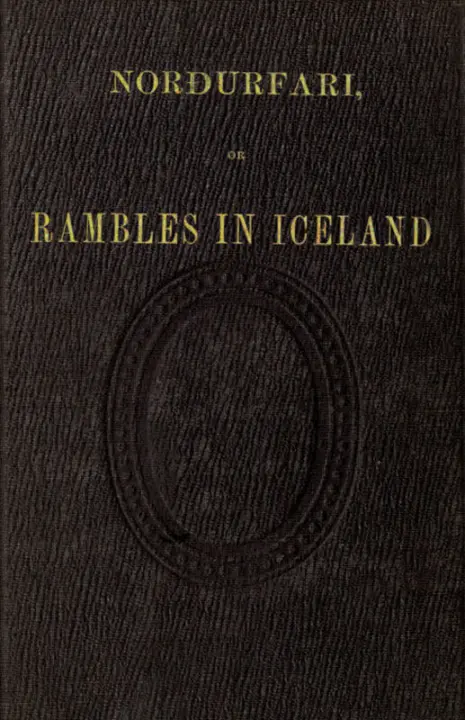
"Norðurfari; or, Rambles in Iceland" by Pliny Miles is a travel narrative written in the mid-19th century. The book chronicles the author's adventures as he journeys to Iceland, exploring its natural beauty, culture, and history, and provides a remarkable commentary on the people and landscapes he encounters. With a mix of personal reflection and historical insight, the narrative aims to depict the real Iceland, dispelling myths and misconceptions about the island. At the start of the narrative, Miles describes his voyage to Iceland aboard the schooner "Sölöven," detailing stops in Copenhagen and Elsinore before finally arriving in Reykjavik. He vividly recounts the ship's experiences, including challenges of the journey, interactions with fellow passengers, and a celebratory Fourth of July marked by cannon fire and spirited oration. The opening focuses on the excitement of travel, the camaraderie among passengers, and the author's first impressions of Iceland's unique geography and culture, setting the stage for deeper explorations to come.
Introduction adapted from the source catalogue; source summaries may be automatically generated.
Free to read · English · 86,267 words · No account needed
MAKE TIME FOR A GOOD BOOK
On by default. Untick to stop anonymous reading totals. Each page counts after 10 seconds in view. How this works.
Anonymous counting is on unless you have switched it off.
ACCORDING to the system of the Northmen, man and woman were the last and most perfect productions of the creative power. After the Æsir, the Jötuns and the Dwarfs had a being. Odin and two other deities were walking on the sea-shore, and came to two trees, and from them they made the first man, ASK, and the first woman, EMBLA. They had allotted to them, for a residence, Midgard, which, from being the home of man, was called Mannheim; and from these two, Ask and Embla, are descended the whole human race. Some time after this, Heimdal, the warder and trumpeter of the gods, wandered over the earth under the name of Rigr. He was received and hospitably entertained by the descendants of Ask and Embla; first by Ai—Great Grandfather,—and Edda—Great Grandmother,—who dwelt in a lowly hut; next by Afi—Grandfather,—and Amma—Grandmother,—living in a comfortable habitation; and, lastly, by Father and Mother,[33] who occupied a splendid mansion. The deity, by his beneficent presence, infuses a vital energy into his hosts; and, in due time after his departure, Edda, Amma, and Mother, each give birth to a son. The infants are sprinkled with water at the moment of their birth: Edda’s son is called Thræll—Thrall; Amma’s, Karl—Churl; and Mother’s, Jarl, or Noble; and these three, Thrall, Churl, and Noble, have each a numerous offspring. Here is an aristocratic explanation of the three castes that appear, at an early period, to have formed the frame-work of Scandinavian society,—the thralls, or slaves; the churls, or free peasants—odalsmen, as they were afterwards termed; and the nobles. The poet, in his Edda,[34] describes the thralls as having black hair, an unsightly countenance, uncouth appearance, and of low and deformed stature; physiological traits characteristic of the Lapps, who were probably reduced to a state of vassalage by their Scandinavian conquerors. The destiny of the thralls is to toil incessantly, in order that by their labor the churls may obtain sufficient produce from the earth to enable the nobles to live with becoming splendor. The poet shows his contempt for this class, by giving Thrall’s sons such names as Frousy, Stumpy, Plumpy, Sootyface, Slowpace, Homespun, &c., and calling his daughters Lazybody, Cranefoot, Smokynose, and Tearclout. Among the churls, sons of Karl, we find such names as Stiffbeard, Husbandman, Holder (of land), and Smith; the daughters being designated Prettyface, Swanlike, Blithespeech, Chatterbox, &c. The poet, though, reserves the most of his eloquence for the nobles, who, he says, have fair hair, a clear complexion, and fine piercing eyes; their sole avocations being to wield the sword, dart the javelin, rein the fiery steed, chase the deer, and other elegant amusements, which Jarl’s descendants still delight to astonish the churls with. Jarl—equivalent to Earl—marries Erna—Lively—the daughter of Hersir—Baron; but the poet only gives the names of the sons; names that usually designate relationship, as Cousin, Nephew, &c.
Your reading position is saved on this browser. Take it to another device with a library code. Reading pages adapt to text, rather than matching a printed edition.
BEHIND THE BOOK
This eBook is for the use of anyone anywhere in the United States and most other parts of the world at no cost and with almost no restrictions whatsoever. You may copy it, give it away or re-use it under the terms of the Project Gutenberg License included with this eBook or online at www.gutenberg.org. If you are not located in the United States, you will have to check the laws of the country where you are located before using this eBook. Read the source licence.
The original source file, including credits and licence, is retained by this library. Request an original-format copy at no charge. Please include the book title and Project Gutenberg identifier #61992.
KEEP YOUR CURIOSITY GOING
Wilfrid Scawen Blunt
Wilfrid Scawen Blunt

E. W. (Edgar Watson) Howe
Francis Greenleaf Allinson & Anne C. E. (Anne Crosby Emery) Allinson
Cyrenus Cole

John Martineau