THE CLASSIC COLLECTION✦My diaries, being a personal narrative of events 1888-1914, Part 2 (1900-1914)CLASSIC FREE BOOKS
My diaries, being a personal narrative of events 1888-1914, Part 2 (1900-1914)
Wilfrid Scawen Blunt
THE CLASSIC COLLECTION · 1854
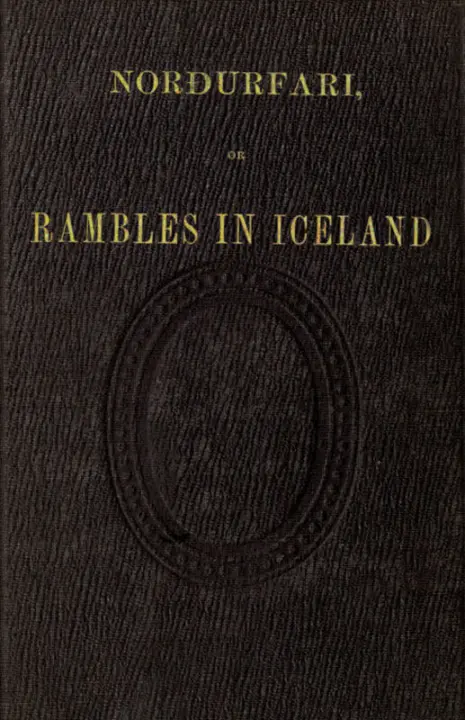
"Norðurfari; or, Rambles in Iceland" by Pliny Miles is a travel narrative written in the mid-19th century. The book chronicles the author's adventures as he journeys to Iceland, exploring its natural beauty, culture, and history, and provides a remarkable commentary on the people and landscapes he encounters. With a mix of personal reflection and historical insight, the narrative aims to depict the real Iceland, dispelling myths and misconceptions about the island. At the start of the narrative, Miles describes his voyage to Iceland aboard the schooner "Sölöven," detailing stops in Copenhagen and Elsinore before finally arriving in Reykjavik. He vividly recounts the ship's experiences, including challenges of the journey, interactions with fellow passengers, and a celebratory Fourth of July marked by cannon fire and spirited oration. The opening focuses on the excitement of travel, the camaraderie among passengers, and the author's first impressions of Iceland's unique geography and culture, setting the stage for deeper explorations to come.
Introduction adapted from the source catalogue; source summaries may be automatically generated.
Free to read · English · 86,267 words · No account needed
MAKE TIME FOR A GOOD BOOK
On by default. Untick to stop anonymous reading totals. Each page counts after 10 seconds in view. How this works.
Anonymous counting is on unless you have switched it off.
—— It is no dream;—
The wild horse swims the wilder stream.
Mazeppa.
OUR pleasant stay at the Geysers was finished, the last look taken; the last piece of bacon that we had boiled in Dame Nature’s cauldron, had disappeared; the farmer of Haukadalr had given us his good benediction and a hearty grip of the hand, while he pocketed the dollars that we gave him; and, our ponies being ready, we prepared to leave. The old raven, too,—for here in Iceland “the raven croaks him on the chimney top,” as he did when and where Richard the III. was born,—the old raven had croaked out his farewell. There is no blinking the matter; we have to face it. Mount Hekla is in the distance, and visit it we must. It was two days journey there, and several terrible rivers lay in the route; but hospitable Icelanders lived on the way, and the soft plank floors of orthodox church “hotels” invite the traveler to spread down his blanket and repose. Reader, just glance at a map of Iceland, such a one as Mr. GUNNLAUGSONN’S—but you haven’t got one; then put one “in your mind’s eye,” or imagine yourself in a balloon about “these parts,” and see what a tract of country we have to travel through.
To the north, just about the center of Iceland, the ranges of the Lang Jokull and Hofs Jokull lift their heads and show their crowns of perpetual snow; to the east lies Skaptar Jokull, once terrible, in an eruption the most devastating that ever occurred, but now hushed in grim repose, and covered with a snow-white blanket. Far to the south is Mount Hekla, with a slight bit of snow near the top, and rearing its burning summit near six thousand feet above the level of the sea. Encircled by these mountains is a valley, the most extensive tract of fertile land in Iceland, and drained by its largest rivers. Behind us lay the Bruará, and next was the Arbrandsá; but the Hvitá (Wheet-ow), the Laxá, and the Thjorsá, are far the largest, the last more than 150 miles in length, and draining the extensive glaciers of the Hofs and Skaptar Jokulls. These rivers flow in a southwestern direction, emptying into the Atlantic between the Westmann Islands and Cape Reykjanes. We dashed into the Arbrandsá, and were through it in a hurry, our ponies making light of the three feet of water and a swift current. Don’t ask us how we fared. The rain over head, and the rivers, lakes, and hot springs, had made us amphibious before this, about as effectually as if we had been born otters or sea-gulls. What a splendid meadow we pass through, here in the beautiful valley of the Hvitá! Here the “mower whets his scythe;” and such a scythe!—about two feet long and an inch wide, hung on a straight snath. But don’t he cut the grass clean to the turf? He shaves it down as close as some men reap their chins—those that shave at all, I mean—“let the galled jade wince,” our beard is uncut. But we were speaking of an Iceland meadow. How can grass grow in Iceland? you ask. Why, right out of the ground; for the soil, though shallow, is quite fertile. An Iceland meadow looks very much like a good pasture when nothing has been in it for some six weeks: grass thick, green, and soft; but very little of it running up to seed. The grass looks like our “red top.” White clover would do well, undoubtedly, if they would sow it. Almost every Icelander unites the occupations of farmer and fisherman. In June he goes to sea “to fish for cod,” and in July and August cuts and secures his hay. This is a very important operation with the Icelander, for without hay his animals would die in the winter. The hay is fed to the sheep and cattle; the horses have to do without. How a race of animals like the horse manage to live without a particle of attention, shelter, or food, for a long Iceland winter, except just what they can get out of doors, is more than we can divine. Guess they’re used to it! They eat the dead grass, often having to paw away the snow to get it; they go on the mountains, gather moss, browse the stunted shrubbery; and when driven from the fields and the mountains, they go down on the sea-shore and pick up sea-weed. When badly pushed with hunger, they will eat fish bones, offal, scraps of leather, wood, heath, and shrubbery, and almost every thing but earth and stones. Still, they very seldom die. They seem hardened by the climate, and fitted to endure the changing seasons as they roll. In winter they get reduced to skeletons, mere skin and bones; but towards the last of May, when the grass begins to grow, it is surprising how quick they get fat. Every horse in our troop is literally fat, and no oats did they ever eat; neither have they swallowed the barrel, for you can’t see the hoops on their sides! Were you to offer any grain to an Iceland horse, he would not know what you meant, and undoubtedly would think you joking.
Your reading position is saved on this browser. Take it to another device with a library code. Reading pages adapt to text, rather than matching a printed edition.
BEHIND THE BOOK
This eBook is for the use of anyone anywhere in the United States and most other parts of the world at no cost and with almost no restrictions whatsoever. You may copy it, give it away or re-use it under the terms of the Project Gutenberg License included with this eBook or online at www.gutenberg.org. If you are not located in the United States, you will have to check the laws of the country where you are located before using this eBook. Read the source licence.
The original source file, including credits and licence, is retained by this library. Request an original-format copy at no charge. Please include the book title and Project Gutenberg identifier #61992.
KEEP YOUR CURIOSITY GOING
Wilfrid Scawen Blunt
Wilfrid Scawen Blunt

E. W. (Edgar Watson) Howe
Francis Greenleaf Allinson & Anne C. E. (Anne Crosby Emery) Allinson
Cyrenus Cole

John Martineau