THE CLASSIC COLLECTION✦My diaries, being a personal narrative of events 1888-1914, Part 2 (1900-1914)CLASSIC FREE BOOKS
My diaries, being a personal narrative of events 1888-1914, Part 2 (1900-1914)
Wilfrid Scawen Blunt
THE CLASSIC COLLECTION · 1854
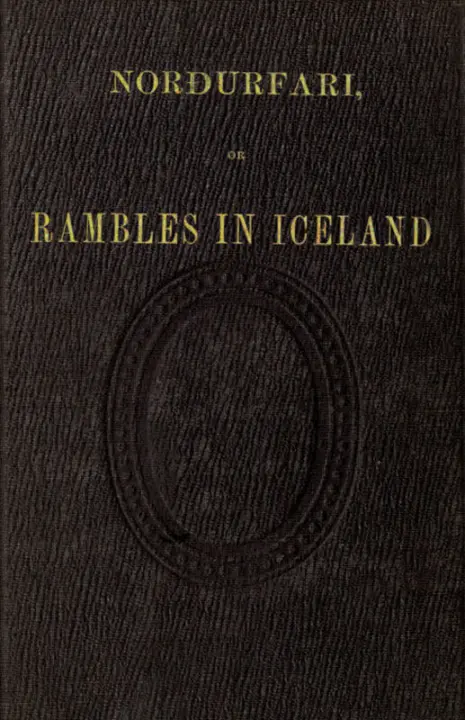
"Norðurfari; or, Rambles in Iceland" by Pliny Miles is a travel narrative written in the mid-19th century. The book chronicles the author's adventures as he journeys to Iceland, exploring its natural beauty, culture, and history, and provides a remarkable commentary on the people and landscapes he encounters. With a mix of personal reflection and historical insight, the narrative aims to depict the real Iceland, dispelling myths and misconceptions about the island. At the start of the narrative, Miles describes his voyage to Iceland aboard the schooner "Sölöven," detailing stops in Copenhagen and Elsinore before finally arriving in Reykjavik. He vividly recounts the ship's experiences, including challenges of the journey, interactions with fellow passengers, and a celebratory Fourth of July marked by cannon fire and spirited oration. The opening focuses on the excitement of travel, the camaraderie among passengers, and the author's first impressions of Iceland's unique geography and culture, setting the stage for deeper explorations to come.
Introduction adapted from the source catalogue; source summaries may be automatically generated.
Free to read · English · 86,267 words · No account needed
MAKE TIME FOR A GOOD BOOK
On by default. Untick to stop anonymous reading totals. Each page counts after 10 seconds in view. How this works.
Anonymous counting is on unless you have switched it off.
Thule, the period of cosmographie, Doth vaunt of Hekla, whose sulphureous fire Doth melt the frozen clime, and thaw the skie; Trinacrian Ætna’s flames ascend not hier: These things seem wondrous. Old Ballad.
HEIGHO for Hekla! Thursday, July 29th, was a lofty one in my calendar. The sun had many hours the start of us, getting up as he does here at two o’clock in the morning. An early hour, though, found us in our saddles. The morning was magnificently bright, the mountain being visible, clear to the curling wreath of smoke on the summit. Little patches of snow, here and there near the top, made a break in the broad, black streams of lava that covered every part of the mountain. We provided ourselves with every requisite for a long day’s journey. My knapsack was well stored with good things—solids and fluids; and then I had my old Scotch companion, the tartan plaid, to keep the cold away; and each of us had a fine staff—what the Swiss travelers call an Alpen stock, but ours were Hekla stocks, Iceland staffs—some six feet long, and armed with a strong, sharp, iron pike. My traveling guide, the farmer of Næfrholt, and the reader’s most humble servant, made up the party—not quite a princely retinue, but enough. Yes, and there was our dog, Nero. The top of the mountain was distant about seven miles, of which we could ride nearly four. Away we galloped through some fine green meadows, till we came to a mountain gorge on our right, down which in numerous cascades poured a small river. Several ducks and water-hens flew away as we approached their mountain home. Passing through this gorge, we came into a circular meadow entirely shut in by mountains, like an immense amphitheater, and this was the last bit of productive land on our way towards the summit of Hekla. A hut was erected here, as a temporary residence for the farmer while gathering his hay. High, precipitous hills of red lava overhung our path on the right, but the ascent for some distance was gradual. For near a mile, we galloped our horses over a gently ascending plain of fine volcanic sand. High up the mountain side were several sheep, but scarce a blade of grass could be seen where they stood. Perhaps they went up to enjoy the prospect of the green meadows far in the distance. We soon found our mountain climbing was not going to be play. Our ponies found it so too. Our route was intercepted by a broad and high stream of lava that extended six or seven miles from the summit of the mountain. We turned to the right in a southerly direction, and for four or five hundred yards found it about as steep as our ponies could climb. We took a zig-zag course to relieve the animals, and after half an hour’s climbing found ourselves on a level table-land, nearly half a mile across. We were now about a thousand feet above the lower region, where we left the farm house; and here we were obliged to leave our horses. The Icelanders have an ingenious way of fastening their animals so they will not stray away. They fasten all their horses in a circle, tying the head of one to the tail of another, and bringing the head of the first round to the tail of the last. If they choose to travel, they can; but like John on his rocking-horse, they may gallop all day in one interminable circle, and not get far. Near where we left the horses, extending away to our right, was a large stream of lava—one that came from the eruption of 1845; and though seven years had elapsed, it was not yet cool, and smoke was rising from it in many places. The “streams of lava” that run from the craters of volcanoes, and which here in Iceland are seen on the plains as well as on the mountains, are usually from twenty to forty feet deep, from a hundred yards to half a mile in breadth, and from one to ten miles long. They are vast ridges of rough, black rocks, of a most forbidding aspect, the largest masses weighing from one to three or four tons. When it flows from the mountain, it is a stream of molten mineral, and its progress generally rather slow, but dependent on the steepness of the mountain, and the size and the force of the stream. Melted lava often does not move more than from fifty to one hundred yards in a day, but in some cases it may run several miles. It soon begins to explode and break up; by the expansion and escape of the air within it, and by the force of the steam created by moisture on the surface of the ground beneath. While the lava is breaking up, for several days, it keeps up a terrible roaring. Then this rough mass, as black as charcoal, lies unchanged in appearance for centuries. After a long time, it begins to turn a little brown, and on its surface appears in minute particles one of the lowest order of mosses.
Your reading position is saved on this browser. Take it to another device with a library code. Reading pages adapt to text, rather than matching a printed edition.
BEHIND THE BOOK
This eBook is for the use of anyone anywhere in the United States and most other parts of the world at no cost and with almost no restrictions whatsoever. You may copy it, give it away or re-use it under the terms of the Project Gutenberg License included with this eBook or online at www.gutenberg.org. If you are not located in the United States, you will have to check the laws of the country where you are located before using this eBook. Read the source licence.
The original source file, including credits and licence, is retained by this library. Request an original-format copy at no charge. Please include the book title and Project Gutenberg identifier #61992.
KEEP YOUR CURIOSITY GOING
Wilfrid Scawen Blunt
Wilfrid Scawen Blunt

E. W. (Edgar Watson) Howe
Francis Greenleaf Allinson & Anne C. E. (Anne Crosby Emery) Allinson
Cyrenus Cole

John Martineau