THE CLASSIC COLLECTION✦My diaries, being a personal narrative of events 1888-1914, Part 2 (1900-1914)CLASSIC FREE BOOKS
My diaries, being a personal narrative of events 1888-1914, Part 2 (1900-1914)
Wilfrid Scawen Blunt
THE CLASSIC COLLECTION · 1854
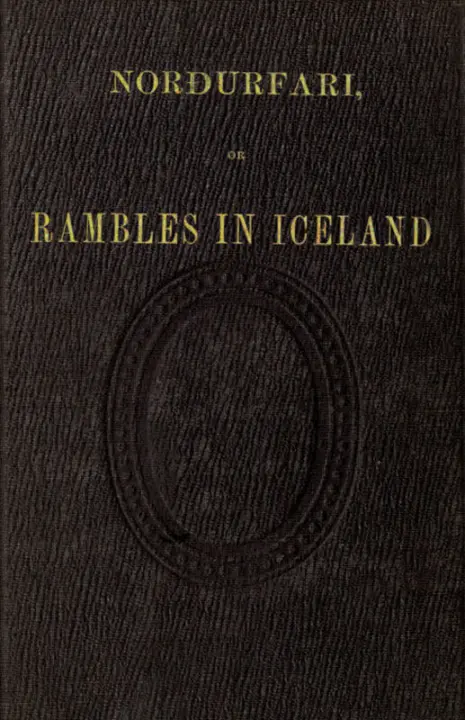
"Norðurfari; or, Rambles in Iceland" by Pliny Miles is a travel narrative written in the mid-19th century. The book chronicles the author's adventures as he journeys to Iceland, exploring its natural beauty, culture, and history, and provides a remarkable commentary on the people and landscapes he encounters. With a mix of personal reflection and historical insight, the narrative aims to depict the real Iceland, dispelling myths and misconceptions about the island. At the start of the narrative, Miles describes his voyage to Iceland aboard the schooner "Sölöven," detailing stops in Copenhagen and Elsinore before finally arriving in Reykjavik. He vividly recounts the ship's experiences, including challenges of the journey, interactions with fellow passengers, and a celebratory Fourth of July marked by cannon fire and spirited oration. The opening focuses on the excitement of travel, the camaraderie among passengers, and the author's first impressions of Iceland's unique geography and culture, setting the stage for deeper explorations to come.
Introduction adapted from the source catalogue; source summaries may be automatically generated.
Free to read · English · 86,267 words · No account needed
MAKE TIME FOR A GOOD BOOK
On by default. Untick to stop anonymous reading totals. Each page counts after 10 seconds in view. How this works.
Anonymous counting is on unless you have switched it off.
WE shall climb over the mountains and their hard names, and gallop through the valleys a little more smoothly, if we look at the spelling, pronunciation, and meaning of some of the Icelandic terms. A great appropriateness will be seen in nearly all the geographical names in Iceland. By translating the language, we shall see some characteristic feature embodied in the name of about every place, river, lake, mountain, bay, and island in the country. The explanation of a few Icelandic words will show the signification of many of the names that I shall have occasion to mention. The letter á (pronounced ow) signifies river, and is the last letter in the names of Icelandic rivers. Bru is a bridge, hence bruará, or bridge river. Hvit is white; vatn, water or lake; hvitá, white river; hvitarvatn, white lake. Hver is a hot spring; laug (pronounced lage), a warm spring, and dalr, a dale or vale. There is a valley north of Hekla, known as Laugardalr, or vale of warm springs. The Icelanders pronounce double l at the end of words, like tl. They have a distinct name for each description of mountain. Jokull (pronounced yo-kut-l; or, spoken rapidly as the Icelanders speak, it sounds about like yo-kul) is the term used to designate mountains that are covered with perpetual ice. Fell, fjall, and fjöll (pronounced fee-et-l, fee-aht-l, and fee-ote-l), all signify mountains, but fell is applied to single peaks, to small and isolated mountains, and fjall and fjöll to large mountains, or chains of mountains. Bla is blue; snæ, snow; and we have blafell, or a blue mountain standing alone—an isolated peak in the middle of a plain. A celebrated mountain in the west of Iceland, is Snæfell Jokull (snef-el-yo-kul), a snowy mountain, standing alone, and covered with perpetual ice; and in the comprehensive language of the Icelanders, it is all expressed in two words. Oræfa signifies desert or sandy plain, and torf is turf or peat. There are two mountains, Oræfa Jokull and Torfa Jokull; one standing in a desert, and the other in a large peat district. One portion of the immense mountain, the Skaptar Jokull, is known as Vatna Jokull, as it is supposed to contain, on a portion of its surface, large pools of standing water. The points of compass are, north, suth, æst, and vest. Eyjar signifies islands. South of Hekla is a lofty and celebrated mountain known as the Eyjafjalla Jokull. To an English reader, unacquainted with the Icelandic, it is a crooked-looking mouthful; but on the tongue of an Icelander, it flows off, a round, smooth, sonorous term. They call it i-a-fe-aht-la yo-kull. It defines itself as ice mountain of islands, having numerous knobs or peaks that stand up like islands in the sea. Many Icelandic words are identical with the English, and many others nearly so. It remains for some future lexicographer to show the great number of English words that are derived from the Icelandic. The points of compass have been noticed; a few more examples will suffice. Hestr is a horse; holt, a hill; hus, a house; hval, a whale; lang, long; men, men; mann, man; sandr, sand; sitha, the side; gerthi, a garden; litil, little; mikla, large (Scottish, muckle); myri, a bog or miry place; fjorth, is a firth or bay; kirkja, a church; prestur, a priest; morgun, morning; ux, ox; daga, days. “July, or midsummer month,” stands literally in Icelandic, Julius etha mithsumar-manuthur. J, at the beginning of words and syllables in the Icelandic, is pronounced like y consonant, and in the middle of a syllable, like i or long e.
Your reading position is saved on this browser. Take it to another device with a library code. Reading pages adapt to text, rather than matching a printed edition.
BEHIND THE BOOK
This eBook is for the use of anyone anywhere in the United States and most other parts of the world at no cost and with almost no restrictions whatsoever. You may copy it, give it away or re-use it under the terms of the Project Gutenberg License included with this eBook or online at www.gutenberg.org. If you are not located in the United States, you will have to check the laws of the country where you are located before using this eBook. Read the source licence.
The original source file, including credits and licence, is retained by this library. Request an original-format copy at no charge. Please include the book title and Project Gutenberg identifier #61992.
KEEP YOUR CURIOSITY GOING
Wilfrid Scawen Blunt
Wilfrid Scawen Blunt

E. W. (Edgar Watson) Howe
Francis Greenleaf Allinson & Anne C. E. (Anne Crosby Emery) Allinson
Cyrenus Cole

John Martineau