THE CLASSIC COLLECTION✦My diaries, being a personal narrative of events 1888-1914, Part 2 (1900-1914)CLASSIC FREE BOOKS
My diaries, being a personal narrative of events 1888-1914, Part 2 (1900-1914)
Wilfrid Scawen Blunt
THE CLASSIC COLLECTION · 1854
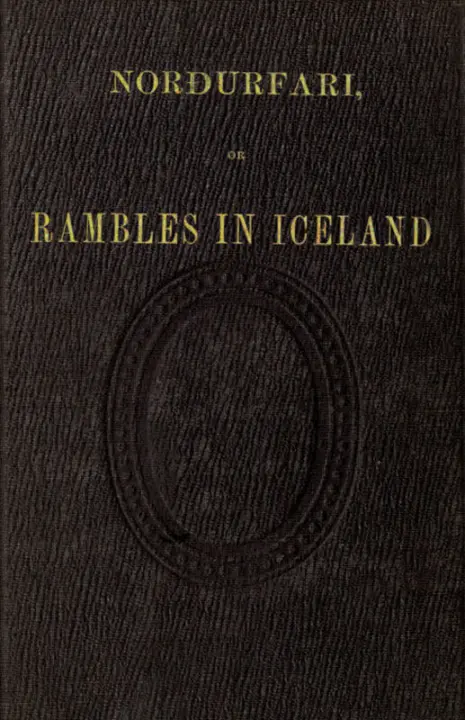
"Norðurfari; or, Rambles in Iceland" by Pliny Miles is a travel narrative written in the mid-19th century. The book chronicles the author's adventures as he journeys to Iceland, exploring its natural beauty, culture, and history, and provides a remarkable commentary on the people and landscapes he encounters. With a mix of personal reflection and historical insight, the narrative aims to depict the real Iceland, dispelling myths and misconceptions about the island. At the start of the narrative, Miles describes his voyage to Iceland aboard the schooner "Sölöven," detailing stops in Copenhagen and Elsinore before finally arriving in Reykjavik. He vividly recounts the ship's experiences, including challenges of the journey, interactions with fellow passengers, and a celebratory Fourth of July marked by cannon fire and spirited oration. The opening focuses on the excitement of travel, the camaraderie among passengers, and the author's first impressions of Iceland's unique geography and culture, setting the stage for deeper explorations to come.
Introduction adapted from the source catalogue; source summaries may be automatically generated.
Free to read · English · 86,267 words · No account needed
MAKE TIME FOR A GOOD BOOK
On by default. Untick to stop anonymous reading totals. Each page counts after 10 seconds in view. How this works.
Anonymous counting is on unless you have switched it off.
—— A merrier man,
Within the limits of becoming mirth,
I never spent an hour’s talk withal.
SHAKSPEARE.
MY ride along the banks of the Thiorsá, before my detour to the south coast, near the Westmann Islands, was a pleasant one. The little green, turf-covered hillocks—not appearing much like houses, though they were so—gave an air of solitude to the landscape, that but few civilized countries possess. The air was vocal with birds, that constantly flew about us. The mournful note of the plover, and the wild scream of the curlew, were constantly heard, as they rested on the signal-cairns by the way-side, or flew away towards a thicket. These birds, as well as the ptarmigan, are quite plentiful in Iceland, and all reckoned as game-birds.
A man could travel through Iceland in the summer, carrying a gun, a few loaves of bread, some tea, coffee, and sugar, get plenty of milk and cream at the farmers’ houses, and shoot game enough for his meat, without once leaving his horse. Some might not consider it a great luxury, after a hard day’s ride, to sit down to a banquet of roasted raven, a fricasseed hawk, or a broiled sea-gull; but it would be quite as good as the buzzard soup that Prince Achille Murat used to get in Florida. Some nice ptarmigan, or plover, with a piece of a loaf, tea or coffee, and butter, would make a feast that many a traveler would be glad to have. Then, too, in the interior are large herds of wild reindeer, where a good marksman could select a nice piece of venison. Henderson, the missionary, saw a large flock, that approached quite near him before offering to retreat. White and blue foxes, seals, and sometimes an importation of white bears from Greenland, who not unfrequently float over on fields of ice, might afford a little sport, and perhaps profit, but would be rather tough eating. I, however, carried no arms, except the “pickers and stealers” that Dame Nature furnished me; so I did not speak to the birds in the loud tones of villainous saltpetre. I have had my murderous propensities—nurtured when a lad, by shooting crows and squirrels—the most excited here, in Iceland, by some old ravens, who seemed to me to act with a very unbecoming familiarity. These birds were sacred to Odin, and I believe the Icelanders never molest them. Odin had two, one for memory, and the other for news. They used to fly abroad during the day, and return at night, bringing intelligence from all parts of the world. One would perch on his right shoulder, and the other on his left, and relate to him every thing that was going on, at the same time refreshing his memory in regard to past events. The old Scandinavians never used to make a voyage, or go a journey, without them. Floki, a Norwegian pirate, one of the first settlers of Iceland, took three of them with him when he started on his voyage, taking them as pilots, to show him the way. After getting some distance beyond the Faroe Isles, he let off one, and he returned to Faroe. Sailing awhile longer, he sent off another; and, after a wide circuit in the air, he returned to the ship. Sailing some days more, he released the third; and he flew away to the north-west. Following him, he soon reached the coast of Iceland. There seems to be a pair of these birds living near almost every house in Iceland. I have never seen a church, with a house near by, where there was not a pair of ravens. They seem to be a much larger bird here, than any of the kind that I ever saw in America. At the little church and farm-house of Haukadalr, near the Geysers, were two; and they would often alight on the church, and sometimes on a gate-post, but a few feet from me. One of them showed a great aversion to Nero, and would sometimes swoop down, and nearly hit the dog’s head. Believing him to be nothing but a heathen, I had a most Christian wish to send a bullet through him. But my Colt’s pistol was far away, and his black ravenship could worship Odin, Thor, or any other deity he pleased.
Your reading position is saved on this browser. Take it to another device with a library code. Reading pages adapt to text, rather than matching a printed edition.
BEHIND THE BOOK
This eBook is for the use of anyone anywhere in the United States and most other parts of the world at no cost and with almost no restrictions whatsoever. You may copy it, give it away or re-use it under the terms of the Project Gutenberg License included with this eBook or online at www.gutenberg.org. If you are not located in the United States, you will have to check the laws of the country where you are located before using this eBook. Read the source licence.
The original source file, including credits and licence, is retained by this library. Request an original-format copy at no charge. Please include the book title and Project Gutenberg identifier #61992.
KEEP YOUR CURIOSITY GOING
Wilfrid Scawen Blunt
Wilfrid Scawen Blunt

E. W. (Edgar Watson) Howe
Francis Greenleaf Allinson & Anne C. E. (Anne Crosby Emery) Allinson
Cyrenus Cole

John Martineau