THE CLASSIC COLLECTION✦My diaries, being a personal narrative of events 1888-1914, Part 2 (1900-1914)CLASSIC FREE BOOKS
My diaries, being a personal narrative of events 1888-1914, Part 2 (1900-1914)
Wilfrid Scawen Blunt
THE CLASSIC COLLECTION · 1854
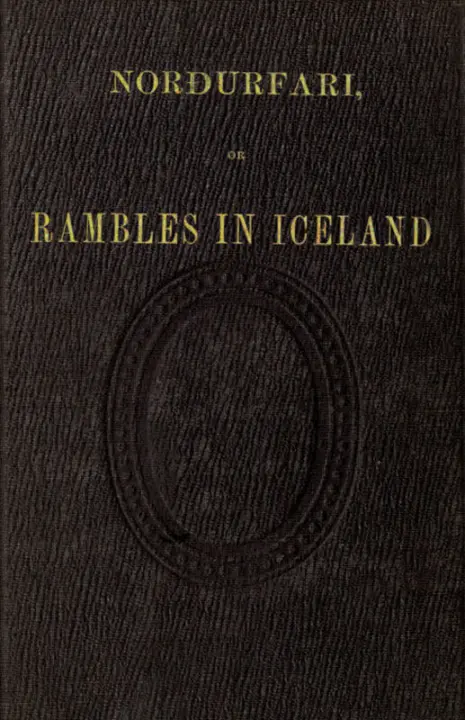
"Norðurfari; or, Rambles in Iceland" by Pliny Miles is a travel narrative written in the mid-19th century. The book chronicles the author's adventures as he journeys to Iceland, exploring its natural beauty, culture, and history, and provides a remarkable commentary on the people and landscapes he encounters. With a mix of personal reflection and historical insight, the narrative aims to depict the real Iceland, dispelling myths and misconceptions about the island. At the start of the narrative, Miles describes his voyage to Iceland aboard the schooner "Sölöven," detailing stops in Copenhagen and Elsinore before finally arriving in Reykjavik. He vividly recounts the ship's experiences, including challenges of the journey, interactions with fellow passengers, and a celebratory Fourth of July marked by cannon fire and spirited oration. The opening focuses on the excitement of travel, the camaraderie among passengers, and the author's first impressions of Iceland's unique geography and culture, setting the stage for deeper explorations to come.
Introduction adapted from the source catalogue; source summaries may be automatically generated.
Free to read · English · 86,267 words · No account needed
MAKE TIME FOR A GOOD BOOK
On by default. Untick to stop anonymous reading totals. Each page counts after 10 seconds in view. How this works.
Anonymous counting is on unless you have switched it off.
From Skarth, the Eyjafjalla and Tindfjalla Jokulls show their broad, snowy sides and summits; but Hekla is the most conspicuous. The whole mountain, near to the top, is black. Near the summit there are some spots of snow that extend more or less down the north side, while a curling wreath of smoke on the apex reveals the existence of the fire within. We started directly towards the mountain, with the farmer for our guide. On every side of Hekla, as far as we could see, much of the ground was covered with black lava. The land over which we rode here was covered with lava and volcanic sand, and, what is seldom seen in such a situation, tufts of grass grew here and there. Heath is nearly the first vegetation that finds root on the lava. Here, in a pasture near a river, we saw a splendid lot of horses. What a wild, untamed look they had; sleek and fat, with long, flowing tails and manes! They appeared like the flock that crossed the path of Mazeppa. The Iceland farmers usually keep great numbers of horses, and there is no country in the world where they can be raised so cheaply. And they sell these animals cheap. I saw a beautiful, jet black, four-year old, at the Geysers, an entire horse, that had never been saddled. His form was symmetry itself. He was just about twelve and a half hands high. I asked the price—less than ten dollars, our money. In Boston or New York he would bring $150 or $200. We crossed the Vestri Rangá, a small stream, and arrived about the middle of the afternoon at Næfrholt, the last farm and the last green spot this side of Hekla. The farmer was from home; and our farmer from Skarth, who had accompanied us, started off after him. He had not got far before down he came, thrown by his horse, or rather falling off, for I could see nothing to bring him out of the saddle. Perhaps Mr. Cogniac Brandy, or somebody else, had put a “brick” in his hat. He was a big, beefy fellow, and fell tumbling down like a meal-sack. I thought he must be killed, and ran to help him; but he was up in a jiffy, and under full gallop in less than a minute, vaulting into his saddle on the off side at that. It takes an Icelander, to fall and not hurt him. I rather think this one would tumble down Mount Hekla and never bruise his shins. The farmer came home, and told us we could put up at his house; and then the Skarth farmer returned to his home. This was the first really pleasant evening I had seen during my journey, and it bid fair for a clear day on the morrow. Unless it were so, it would be useless to attempt the ascent of Hekla, and expect to see any thing. I took the guide, and climbed to the top of a steep mountain, one of several about a thousand feet high that skirt the base of Hekla, and seemed to stand as sentries near their fiery and warlike monarch. Here the recollection of my boyish days and boyish sports came up, and I felt like having a little fun. There was a grand chance for rolling stones down hill, and we improved it. After setting off a number of different sizes, we noticed a ponderous boulder partly buried in the earth. It looked as if it could be moved. It was nearly round, and would weigh five or six tons. I called the guide to help me push it off, but he looked ominously at the house far on the plain below. I convinced him that it could not go there; and then he showed me the farmer’s wall, a beautiful dyke of stones and turf that separated the meadow below from the mountain pasture. I told him I would pay all damage; and we got behind it. With our backs to the mountain, and feet against it, we crowded it out of its bed. It fell with an awful crash through about a hundred feet of jagged rocks, nearly perpendicular, and then took the sloping plain below. But didn’t it streak it? The ground fairly smoked. The surface was smooth sand and gravel, and within thirty or thirty-five degrees of the perpendicular. Lower down, the grass began to grow. The rock took a bee-line for two or three hundred yards, till near the bottom, when it commenced a series of flights of “ground and lofty tumbling” that would have done honor to Ducrow. One leap that I measured was thirty-four feet, and there it struck the farmer’s wall. It walked through it as if it had been a cobweb, making a horrible gap near six feet wide, and moving one stone that would weigh at least a ton. Well, it was capital fun. The old rock curled round in a circuit, and rested in the meadow. The farmer and his family ran out of the house at the noise, and he came up to meet us. The guide got a furious blowing up, all of which he took very coolly. I ended the confab by paying him a dollar for the damage done, and he went away quite satisfied. As I had had my dance, it was all fair that I should pay the fiddler.
Your reading position is saved on this browser. Take it to another device with a library code. Reading pages adapt to text, rather than matching a printed edition.
BEHIND THE BOOK
This eBook is for the use of anyone anywhere in the United States and most other parts of the world at no cost and with almost no restrictions whatsoever. You may copy it, give it away or re-use it under the terms of the Project Gutenberg License included with this eBook or online at www.gutenberg.org. If you are not located in the United States, you will have to check the laws of the country where you are located before using this eBook. Read the source licence.
The original source file, including credits and licence, is retained by this library. Request an original-format copy at no charge. Please include the book title and Project Gutenberg identifier #61992.
KEEP YOUR CURIOSITY GOING
Wilfrid Scawen Blunt
Wilfrid Scawen Blunt

E. W. (Edgar Watson) Howe
Francis Greenleaf Allinson & Anne C. E. (Anne Crosby Emery) Allinson
Cyrenus Cole

John Martineau