THE CLASSIC COLLECTION✦My diaries, being a personal narrative of events 1888-1914, Part 2 (1900-1914)CLASSIC FREE BOOKS
My diaries, being a personal narrative of events 1888-1914, Part 2 (1900-1914)
Wilfrid Scawen Blunt
THE CLASSIC COLLECTION · 1854
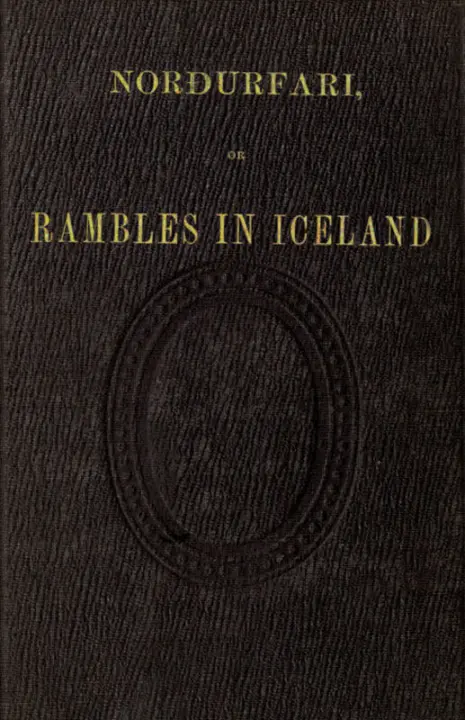
"Norðurfari; or, Rambles in Iceland" by Pliny Miles is a travel narrative written in the mid-19th century. The book chronicles the author's adventures as he journeys to Iceland, exploring its natural beauty, culture, and history, and provides a remarkable commentary on the people and landscapes he encounters. With a mix of personal reflection and historical insight, the narrative aims to depict the real Iceland, dispelling myths and misconceptions about the island. At the start of the narrative, Miles describes his voyage to Iceland aboard the schooner "Sölöven," detailing stops in Copenhagen and Elsinore before finally arriving in Reykjavik. He vividly recounts the ship's experiences, including challenges of the journey, interactions with fellow passengers, and a celebratory Fourth of July marked by cannon fire and spirited oration. The opening focuses on the excitement of travel, the camaraderie among passengers, and the author's first impressions of Iceland's unique geography and culture, setting the stage for deeper explorations to come.
Introduction adapted from the source catalogue; source summaries may be automatically generated.
Free to read · English · 86,267 words · No account needed
MAKE TIME FOR A GOOD BOOK
On by default. Untick to stop anonymous reading totals. Each page counts after 10 seconds in view. How this works.
Anonymous counting is on unless you have switched it off.
A few miles from our caravansera we came to the banks of the lake of Thingvalla, or, in Icelandic, “Thingvalla vatn.” This lake is about ten miles long, and the largest body of water in Iceland. It is of great depth, in some places over 1,000 feet deep. The town, or place, or what had been a place, is at the north end of the lake. Just before arriving there, while jogging along on the level ground, we came suddenly upon the brink of an immense chasm, 150 feet deep, and about the same in breadth. This was one of those seams or rents in the earth, common in Iceland; originally a crack in a bed of lava. Its precipitous sides and immense depth seemed at once a bar to our progress; and without a bridge over it, or ropes or wings, we saw no way of getting along without going round it. Without seeing either end, and wondering how we were to get round it, we were told we must go through it. And sure enough, and the animals, as well as the guides, seemed to understand it; and if we had kept in our saddles I actually believe they would have found their way down this almost perpendicular precipice. We, however, dismounted, and in a steep defile were shown a passage that much resembled the “Devil’s Staircase,” at the Pass of Glencoe, in the Highlands of Scotland. By picking and clambering our way down some pretty regular stairs—and our horses followed without our holding their bridles—we made our way to the bottom. There we found grass growing; and, while our ponies were feeding, we lay on the turf and admired this singular freak of nature. We were in the bottom of a deep chasm or defile, the wall on the west side being over a hundred feet high and on a level with the country back of it. The wall on the east side was lower, and beyond this wall the country was on a level with the bottom where we were. By walking a short distance to the north, in this singular defile, we found the wall on the east side broken down by a river that poured down the precipice from the west, and being thus imprisoned between two walls, it had thrown down the lowest one, and found its way into the Thingvalla lake. This chasm is called the Almannagjá (pronounced Al-man-a-gow), or “all men’s cave.” In former days, when the Althing, or Icelandic Congress, met at the place, all men of consequence, or nearly all, used to assemble here; and no doubt they admired this singular freak of nature. The river here, the Oxerá, in pouring over the precipice forms a most splendid cataract. Here is Thingvalla, a once important place, and, as I have mentioned, for nearly a thousand years the capital of the nation. It is now a mere farm, and contains two huts and a very small church. This church is on about the same scale of most of the churches in Iceland. It is a wooden building, about eighteen feet long by twelve wide, with a door less than five feet high. It is customary for the clergyman or farmer—and the owner of the land is often both—to store his provisions, boxes of clothing, dried fish, &c., in the church; and strangers in the country often sleep in the churches. Some travelers have made a great outcry about the desecration of turning a church into a hotel, but with all their squeamishness have usually fallen into the general custom. Surely if their tender consciences went against it, they had “all out doors” for a lodging place. I have not yet arrived at the honor of sleeping in a church, though I have slept out of doors; and when I have tried both, I will tell which I like best. A tent has been presented to the important “town” of Thingvalla, by the liberality of the French officers who visit the coast; and this was pitched for our use. The clergyman here—who is also farmer and fisherman—a pale, spare, intellectual-looking young man, received us very kindly. It was the haying season, and the ground was covered with the new-mown hay. Two of the working-men of the farm had that day been out on the lake, fishing in a small boat. They came to the shore as we rode up, and I had the curiosity to go and see what they had caught. And what had they? Who can guess? No one. Over two hundred and fifty fresh-water trout, all alive “and kicking.” They were large, handsome fellows, and would weigh from one to three pounds each. Not a fish that wouldn’t weigh over a pound. But didn’t I scream? “Oh, Captain Laborde! Rector Johnson! I say; come and see the fish. Speckled trout, more than two barrels-full.” Well, hang up my fish-hooks; I’ll never troll another line in Sandy Creek. The tent pitched, some trout dressed, and a fire built in the smithy, and we soon had a dinner cooking. And such a dinner! Well, say French naval officers on shore, Icelanders, Yankees, and Cosmopolites, can not enjoy life “in the tented field”! But this chapter is long enough, and I’ll tell about the dinner in my next.
Your reading position is saved on this browser. Take it to another device with a library code. Reading pages adapt to text, rather than matching a printed edition.
BEHIND THE BOOK
This eBook is for the use of anyone anywhere in the United States and most other parts of the world at no cost and with almost no restrictions whatsoever. You may copy it, give it away or re-use it under the terms of the Project Gutenberg License included with this eBook or online at www.gutenberg.org. If you are not located in the United States, you will have to check the laws of the country where you are located before using this eBook. Read the source licence.
The original source file, including credits and licence, is retained by this library. Request an original-format copy at no charge. Please include the book title and Project Gutenberg identifier #61992.
KEEP YOUR CURIOSITY GOING
Wilfrid Scawen Blunt
Wilfrid Scawen Blunt

E. W. (Edgar Watson) Howe
Francis Greenleaf Allinson & Anne C. E. (Anne Crosby Emery) Allinson
Cyrenus Cole

John Martineau