THE CLASSIC COLLECTION✦My diaries, being a personal narrative of events 1888-1914, Part 2 (1900-1914)CLASSIC FREE BOOKS
My diaries, being a personal narrative of events 1888-1914, Part 2 (1900-1914)
Wilfrid Scawen Blunt
THE CLASSIC COLLECTION · 1854
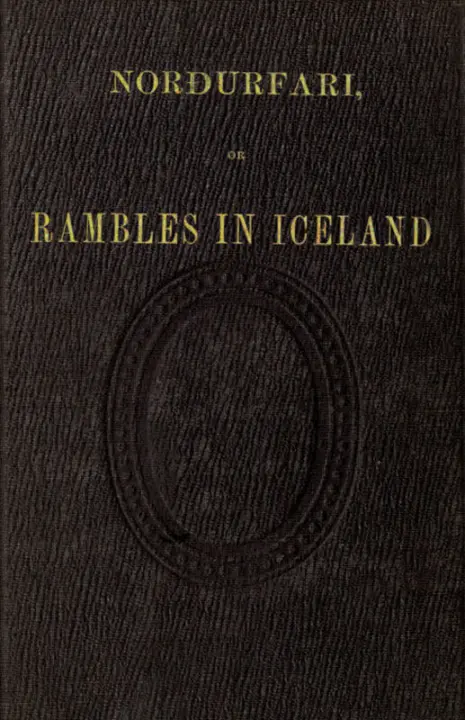
"Norðurfari; or, Rambles in Iceland" by Pliny Miles is a travel narrative written in the mid-19th century. The book chronicles the author's adventures as he journeys to Iceland, exploring its natural beauty, culture, and history, and provides a remarkable commentary on the people and landscapes he encounters. With a mix of personal reflection and historical insight, the narrative aims to depict the real Iceland, dispelling myths and misconceptions about the island. At the start of the narrative, Miles describes his voyage to Iceland aboard the schooner "Sölöven," detailing stops in Copenhagen and Elsinore before finally arriving in Reykjavik. He vividly recounts the ship's experiences, including challenges of the journey, interactions with fellow passengers, and a celebratory Fourth of July marked by cannon fire and spirited oration. The opening focuses on the excitement of travel, the camaraderie among passengers, and the author's first impressions of Iceland's unique geography and culture, setting the stage for deeper explorations to come.
Introduction adapted from the source catalogue; source summaries may be automatically generated.
Free to read · English · 86,267 words · No account needed
MAKE TIME FOR A GOOD BOOK
On by default. Untick to stop anonymous reading totals. Each page counts after 10 seconds in view. How this works.
Anonymous counting is on unless you have switched it off.
Their domestic animals are sheep, cattle, horses, and dogs. They rarely keep domestic fowls, but from the nests of the wild eider-duck they obtain large quantities of eggs, as well as down. Reindeer run wild in the interior, but are not domesticated. Blue and white foxes are common; and these, with eagles, hawks, and ravens, destroy many of their sheep and lambs. White bears are not found in the country, except as an “imported” article, when they float over from Greenland on the drift ice. The domestic animals in Iceland are estimated in the following numbers:—500,000 sheep, 60,000 horses, and 40,000 cattle. All their animals are of rather small size, as compared to those in more temperate regions. Their horses are a size larger than the ponies of Shetland, and average from twelve to thirteen hands high. Their hay is a short growth, but a very sweet, excellent quality. The Icelanders speak of their “forests,”—mere bunches of shrubbery from two to six feet high. These are principally birch and willow. The beautiful heath, so common in Scotland and the north of Europe, is found throughout Iceland. Their game birds are the ptarmigan, the curlew, the plover, and the tern. Nearly every variety of water-fowl common to Great Britain or America, abounds in the bays, islands, and shores of Iceland, and in the greatest numbers. The Icelanders export wool, about 1,000,000 lbs. annually, and from two to three hundred thousand pairs each of woolen stockings and mittens. Besides these articles, they sell dried and salted codfish, smoked salmon, fish and seal oil, whale blubber, seal and fox skins, feathers, eider-down, beef and mutton, hides, tallow, and sulphur. They import their principal luxuries—flour, rye and barley meal, beans, potatoes, wine, brandy, rum, ale and beer, tobacco, coffee, sugar, tea, salt, timber, coal, iron, cutlery, fish-hooks and lines, cotton and silk goods, leather, crockery, and furniture. From thirty to forty vessels sail from Denmark to Iceland every year. Reykjavik, the capital, on the west coast, is the largest town in the island—a place of about 1,200 people. Then there are Eskifiorth and Vopnafiorth in the east, Akreyri in the north, and Stykkisholm and Hafnarfiorth in the west, all places of considerable trade. All goods are taken to Iceland duty free; and letters and papers are carried there in government vessels, free of postage, and sent through the island by government messengers. By the present arrangement, the government “post-ship” makes five voyages to and from Iceland in a year. It sails from Copenhagen to Reykjavik on the first days of March, May, July, and October, and from Liverpool to Reykjavik on the first day of January. It leaves Reykjavik, for Copenhagen, February 1st, April 1st, June 1st, and August 10th; and from Reykjavik for Liverpool on the 10th of November. One half of the trips each way, it stops at the Faroe Isles. In addition to the mail service by this ship, letter-bags are forwarded from Denmark by the different vessels trading to Iceland.
Your reading position is saved on this browser. Take it to another device with a library code. Reading pages adapt to text, rather than matching a printed edition.
BEHIND THE BOOK
This eBook is for the use of anyone anywhere in the United States and most other parts of the world at no cost and with almost no restrictions whatsoever. You may copy it, give it away or re-use it under the terms of the Project Gutenberg License included with this eBook or online at www.gutenberg.org. If you are not located in the United States, you will have to check the laws of the country where you are located before using this eBook. Read the source licence.
The original source file, including credits and licence, is retained by this library. Request an original-format copy at no charge. Please include the book title and Project Gutenberg identifier #61992.
KEEP YOUR CURIOSITY GOING
Wilfrid Scawen Blunt
Wilfrid Scawen Blunt

E. W. (Edgar Watson) Howe
Francis Greenleaf Allinson & Anne C. E. (Anne Crosby Emery) Allinson
Cyrenus Cole

John Martineau