THE CLASSIC COLLECTION✦My diaries, being a personal narrative of events 1888-1914, Part 2 (1900-1914)CLASSIC FREE BOOKS
My diaries, being a personal narrative of events 1888-1914, Part 2 (1900-1914)
Wilfrid Scawen Blunt
THE CLASSIC COLLECTION · 1854
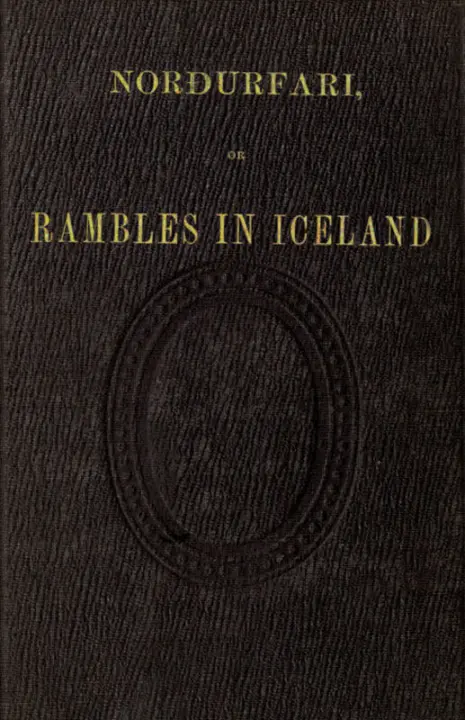
"Norðurfari; or, Rambles in Iceland" by Pliny Miles is a travel narrative written in the mid-19th century. The book chronicles the author's adventures as he journeys to Iceland, exploring its natural beauty, culture, and history, and provides a remarkable commentary on the people and landscapes he encounters. With a mix of personal reflection and historical insight, the narrative aims to depict the real Iceland, dispelling myths and misconceptions about the island. At the start of the narrative, Miles describes his voyage to Iceland aboard the schooner "Sölöven," detailing stops in Copenhagen and Elsinore before finally arriving in Reykjavik. He vividly recounts the ship's experiences, including challenges of the journey, interactions with fellow passengers, and a celebratory Fourth of July marked by cannon fire and spirited oration. The opening focuses on the excitement of travel, the camaraderie among passengers, and the author's first impressions of Iceland's unique geography and culture, setting the stage for deeper explorations to come.
Introduction adapted from the source catalogue; source summaries may be automatically generated.
Free to read · English · 86,267 words · No account needed
MAKE TIME FOR A GOOD BOOK
On by default. Untick to stop anonymous reading totals. Each page counts after 10 seconds in view. How this works.
Anonymous counting is on unless you have switched it off.
Our living on board was, I believe, as it usually is on Danish merchant vessels. It consisted principally of a thin, watery compound called “soup,” of black potatoes, black beef, and yet blacker bread. At the evening meal we had for drink, hot water frightened into a faint color by a gentle infusion of China’s favorite plant. This drink our captain called “tea.” Believing that good order on shipboard is much promoted by subordination and submission to the commanding officer, I never used to tell him it wasn’t “tea.” If strength, however, is a sign of life, I must say that this showed very little sign of vitality. It probably contained at least half a teaspoonful of tea, to a gallon of water; but Oh! that black bread! it was not so bad an article, though, after all. We had one blacker thing on board, and that was our dog “Nigger.” The good boys and girls in America, who eat “Indian bread,” “wheat bread,” “short cake” and “johnny cake,” have all read of the peasants of Europe living on “black bread,” and wonder what it is. It is made of rye, ground, but not bolted much, if any; and the bread is very dark, a good deal darker than corn bread. At first I did not like it very well, and at Elsinore I purchased a couple of large wheaten loaves. This bread is very dear: I paid half a dollar a loaf; these lasted me about ten days, but before that time, the mould had struck clear through them. Not so the black bread. That keeps much better than wheaten bread. The mould walks into it gradually however, but thoroughly. At first there appeared a green coat, on the side that stood next to another loaf in baking. This coat of mould kept growing deeper and deeper, getting first the eighth of an inch, then a quarter of an inch, and before the end of the voyage, over half an inch deep of solid green. Inside of this the loaf was moist and fresh; and certainly, after getting used to it, it is very good bread. It was the “staff of life” with us; and considerably like a staff the loaves were, being in size and appearance about like a couple of feet of scantling cut out of the heart of an oak. So much for living on shipboard. If we did not fare like princes, we had the consolation of knowing that the fares we paid were very light. So bad fare and light fares went together; and that made it all fair. On the fifteenth day out, we first saw the coast of Iceland. It was an irregular, rocky promontory, ending in Cape Reykianess, the southwestern extremity of the island. In two days we saw and passed the “Meal sack,”—(Danish Meel sakken)—a singular rock island about eight miles southwest of Cape Reykianess. While passing I took a drawing of it, and certainly very much like a bag of meal it looks. It is near 200 feet high, and about that in diameter, apparently perpendicular all round; on the north a little more so! All over its craggy sides, we could see thousands of sea-birds. As sunset approached we saw great numbers of gannets flying towards it, going to rest for the night. This bird, known as the solan goose, is larger than a goose, and while flying, from its peculiar color has a most singular appearance. They are white, except the outer half of the wing, the feet, and the bill, which are jet black, and the head a sort of brownish yellow. A word more about these birds, and some others, hereafter. Southwest of the Meal sack a few miles, is another singular island called “the Grenadier.” It is a most striking looking object, standing up out of the ocean several hundred feet high, like some tall giant or lofty pillar. What a constant screaming of sea fowl there is at all times about these lonely islands! But where is the night in this northern latitude, in the summer season? Ask the lovely twilight that continues for the two or three hours that the sun is below the horizon. At midnight I read a chapter in the Bible, in fine print, with perfect ease. At a distance of several miles I could tell the dividing line between the rocks and the vegetation on the mountains. And what a splendid panorama of mountain scenery this singular country presents! Unlike any thing that I have ever seen on the face of the globe. Finally on the nineteenth day of our voyage, our little bark dropped anchor in the harbor of Reykjavik, and our cannon announced to the Icelanders the arrival of the “Post ship” with letters and friends from Denmark. Then with expectation about to be gratified, I stepped ashore on the rocky coast of Iceland.
Your reading position is saved on this browser. Take it to another device with a library code. Reading pages adapt to text, rather than matching a printed edition.
BEHIND THE BOOK
This eBook is for the use of anyone anywhere in the United States and most other parts of the world at no cost and with almost no restrictions whatsoever. You may copy it, give it away or re-use it under the terms of the Project Gutenberg License included with this eBook or online at www.gutenberg.org. If you are not located in the United States, you will have to check the laws of the country where you are located before using this eBook. Read the source licence.
The original source file, including credits and licence, is retained by this library. Request an original-format copy at no charge. Please include the book title and Project Gutenberg identifier #61992.
KEEP YOUR CURIOSITY GOING
Wilfrid Scawen Blunt
Wilfrid Scawen Blunt

E. W. (Edgar Watson) Howe
Francis Greenleaf Allinson & Anne C. E. (Anne Crosby Emery) Allinson
Cyrenus Cole

John Martineau