THE CLASSIC COLLECTION✦My diaries, being a personal narrative of events 1888-1914, Part 2 (1900-1914)CLASSIC FREE BOOKS
My diaries, being a personal narrative of events 1888-1914, Part 2 (1900-1914)
Wilfrid Scawen Blunt
THE CLASSIC COLLECTION · 1854
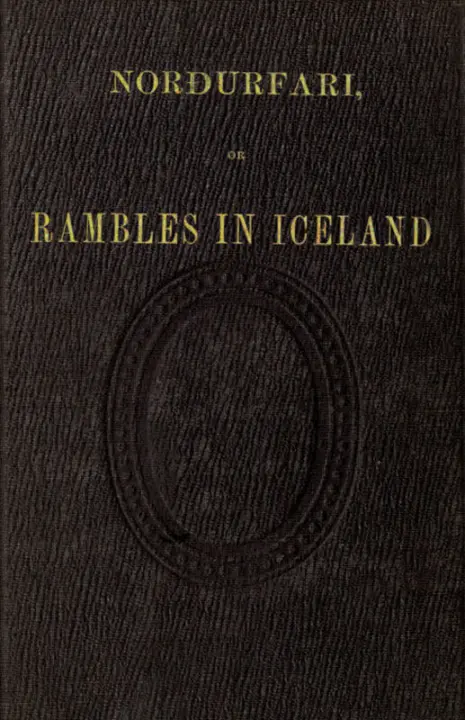
"Norðurfari; or, Rambles in Iceland" by Pliny Miles is a travel narrative written in the mid-19th century. The book chronicles the author's adventures as he journeys to Iceland, exploring its natural beauty, culture, and history, and provides a remarkable commentary on the people and landscapes he encounters. With a mix of personal reflection and historical insight, the narrative aims to depict the real Iceland, dispelling myths and misconceptions about the island. At the start of the narrative, Miles describes his voyage to Iceland aboard the schooner "Sölöven," detailing stops in Copenhagen and Elsinore before finally arriving in Reykjavik. He vividly recounts the ship's experiences, including challenges of the journey, interactions with fellow passengers, and a celebratory Fourth of July marked by cannon fire and spirited oration. The opening focuses on the excitement of travel, the camaraderie among passengers, and the author's first impressions of Iceland's unique geography and culture, setting the stage for deeper explorations to come.
Introduction adapted from the source catalogue; source summaries may be automatically generated.
Free to read · English · 86,267 words · No account needed
MAKE TIME FOR A GOOD BOOK
On by default. Untick to stop anonymous reading totals. Each page counts after 10 seconds in view. How this works.
Anonymous counting is on unless you have switched it off.
All this the Danes seem to remember, for two splendid steamers, the “HAMLET” and the “OPHELIA,” run regularly between here and Copenhagen; and as if to disprove the poet’s account, they run in unison with one another. We soon found our way to the castle, about half a mile from town, through a long, shady walk overhung with trees. Somehow, when we read of the castle of Elsinore, and of Bernardo and Francisco keeping sentry before it, and the platform, and the ghost appearing there, it hardly seems as if it was a real castle that we could now see and visit, and climb over, and withal find sentries keeping guard over! But here it is, and as substantial and real as that of Britain’s queen at Windsor. I spent an hour on its lofty battlements. Here, too, is the “ordnance,” such as the small-beer critics are always abusing Shakspeare for having “shot off.” Yes, the theater manager, actor, and dramatist, in his play of Hamlet, adds to his text, “ordnance shot off within”—while these small-fry scribblers cry out “anachronism.” Yes, they have found out the wonderful fact that king Hamlet reigned here about the year 1200, while gunpowder—“thy humane discovery, Friar Bacon!”—was unknown for more than a hundred years after. Go to: yes, go to Elsinore, and now you’ll find ordnance enough to fire off, and blow up all the paltry criticism that has been fired at Shakspeare since he first lampooned Sir Thomas Lucy.
The castle of Elsinore stands close beside the water, the big guns sticking out directly over the Cattegat. On the land side it is defended by bastions, cannon, moat, gates, and draw-bridge. The castle covers, perhaps, two acres of ground, inclosing a hollow square or court yard in the center. It is unlike any other castellated pile I have ever seen. At the corners are towers of different heights; the tallest one is about 175 feet high, and looks like a pile of Dutch cheeses, the largest at the bottom. The party I was with were all Danes; and, though their language is cousin-German to our Anglo-Saxon, and I could in part understand it, as if “native and to the manor born,” yet I preferred my own. With another party was a very pretty and intelligent German girl, who spoke English, and was acquainted with the place; and to her I was indebted for the best vivâ voce account that I had. We were first taken into the chapel, a small and very neat place of worship in the south-east angle of the castle. The glaring and rather gaudy style of the coats of arms of the royal and noble families whose dead are here, gave it something of a gingerbread appearance; but otherwise I liked it. I looked in vain for a monument to Mr. Shakspeare’s hero. Could I have found that skull of Yorick, “the king’s jester,” I think I should have carried it off as a sacred relic, and made a present of it to Ned Forrest. Alas! no Yorick, no Hamlet, no Polonius—not one of their “pictures in little,” nor even a slab to their memory, could I see. We ascended one of the corner towers—used as a light-house and observatory, and provided with telescopes—from whence we had a fine view of the Cattegat, the island of Zeeland, and the lofty range of Swedish mountains on the opposite coast. Directly across the strait, some three miles distant, is the Swedish town of Helsingborg, a place about the size of Elsinore. The prominent object in it is a tall square tower, probably the steeple of a church. In one room of the castle, where I could fancy the “melancholy Dane” in his “inky cloak,” the Queen, with “her husband’s brother,” and Rosencrantz and Guildernstern, and old blear-eyed Polonius, too, there was a broad fire-place, with the mantel-piece supported by caryatidæ on each side. When some of our scenic artists are painting “a room in the castle” of Elsinore, for a scene in Hamlet, if they have no better guide, they may remember the above slight description, if they please. Any traveler visiting Elsinore, will find this room in the northeast corner of the castle, and on the second or third floor. We walked out on the ramparts, and saw a few soldiers: wonder if any of them have the name of Bernardo or Francisco! The men on guard were lolling lazily about, not walking back and forth like English or American sentries. The smooth-mown embankments, the well-mounted guns, and the “ball-piled pyramid,” with the neat appearance of the soldiers, showed the good condition in which the castle is kept. No marks of ruin or decay are visible. I tried to find some musket bullet, or something besides a mere pebble, that I could take away as a souvenir, but I could get nothing. A woman was in attendance in the chapel, but no one accompanied us about the castle; no gratuities were asked, no “guides” proffered their obsequious services; but I believe the German party knew the locality, for we found “open sesame” on every latch. I thanked the fair German for her explanation; and we walked to town, back, through the avenue of trees. At four we went to a hotel, and had a capital dinner. I then strolled about the place, looked at the “sights”—all there were to be found—went to a book-store and a toy-shop, and bought some prints and some little porcelain dolls.
Your reading position is saved on this browser. Take it to another device with a library code. Reading pages adapt to text, rather than matching a printed edition.
BEHIND THE BOOK
This eBook is for the use of anyone anywhere in the United States and most other parts of the world at no cost and with almost no restrictions whatsoever. You may copy it, give it away or re-use it under the terms of the Project Gutenberg License included with this eBook or online at www.gutenberg.org. If you are not located in the United States, you will have to check the laws of the country where you are located before using this eBook. Read the source licence.
The original source file, including credits and licence, is retained by this library. Request an original-format copy at no charge. Please include the book title and Project Gutenberg identifier #61992.
KEEP YOUR CURIOSITY GOING
Wilfrid Scawen Blunt
Wilfrid Scawen Blunt

E. W. (Edgar Watson) Howe
Francis Greenleaf Allinson & Anne C. E. (Anne Crosby Emery) Allinson
Cyrenus Cole

John Martineau