THE CLASSIC COLLECTION✦My diaries, being a personal narrative of events 1888-1914, Part 2 (1900-1914)CLASSIC FREE BOOKS
My diaries, being a personal narrative of events 1888-1914, Part 2 (1900-1914)
Wilfrid Scawen Blunt
THE CLASSIC COLLECTION · 1854
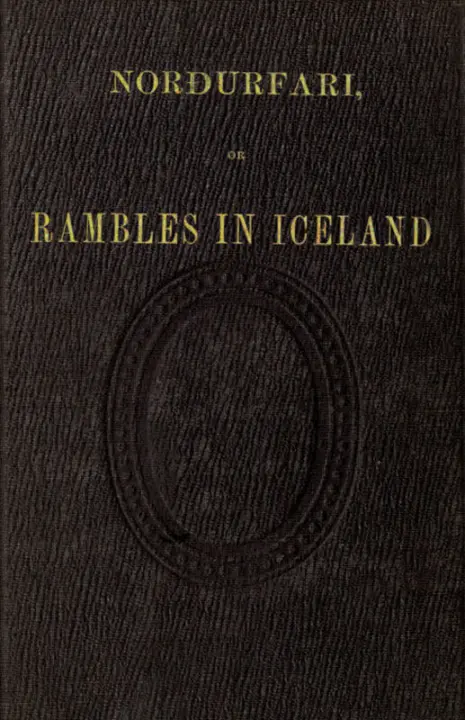
"Norðurfari; or, Rambles in Iceland" by Pliny Miles is a travel narrative written in the mid-19th century. The book chronicles the author's adventures as he journeys to Iceland, exploring its natural beauty, culture, and history, and provides a remarkable commentary on the people and landscapes he encounters. With a mix of personal reflection and historical insight, the narrative aims to depict the real Iceland, dispelling myths and misconceptions about the island. At the start of the narrative, Miles describes his voyage to Iceland aboard the schooner "Sölöven," detailing stops in Copenhagen and Elsinore before finally arriving in Reykjavik. He vividly recounts the ship's experiences, including challenges of the journey, interactions with fellow passengers, and a celebratory Fourth of July marked by cannon fire and spirited oration. The opening focuses on the excitement of travel, the camaraderie among passengers, and the author's first impressions of Iceland's unique geography and culture, setting the stage for deeper explorations to come.
Introduction adapted from the source catalogue; source summaries may be automatically generated.
Free to read · English · 86,267 words · No account needed
MAKE TIME FOR A GOOD BOOK
On by default. Untick to stop anonymous reading totals. Each page counts after 10 seconds in view. How this works.
Anonymous counting is on unless you have switched it off.
Hermod pursued his journey till he arrived at the gates of Hel, and found them barred. He alighted, tightened the girths, mounted, put spurs to the horse, and at one leap sprang over the gate without touching. He found Baldur occupying the most distinguished seat in the hall; and after spending a night with him, asked Hela (death) to let Baldur return to Asgard. She said she would consent to it, provided Baldur was so beloved that every thing would weep for him. Hermod then returned, bearing a gold ring as a present to Odin from Baldur, and some valuable gifts from Nanna to Friga. Every thing wept for Baldur, except one old woman, who refused. This was found to be Loki in disguise, who never ceased to work evil among the Æsir. To escape the wrath of the gods, Loki changed himself into a salmon, was pursued down a river, and in leaping a net was caught by Thor in his hands. The gods then confined him in a cavern, with a serpent directly over him; and as the venom drops on him, he writhes and howls, and this makes that shaking of the earth that men call earthquakes. Loki’s two children were taken, and one changed to a wolf; and he immediately devoured the other.
The end of all material things is known as Ragnarök,—the twilight of the gods, and conflagration of the universe. The world becomes corrupt; a wolf devours the sun, and another wolf the moon; trees fall, and mountains tumble to pieces. The wolf Fenrir opens his enormous mouth, the lower jaw being on the earth, and the upper reaching to heaven; the Midgard serpent gains the land, and heaven is cleft in twain. The sons of Muspell ride through the breach, led by Surtur, in the midst of flaming fire. Bifröst breaks in pieces, and a vast assemblage gathers on the battle-field of Vigrid, which is a hundred miles long. Heimdall stands up, and, with all his might, blows a blast on the Gjallar-horn, which arouses all the gods. Odin asks advice of Mimir; the Æsir, and all the heroes of Valhalla, led by the All-father, go forth to the field of battle. The ash, Yggdrasill, begins to shake; a dissolution of all things is at hand. Odin places himself against the wolf Fenrir, and Thor encounters the Midgard serpent. Frey meets Surtur, and they exchange terrible blows; but Frey falls, as he has been without his trusty sword ever since he fell in love with Gerda. The dog, Garm, that had been chained in a cave, breaks loose, and attacks Tyr, and they kill each other. Thor slays the Midgard serpent, thereby gaining great renown; but, retiring nine paces, he falls dead on the spot, being suffocated with the venom that the dying serpent throws over him. Odin is swallowed by the wolf; and Vidar, coming up, with his foot on the lower jaw and his hand on the upper, he tears the animal’s jaws apart, and rends him till he dies. Loki and Heimdall fight, and kill each other. This most terrible battle being over, Surtur darts fire and flame over the world, and the whole universe is consumed by it. A heaven, and many abodes, both good and bad, are supposed to exist after this; for the spirits of all who have lived are immortal. A new earth, most lovely and verdant, shall rise out of the sea, and grain shall grow unsown. During the conflagration, a woman named Lif (Life) and a man named Lifthrasir, lie concealed in Hodmimir’s forest. They feed on morning dew, and their descendants soon cover the earth again. Vidar and Vali survive the conflagration, and dwell on the plain of Ida, where Asgard formerly stood. Thither went the sons of Thor, Modi and Magni, carrying with them their father’s mallet, Mjölnir. Baldur and Hödur repaired thither from the abode of death (Hel) and there they hold converse on their past perils and adventures. A famous ship, called Skidbladnir, is spoken of, that is so large that it would hold all the Æsir, and their weapons. It was built by the dwarfs, and presented to Frey; and, being constructed of many pieces and with great skill, when not wanted Frey could fold it up like a piece of cloth and put it in his pocket. In the language of the Edda,
Your reading position is saved on this browser. Take it to another device with a library code. Reading pages adapt to text, rather than matching a printed edition.
BEHIND THE BOOK
This eBook is for the use of anyone anywhere in the United States and most other parts of the world at no cost and with almost no restrictions whatsoever. You may copy it, give it away or re-use it under the terms of the Project Gutenberg License included with this eBook or online at www.gutenberg.org. If you are not located in the United States, you will have to check the laws of the country where you are located before using this eBook. Read the source licence.
The original source file, including credits and licence, is retained by this library. Request an original-format copy at no charge. Please include the book title and Project Gutenberg identifier #61992.
KEEP YOUR CURIOSITY GOING
Wilfrid Scawen Blunt
Wilfrid Scawen Blunt

E. W. (Edgar Watson) Howe
Francis Greenleaf Allinson & Anne C. E. (Anne Crosby Emery) Allinson
Cyrenus Cole

John Martineau