THE CLASSIC COLLECTION✦My diaries, being a personal narrative of events 1888-1914, Part 2 (1900-1914)CLASSIC FREE BOOKS
My diaries, being a personal narrative of events 1888-1914, Part 2 (1900-1914)
Wilfrid Scawen Blunt
THE CLASSIC COLLECTION · 1854
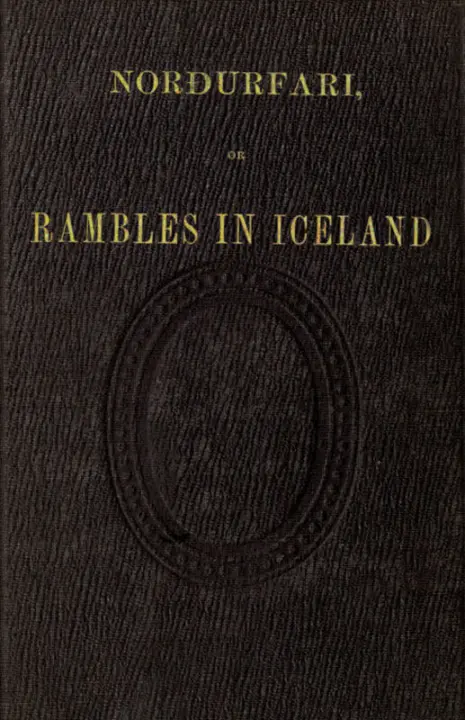
"Norðurfari; or, Rambles in Iceland" by Pliny Miles is a travel narrative written in the mid-19th century. The book chronicles the author's adventures as he journeys to Iceland, exploring its natural beauty, culture, and history, and provides a remarkable commentary on the people and landscapes he encounters. With a mix of personal reflection and historical insight, the narrative aims to depict the real Iceland, dispelling myths and misconceptions about the island. At the start of the narrative, Miles describes his voyage to Iceland aboard the schooner "Sölöven," detailing stops in Copenhagen and Elsinore before finally arriving in Reykjavik. He vividly recounts the ship's experiences, including challenges of the journey, interactions with fellow passengers, and a celebratory Fourth of July marked by cannon fire and spirited oration. The opening focuses on the excitement of travel, the camaraderie among passengers, and the author's first impressions of Iceland's unique geography and culture, setting the stage for deeper explorations to come.
Introduction adapted from the source catalogue; source summaries may be automatically generated.
Free to read · English · 86,267 words · No account needed
MAKE TIME FOR A GOOD BOOK
On by default. Untick to stop anonymous reading totals. Each page counts after 10 seconds in view. How this works.
Anonymous counting is on unless you have switched it off.
Thor and Loki had a famous journey to Jötunheim, the land of the giants. Thor, as usual, rode in his car drawn by two goats; and when night came they put up at the cottage of a peasant, both the travelers assuming the form and costume of men. Thor killed his goats, and after flaying them, put them in a kettle to cook for their supper, and asked the peasant and his family to partake with him. The peasant’s son was named Thjálfi, and the daughter Röskva. Thor told them to throw all the bones into the goats’ skins, which were spread out on the floor; but Thjálfi broke one of the bones to get at the marrow. The next morning, Thor raised his mallet, consecrated the goats’ skins, and they instantly assumed their usual form, alive and well and ready to pursue the journey; but one of the goats was found to be lame in one leg. To appease the anger of Thor, the peasant offered any thing he possessed as a compensation. Thor chose both his children; and ever after Thjálfi the Nimble and Röskva the Quick were his attendants. They then continued their journey, passed out of Mannheim, crossed a broad ocean, and entered a deep forest. They saw a large hall, and, entering it, went to sleep in a deep room at one end. During the night, there was an earthquake and a terrible roaring, which shook the whole edifice. In the morning they found a giant of enormous size, sleeping and snoring near them; and the vast edifice was his glove which he had thrown off, and they had slept in the thumb of it. The giant’s name was Skrymir, and when he awoke he knew Thor at once and called him by name. He offered to carry the wallet of provisions and relieve Thjálfi, and after breakfast they journeyed together. Thor, wishing to get rid of his new fellow-traveler, when night arrived, hurled his mallet at him after he was asleep; and it was buried deep in his skull. Waking up, the giant asked if a leaf had fallen on his head. He slept again, and Thor made two more efforts—once his mallet going deep into his cheek; and again, burying it in his head up to the handle. The giant merely put up his hand and asked if a bit of moss or an acorn had fallen on him. He soon, however, left Thor, and pursued his journey to the north. The travelers arrived at the city of Utgard, situated in a vast plain, and immediately paid their respects to Utgard-Loki, the king. His majesty looked at the Thunderer with great contempt, called him a stripling, and said if he was not mistaken it must be Aku-Thor. The king challenged Thor and his companions to try various feats of skill and strength with his subjects, the giants of Jötunheim. Loki sat down to a trough filled with meat, and to eat a race with a giant; but he got vanquished, his competitor eating the most, and swallowing bones and all. Thor then produced Thjálfi to run a race, and he was completely distanced. Thor himself then attempted a drinking bout with the giants; but at three long pulls he could not empty a single horn. He then tried his hand at lifting; but though the giants only furnished a common gray cat to be lifted, Thor could not raise him from the ground, only lifting one foot a short distance. Then he tried wrestling; but though his competitor was a wrinkled old woman, he could not throw her, but came near being thrown himself. Thor confessed that he was vanquished, and turned his steps away, being accompanied without the walls of the city by his majesty Utgard-Loki, in person. Then the king tells Thor that, if he has his way, the god shall never come into his place again, for he fears him and only got the better of him that time by stratagem. He said it was he that met him in the forest, and he had a mountain before him when he slept; and if Thor would see it on his return, he would observe two deep vallies where he buried his mallet, while he thought he struck Utgard himself. The two immense glens that could be seen in the mountain were but the dints of Thor’s mallet. In the contest of eating, the competitor of Loki was Fire itself, that consumed all before it. Thjálfi ran a race with Hugi—Thought—which flies faster than the fleetest being that is created. The old woman who wrestled with Thor was Old Age, which could in time lay every thing low. What appeared to be a cat, was the great Midgard serpent, that encompassed the whole earth. The horn he drank from extended to the sea itself; and in this he performed a most prodigious feat, for he settled it greatly, as could be seen, and which was called the ebb. Thor, on hearing how he had been vanquished by stratagem, raised his mallet to strike down the giant; but on turning, he had disappeared, and, instead of a city near by, he saw nothing but a vast plain. This was the end of Thor’s adventures in Jötunheim. Then to reëstablish his reputation, Thor went out to fish for the great Midgard serpent. He took no companions, not even his car or goats. He traveled in the guise of a young man, and put up at the house of a giant named Hymir, who was going fishing; and he asked Thor to provide some bait. He went into a herd of the giant’s oxen, and seizing the largest bull, wrung off his head; and returning with it, the two put off to sea together. They rowed much further than the giant had ever gone before; and Thor, baiting a hook and line of great strength with the head of the bull, cast it out. The Midgard serpent immediately swallowed it, and Thor drew upon him. The scene was now most dreadful. Thor pulled so hard that his feet broke through the boat, and went down to the bottom of the sea. Thor darted looks of ire at the serpent, and he in turn spouted floods of venom upon him. The giant turned pale with fright, took out his knife and cut the line, when the serpent sunk under water. Thor then grasped his mallet and hurled it at the monster; but he was low down in the sea, and escaped, though some say his head was struck off at the bottom of the ocean. Thor then, with his fist, hit the giant a blow under the ear that knocked him out of sight; and then, with rapid strides, he waded ashore.
Your reading position is saved on this browser. Take it to another device with a library code. Reading pages adapt to text, rather than matching a printed edition.
BEHIND THE BOOK
This eBook is for the use of anyone anywhere in the United States and most other parts of the world at no cost and with almost no restrictions whatsoever. You may copy it, give it away or re-use it under the terms of the Project Gutenberg License included with this eBook or online at www.gutenberg.org. If you are not located in the United States, you will have to check the laws of the country where you are located before using this eBook. Read the source licence.
The original source file, including credits and licence, is retained by this library. Request an original-format copy at no charge. Please include the book title and Project Gutenberg identifier #61992.
KEEP YOUR CURIOSITY GOING
Wilfrid Scawen Blunt
Wilfrid Scawen Blunt

E. W. (Edgar Watson) Howe
Francis Greenleaf Allinson & Anne C. E. (Anne Crosby Emery) Allinson
Cyrenus Cole

John Martineau