THE CLASSIC COLLECTION✦My diaries, being a personal narrative of events 1888-1914, Part 2 (1900-1914)CLASSIC FREE BOOKS
My diaries, being a personal narrative of events 1888-1914, Part 2 (1900-1914)
Wilfrid Scawen Blunt
THE CLASSIC COLLECTION · 1854
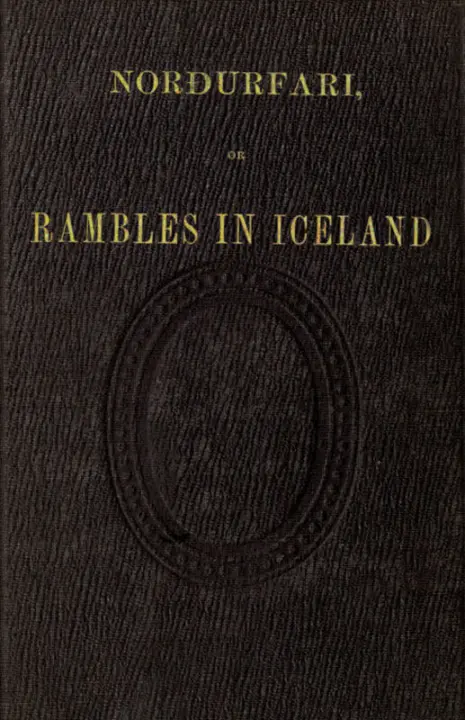
"Norðurfari; or, Rambles in Iceland" by Pliny Miles is a travel narrative written in the mid-19th century. The book chronicles the author's adventures as he journeys to Iceland, exploring its natural beauty, culture, and history, and provides a remarkable commentary on the people and landscapes he encounters. With a mix of personal reflection and historical insight, the narrative aims to depict the real Iceland, dispelling myths and misconceptions about the island. At the start of the narrative, Miles describes his voyage to Iceland aboard the schooner "Sölöven," detailing stops in Copenhagen and Elsinore before finally arriving in Reykjavik. He vividly recounts the ship's experiences, including challenges of the journey, interactions with fellow passengers, and a celebratory Fourth of July marked by cannon fire and spirited oration. The opening focuses on the excitement of travel, the camaraderie among passengers, and the author's first impressions of Iceland's unique geography and culture, setting the stage for deeper explorations to come.
Introduction adapted from the source catalogue; source summaries may be automatically generated.
Free to read · English · 86,267 words · No account needed
MAKE TIME FOR A GOOD BOOK
On by default. Untick to stop anonymous reading totals. Each page counts after 10 seconds in view. How this works.
Anonymous counting is on unless you have switched it off.
Surtur, as interpreted to me by an intelligent Icelander, corresponds pretty nearly to the evil one, the arch-fiend, and great enemy of mankind. The gods, or Æsir, protect and defend man; Surtur is the enemy of them all. The bituminous mineral or mineralized wood found in Iceland, is very inflammable, and known as Surturbrand, or the devil’s fire. The cave of Surtshellir, mentioned on page 109, is an illustration of the character of Surtur; and from this cave, many of the Icelanders to this day believe that Surtur will one day emerge, to destroy the world.
Footnote 8:
The names of these rivers are, Svaul, Gunnþrá, Fiörm, Fimbul, Þulr, Slið, Hrið, Sylgr, Ylgr, Við, Leiptur, and Giöll.
Footnote 9:
These, after the earth was made, became the stars that filled the
heavens.
Footnote 10:
The ingenuity of the heathen could not imagine a world created without
the power of a deity.
Footnote 11:
Oðinn.
Footnote 12:
This seems like a heathen version of the history of Noah and the great
flood.
Footnote 13:
Austri, Vestri, Norðri, and Suðri.
Footnote 14:
Miðgarð.
Footnote 15:
Yo-tun-hime, or giant’s home.
Footnote 16:
Alfaðir.
Footnote 17:
The Grimnis-mál.
Footnote 18:
A very rare quality for a female, to keep secrets!
Footnote 19:
Þor, supposed to be a contraction of Þonar; hence his title, the
Thunderer.
Footnote 20:
It will be observed that Odin and Thor, in their various attributes, are represented much like Saturn and Jupiter. Thor’s youthful attendants are like the Hebe and Ganymede of Jove.
Footnote 21:
He is known as Baldur the Good; and corresponds very nearly to the Apollo of the ancient Greeks.
Footnote 22:
Balldursbrá; and so known in Sweden to this day.
Footnote 23:
In this he certainly excels the lawyers and judges of the present day.
Footnote 24:
There is no account of any of the Scandinavian deities using the razor; not even the weakest and simplest of them; that folly being specially reserved for men. Bragi in preserving the manly appendage, the beard, showed himself in this, as in other things, one of the foremost of his race, and a fit associate for superior intelligences.
Footnote 25:
A character much like Ceres.
Footnote 26:
In this myth we see a quiet satire on those, who to gratify some darling passion or desire, sacrifice their most valuable possessions.
Footnote 27:
A sort of female Æsculapius.
Footnote 28:
Their names are Geirölul, Göll, Herfjötur, Hlökk, Hrist, Mist, Radgrid, Randgrid, Reginlief, Skeggold, Skögul, and Þrudur.
Your reading position is saved on this browser. Take it to another device with a library code. Reading pages adapt to text, rather than matching a printed edition.
BEHIND THE BOOK
This eBook is for the use of anyone anywhere in the United States and most other parts of the world at no cost and with almost no restrictions whatsoever. You may copy it, give it away or re-use it under the terms of the Project Gutenberg License included with this eBook or online at www.gutenberg.org. If you are not located in the United States, you will have to check the laws of the country where you are located before using this eBook. Read the source licence.
The original source file, including credits and licence, is retained by this library. Request an original-format copy at no charge. Please include the book title and Project Gutenberg identifier #61992.
KEEP YOUR CURIOSITY GOING
Wilfrid Scawen Blunt
Wilfrid Scawen Blunt

E. W. (Edgar Watson) Howe
Francis Greenleaf Allinson & Anne C. E. (Anne Crosby Emery) Allinson
Cyrenus Cole

John Martineau