THE CLASSIC COLLECTION✦My diaries, being a personal narrative of events 1888-1914, Part 2 (1900-1914)CLASSIC FREE BOOKS
My diaries, being a personal narrative of events 1888-1914, Part 2 (1900-1914)
Wilfrid Scawen Blunt
THE CLASSIC COLLECTION · 1854
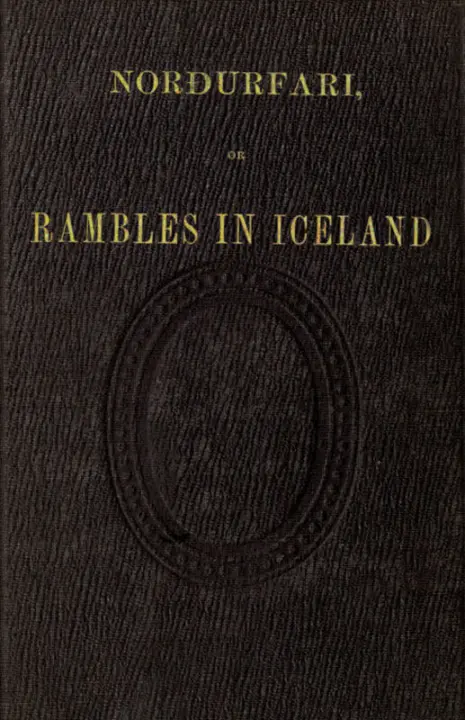
"Norðurfari; or, Rambles in Iceland" by Pliny Miles is a travel narrative written in the mid-19th century. The book chronicles the author's adventures as he journeys to Iceland, exploring its natural beauty, culture, and history, and provides a remarkable commentary on the people and landscapes he encounters. With a mix of personal reflection and historical insight, the narrative aims to depict the real Iceland, dispelling myths and misconceptions about the island. At the start of the narrative, Miles describes his voyage to Iceland aboard the schooner "Sölöven," detailing stops in Copenhagen and Elsinore before finally arriving in Reykjavik. He vividly recounts the ship's experiences, including challenges of the journey, interactions with fellow passengers, and a celebratory Fourth of July marked by cannon fire and spirited oration. The opening focuses on the excitement of travel, the camaraderie among passengers, and the author's first impressions of Iceland's unique geography and culture, setting the stage for deeper explorations to come.
Introduction adapted from the source catalogue; source summaries may be automatically generated.
Free to read · English · 86,267 words · No account needed
MAKE TIME FOR A GOOD BOOK
On by default. Untick to stop anonymous reading totals. Each page counts after 10 seconds in view. How this works.
Anonymous counting is on unless you have switched it off.
The Reykir springs are nearly a hundred in number, and cover some fifty acres—a tract nearly as large as the Geysers occupy. These springs also comprise every variety of hot, warm, spouting, and mud springs. The springs here that spout, are more regular than the Geysers, but do not perform on so extensive a scale. They don’t bore with so big an auger; haven’t the caliber, nor the capital to do business on. They are very beautiful; but, to be appreciated fully, should be seen before going to the Geysers. The spouting ones are intermittent, giving their eruptions at regular periods. I found, by consulting my watch, that the largest one commenced an eruption once in three hours and sixteen minutes. Each eruption continues about half an hour. This spring, or Geyser, is like a well, about five feet in diameter. It has been nearly filled up, by persons throwing large stones into it. When I arrived, it was not in an eruption, and down among the stones I could see the hot water, boiling violently. It was on the top of a rise or knoll of ground, and I could see that the water had made an aperture, and escaped through the petrified wall of the well, and appeared on the surface of the ground, a little way down the knoll, making a fair-sized brook. No water ran over the top of the well, only when in action.
At the time of an eruption, it rushed suddenly, without any warning, up through the stones, separating into a great many streams. There it continued playing beautifully, much like an artificial fountain, for nearly half an hour. The noise could be heard for half a mile, or more. The first time it played, after my arrival, was near midnight, after I had got to sleep. Hearing the roar and rush of water, I was instantly awakened, and ran to the church window, and looked out. There it was, throwing up its broad, white, foamy jets, about a quarter of a mile from me. There being no darkness here, at this season, sights and shows appear to about as good advantage in the Iceland twilight as in the noonday sun. I watched it from my window, till it settled down, and gradually sunk into the earth. I saw it in eruption twice the next morning, before I left. Its height was scarcely forty feet, but it would be a grand addition to the artificial fountains and warm baths in one of our cities. Wonder if the Icelanders would sell it? Guess not; it is one of the “lions” of the country; and, if their curiosities were gone, there would be nothing to attract the foreigners here. If a stretch of the imagination could make a spring movable property, one would hardly think of carrying off Mount Hekla or Skaptar Jokull. This Geyser is near the foot of a range of hills, the same as the Geysers in the north. The brook of hot water from this, ran near half a mile before it emptied into a cold stream that flowed past. One of the prettiest fountain-springs in the world is near the bank of this cold brook, at the foot of a very steep ridge, near half a mile from the larger Geyser. The basin itself was ten or fifteen feet across, and shaped some like the half of an oyster, or rather a clam-shell. The side next the hill was far the deepest, sinking into a kind of well three or four feet in diameter, where the water came out. The direction of the well was slanting or diagonal, the opening coming outward from the hill. The brow of the hill hung partly over the spring, so that in an eruption the water could not rise perpendicularly, but was forced out at an angle of thirty or forty degrees with the ground. It did not throw the water more than ten or twelve feet high, and fifteen or twenty feet outwardly. This spring makes up for its lack of size and grandeur, in the frequency of its eruptions, and the beauty of the incrustations and petrifactions in and around it. All the bottom of the spring is a mass of petrifaction, and nearly as white as the purest marble. After an eruption, the water would gradually recede from the basin, and sink down into the earth, nearly all disappearing, so that the water could just be seen down the aperture of the spring. Then it would at once commence rising gradually; and in three or four minutes it would get to spouting, and continue going till the basin was full, and run over considerably. After three or four minutes it would gradually stop, and sink back again. A whole round of performance, rising up, blowing off, and sinking down again, occupied about fifteen minutes.
Your reading position is saved on this browser. Take it to another device with a library code. Reading pages adapt to text, rather than matching a printed edition.
BEHIND THE BOOK
This eBook is for the use of anyone anywhere in the United States and most other parts of the world at no cost and with almost no restrictions whatsoever. You may copy it, give it away or re-use it under the terms of the Project Gutenberg License included with this eBook or online at www.gutenberg.org. If you are not located in the United States, you will have to check the laws of the country where you are located before using this eBook. Read the source licence.
The original source file, including credits and licence, is retained by this library. Request an original-format copy at no charge. Please include the book title and Project Gutenberg identifier #61992.
KEEP YOUR CURIOSITY GOING
Wilfrid Scawen Blunt
Wilfrid Scawen Blunt

E. W. (Edgar Watson) Howe
Francis Greenleaf Allinson & Anne C. E. (Anne Crosby Emery) Allinson
Cyrenus Cole

John Martineau