THE CLASSIC COLLECTION✦An outlaw’s diary: the CommuneCLASSIC FREE BOOKS
An outlaw’s diary: the Commune
Cécile Tormay
THE CLASSIC COLLECTION · 1908
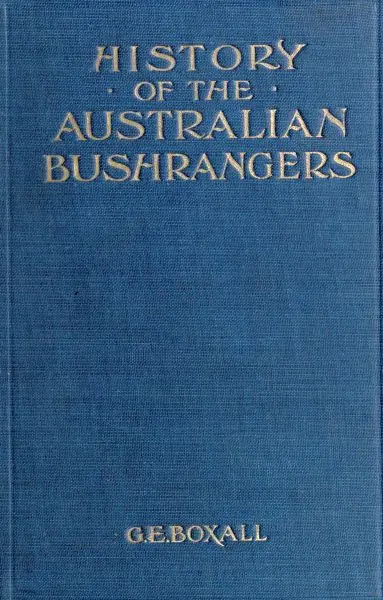
"History of the Australian Bushrangers" by George Boxall is a historical account written in the late 19th century. This work delves into the complex era of bushranging in Australia, examining the social and legal conditions that fostered the emergence of these outlaw groups. The narrative is rooted in the historical treatment of convicts and explores the motivations behind their descent into bushranging, shedding light on a significant period of Australian history. The opening of the text provides a foundational understanding of bushranging, highlighting its origins connected to the convict system in Australia. Boxall discusses how the harsh treatment and oppressive laws against convicts often pushed them to revolt against the system, leading many to take to the bush to escape their dire circumstances. He emphasizes that early bushrangers were often driven by desperation rather than inherent criminality and illustrates the grim realities they faced, including severe punitive measures like flogging. Boxall aims to present a comprehensive picture of bushranging and its implications for Australian society, suggesting that the bushrangers, despite their notorious actions, were products of their brutal environment.
Introduction adapted from the source catalogue; source summaries may be automatically generated.
Free to read · English · 150,077 words · No account needed
MAKE TIME FOR A GOOD BOOK
On by default. Untick to stop anonymous reading totals. Each page counts after 10 seconds in view. How this works.
Anonymous counting is on unless you have switched it off.
Looking back from the present time it appears to me that the Colonial Office was guilty of a serious tactical blunder in appointing Mr. Charles Joseph Latrobe, as the first Governor of Victoria. He had been appointed Resident Magistrate, or Superintendent, of the Port Phillip District in 1839; and, during the agitation for the separation of that district from the huge colony of which it was a part, Mr. Latrobe, very naturally perhaps, did all that he could to prevent the inhabitants from gaining their end. As a consequence, he was perhaps the best hated man that has ever lived in Australia. He was usually called "the Governor's poodle," and was denounced in no measured terms by the advocates of separation. When that was carried, and Mr. Latrobe became Lieutenant Governor, his harsh treatment of the diggers nearly drove them into rebellion. This is not the place to give the history of the Ballarat riot, but some reference to it is necessary. A most exorbitant licence fee was imposed on all residents on proclaimed goldfields, and this tax was collected in a most arbitrary and brutal manner. There were no gaols nor lock-ups on the diggings at the time, and men arrested for all sorts of offences--murder, bushranging, stealing, or the non-payment of licence fees--were simply fastened with handcuffs to a bullock chain attached to a tree stump by a huge staple. Later some boxes, made of corrugated iron, were put up as cells and these were known as "the Dutch ovens," or "the sardine boxes," and prisoners confined in them on hot summer nights suffered tortures, and begged to be put "on the chain" as a relief. Mr. Latrobe, therefore, soon came to be as cordially hated by the new comers as he had been by the older inhabitants of the district. But whatever may be said as to the harshness of his treatment of the gold diggers, the efforts he made to check the lawlessness rampant in the colony cannot be too highly commended. He and the Legislative Council organised a fine body of police in a very short time. The horse police were as well-disciplined and mounted as any similar body in any part of the world, but allowing for their efficiency, it would have been impossible for them to repress lawlessness so rapidly and completely as they did, had they not been assisted by the attitude of the general public. I may be wrong perhaps, but it has always appeared to me that the antagonism between the free and the convict elements in the population of which I have already spoken was continued long after the abolition of the convict system, and even passed on to those who landed in the country during the rush to the diggings. There was a general tendency at the time to credit all sorts of misdeeds to the convicts. No doubt, among the enormous crowds which landed in Victoria in the early years of the rush to the diggings, there was a fair admixture of rough and reckless characters who were not convicts, but it was the custom to assume that all crimes were committed by the "old hands," and that any man arrested for any criminal offence had been "sent out." Thus, when Mr. Lachlan M'Lachlan was appointed police magistrate of Bendigo, he merely expressed openly the opinion held by other magistrates, and the public generally, when he declared that nearly all thefts were perpetrated by "old hands." He asserted that he could distinguish a convict from a free man at a glance. He would order the police to make the prisoner walk down the court, and would exclaim: "Turn him round again, sergeant. Ah! I thought so! I can see the marks of the irons on his legs."[37] By which he meant that the man had acquired a sort of limp through wearing irons, and that he could detect it. All such men were sent to gaol for six or twelve months, not so much for the crime or offence with which they stood charged, as because they were ex-convicts. And generally the public endorsed this apparent injustice. "It's a pity we ain't got more magistrates like Bendigo Mac," was an expression frequently heard in all parts of the colony. It is not impossible that the fashion of crediting all crimes and offences to convicts, however unjust it may have been, tended to prevent others from committing crimes. Whether this was so or not, it is certain that the diggers, rough and careless as the majority of them were, steadily set their faces, as a class, against crime, and never hesitated, even during the height of their dispute with the authorities, to hand over to the police any person detected in stealing. Probably they were forced into this attitude in self-defence. The diggings were merely huge camps, everybody living in tents or "houses" made of wooden rafters and uprights, covered with calico or canvas. Even the big hotels and theatres were calico structures. It was so easy for an evil-disposed person to rip open a tent and thrust his hand under the pillow or into any other place where he thought gold might be concealed. But such thefts, although numerous, constituted only a minority of the crimes committed on the goldfields. All round were holes twenty or thirty feet deep, and the paths from one part of the field to another wound in and out between these holes, so that it was dangerous for a stranger in the locality to travel about after dark. In such a place it was so easy to stab a man and throw his body down a hole that the very facilities offered operated as a temptation to murder. Scarcely a day passed without a body being found murdered and rifled, and thus a peculiar sort of morality was developed on the diggings, and the diggers, while resisting the police, jeering at them and showing their hatred of them in every possible way, still assisted them in capturing thieves and other criminals. It was the custom to call public meetings for political and other purposes, by sending men to all the various camps each carrying a tin dish. These heralds would beat their tin dishes and yell, "Roll up! roll up!" Frequently a "roll up" was called for the purpose of organising a party to hunt down thieves or other evil-doers, and very soon the "roll up" carried terror through the ranks of tent thieves and other robbers. Sometimes the delinquent when caught was cuffed and beaten and ordered off the diggings on pain of death, but, as a rule, he was marched to the police camp, popularly known as "The Camp," and handed over for trial. It was perhaps because of this attitude of the diggers, that "Lynch law" did not become an institution in Victoria, as it had in California. On more than one occasion, it was proposed that thieves, robbers, and murderers should be summarily dealt with by their captors, but such resolutions were not endorsed at the "rolls up"; although, on more than one occasion, it was said that if the Government could not protect the diggers from bushrangers, the diggers would have to protect themselves. Some of the old names, now rapidly disappearing, record the character which the neighbourhood once bore. Thus "Murderer's Flat," the old name of a portion of the Mount Alexander Goldfield, is almost forgotten. The flat is now a portion of the pretty little mining and agricultural town of Castlemaine. It was the custom here in the "roaring fifties," for the diggers to fire off their guns and pistols every night after sundown, and ostentatiously reload them, as a caution that any person seen prowling round the tents during the night would be shot without further notice. In many of the outlying gullies on the Bendigo and Ballarat Goldfields the same ceremony was performed nightly. Beyond the limits of the goldfields the roads were infested by footpads and bushrangers, who hated the diggers for their antagonism to their class. To these the digger was fair game. It was popularly supposed that these bushrangers were all convicts from "Van Diemen's Land," hence they were known as "Van Demonians," "Derwenters" from the River Derwent, and "Tother siders." The newspapers were full of references to their doings. The Geelong Advertiser of June 2nd, 1851, warned the public that "large numbers of men--half bushranger, half gold-seeker--are travelling along the roads, especially the Sydney road, robbing all who are unprotected." These were said to be Van Demonians who had landed in Geelong or Melbourne, and who were making their way to the goldfields of New South Wales. In the same month the Melbourne Herald published several articles calling the attention of the authorities to the large "influx of Van Diemen's Land expirees who are thronging into Port Phillip." These "villains," it was said, were travelling along all the roads which led to the diggings on the Sydney side, and lived by plundering honest travellers. On June 23rd the mail coach was bailed up at Bruce's Creek, between Portland and Geelong. The coach, with three passengers on board, was going down the hill to the crossing-place, when two men stepped from behind gum trees, presented their pistols, and cried "Bail up." The driver, William Freere, instead of complying, began to flog his horses, but before they could respond their heads were seized by one of the bushrangers, while the other put his pistol to Freere's head, and threatened to blow his brains out. The coach was taken some distance off the road, and its occupants were tied to trees. The robbers went very leisurely through the letters, and when all that was of value had been abstracted one of the bushrangers took a saddle and bridle belonging to one of the passengers (Mr. Thomas Gibson) and set it aside with the remark, "Ah, this is just what I wanted." This bushranger was dressed "in a black suit of fashionable cut, and wore black kid gloves." He was afterwards identified as Owen Suffolk, while his companion was Christopher Farrell. Suffolk took one of the coach-horses, put the saddle and bridle on, and mounted. Farrell jumped on the other horse barebacked. The tied men begged hard to be let loose, offering to swear that they would not give information to the police, or move from the spot until their captors were away, but their supplications were only laughed at. The road was at that time but little frequented, and the next mail, which might possibly be the first vehicle to pass, would not come for a week. Moreover, they were out of sight of the road. The struggle to get free was therefore a struggle for life, and it was a severe one. Mr. Gibson was the first to get one hand loose. After this the rest was comparatively easy. In less than an hour they were all free, and they walked straight to the township at Bruce's Creek to tell the police. The robbers were caught in Geelong a day or two later. Suffolk was strolling along the beach near the wharf, and Farrell was found in a boarding-house not far away. They were sentenced to ten years' penal servitude, the first three in irons.
Your reading position is saved on this browser. Take it to another device with a library code. Reading pages adapt to text, rather than matching a printed edition.
BEHIND THE BOOK
This eBook is for the use of anyone anywhere in the United States and most other parts of the world at no cost and with almost no restrictions whatsoever. You may copy it, give it away or re-use it under the terms of the Project Gutenberg License included with this eBook or online at www.gutenberg.org. If you are not located in the United States, you will have to check the laws of the country where you are located before using this eBook. Read the source licence.
The original source file, including credits and licence, is retained by this library. Request an original-format copy at no charge. Please include the book title and Project Gutenberg identifier #58799.
KEEP YOUR CURIOSITY GOING
Cécile Tormay

Moritz Busch
John L. Ransom
Frances Wright
Cécile Tormay

Mabel Potter Daggett