THE CLASSIC COLLECTION✦An outlaw’s diary: the CommuneCLASSIC FREE BOOKS
An outlaw’s diary: the Commune
Cécile Tormay
THE CLASSIC COLLECTION · 1908
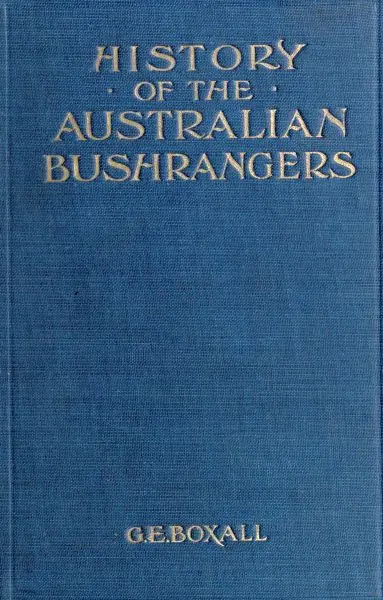
"History of the Australian Bushrangers" by George Boxall is a historical account written in the late 19th century. This work delves into the complex era of bushranging in Australia, examining the social and legal conditions that fostered the emergence of these outlaw groups. The narrative is rooted in the historical treatment of convicts and explores the motivations behind their descent into bushranging, shedding light on a significant period of Australian history. The opening of the text provides a foundational understanding of bushranging, highlighting its origins connected to the convict system in Australia. Boxall discusses how the harsh treatment and oppressive laws against convicts often pushed them to revolt against the system, leading many to take to the bush to escape their dire circumstances. He emphasizes that early bushrangers were often driven by desperation rather than inherent criminality and illustrates the grim realities they faced, including severe punitive measures like flogging. Boxall aims to present a comprehensive picture of bushranging and its implications for Australian society, suggesting that the bushrangers, despite their notorious actions, were products of their brutal environment.
Introduction adapted from the source catalogue; source summaries may be automatically generated.
Free to read · English · 150,077 words · No account needed
MAKE TIME FOR A GOOD BOOK
On by default. Untick to stop anonymous reading totals. Each page counts after 10 seconds in view. How this works.
Anonymous counting is on unless you have switched it off.
On the 15th April, 1841, James Broomfield and Jonas Hopkins bailed up and robbed Henry Atkins, Bonney, taking seven five pound notes from him. In company with James McCallum the same two bushrangers went to the house of Thomas Bates, at Norfolk Plains, about midnight, and woke him up, demanding something to drink. Bates told them that there was plenty of water in the cask. This, however, did not satisfy them, and they broke into the kitchen. They took some flour and grain from the cask and made a damper. While this was baking they took a watch, some money, and a quantity of clothes out of the bedroom. When they had had a meal, they left with their plunder, but were followed and captured. They were convicted of robbery with firearms and were sentenced to death; their sentences were, however, commuted to imprisonment for life.
John Gunn, George Griffiths, William Lambeth, Samuel Harrison, and Thomas Hurn stuck up and robbed Daniel Downie on the 5th September, 1842, of clothing and money. They were followed by Constables Patrick Flynn and George Marsden, and a volunteer named Joseph Masson. The bushrangers were armed with a fowling-piece and a musket. They went next morning to the hut of James Thompson, and told him not to be frightened as they did not intend to hurt him. They took his money and were walking away, when the constables came up and called on them to stand. They surrendered and were taken to gaol. When they were convicted, sentence of death was recorded against each of them, but they were not hung.
On May 4th, 1843, Mr. Thomas Massey, of Ellerslie, South Esk River, was sitting on his verandah when John Conway came up, presented a gun at his head, and cried "Stand." "No, thank you," replied Mr. Massey, "I'm very comfortable sitting down. What do you want?" Conway then asked where the man was. Mr. Massey replied, "Out in the kitchen." A man named Riley Jeffs was standing a short distance away with Henry Blunt and a man named Pockett, both of whom had their hands tied behind them. Jeffs left the two tied men and went round to the kitchen, while Conway demanded money and firearms. Jeffs returned with the manservant and tied his hands. The robbers then took two double-barrelled guns, a single-barrelled fowling-piece, with a shot belt and powder flask, some tea, sugar, flour, and a gallon of rum. After they had gone Constable Thomas Connell, of Campbelltown, with Joseph Masson, Matthew Perry, Edward Quin, Aaron Dunn, and Stephen Wright followed the bushrangers to Blunt's hut, when two men ran away. One of them was lame and was soon caught. It was Jeffs, who said he had accidentally wounded himself the day before, after he left Mr. Massey's. The other man, Conway, was captured after a brisk run. At their trial, Mary Bryan, servant at Mr. Massey's, said she recognised Conway by his big nose. "How many inches? Did you measure it?" asked Jeffs, but the question was ruled out of order by Judge Montagu. The prisoners were then tried for the murder of Constable William Ward. They went to Mr. James Gilligan's house, Clifton Lodge, Break-o'-day Road, and asked Sarah Vasco, the servant, whether any one was at home. She replied, "Only master and mistress and a gentleman." They had four men with their hands tied behind them. Jeffs stopped with these at the kitchen door, while Conway walked into the passage. When he reached the parlour door he presented his gun and cried, "Stand, or I'll blow the contents of this through you." Ward, who was sitting near the door, jumped up and grappled with the bushranger. They struggled together into the passage. Mrs. Gilligan pushed her husband to prevent him from going out, and slammed the parlour door. Mr. Gilligan heard the struggle along the passage, and then a gun went off. He got the door open at last and went out. He saw Ward lying on the floor of the kitchen. Jeffs and Conway and the four men whose hands were tied were looking at him. Conway said to Gilligan, "You go back into your room, old man, or I'll mark you." In the fight in the passage both of the men had endeavoured to obtain possession of the gun, but between them they let it fall and it exploded without injuring any one. Conway then broke away and ran into the kitchen. Ward followed him and was grappled by Jeffs. While they were wrestling Conway drew a pistol and watched for a chance, and when Ward was on top holding Jeffs down Conway deliberately put the pistol to his shoulder and fired. Ward rolled over dead, and Jeffs got up. The robbers then demanded money, and Mrs. Gilligan went to the bedroom upstairs to fetch some. Conway accompanied her. Mrs. Gilligan said, "It's a great pity, Mr. Ward had a large family." "Well," replied Conway, "why didn't he keep out of our road? We tried to shoot him before." The prisoners were convicted of wilful murder. In his summing up the Judge said that the four men who were present appeared to be accomplices, although they were tied. They had prevaricated so much in their evidence that it was worthless or worse. He would consider whether it was advisable to prosecute them for perjury. Conway was very violent while in gaol. He threw a loaf of bread at the gaoler, and threatened that if he got out he'd "do for him." Jeffs and Conway were hung at Launceston in July. The census of the town had been taken a short time before, and showed that the population was 4458 souls. The Launceston Advertiser said that there were more than a thousand men, women, and boys present to see Jeffs and Conway hung. Numbers of people took their blankets with them and slept in the square all night. They were singing songs and making a great noise. The paper says the scene was a disgraceful one, and doubts whether such exhibitions can have any beneficial effect.
Your reading position is saved on this browser. Take it to another device with a library code. Reading pages adapt to text, rather than matching a printed edition.
BEHIND THE BOOK
This eBook is for the use of anyone anywhere in the United States and most other parts of the world at no cost and with almost no restrictions whatsoever. You may copy it, give it away or re-use it under the terms of the Project Gutenberg License included with this eBook or online at www.gutenberg.org. If you are not located in the United States, you will have to check the laws of the country where you are located before using this eBook. Read the source licence.
The original source file, including credits and licence, is retained by this library. Request an original-format copy at no charge. Please include the book title and Project Gutenberg identifier #58799.
KEEP YOUR CURIOSITY GOING
Cécile Tormay

Moritz Busch
John L. Ransom
Frances Wright
Cécile Tormay

Mabel Potter Daggett