THE CLASSIC COLLECTION✦An outlaw’s diary: the CommuneCLASSIC FREE BOOKS
An outlaw’s diary: the Commune
Cécile Tormay
THE CLASSIC COLLECTION · 1908
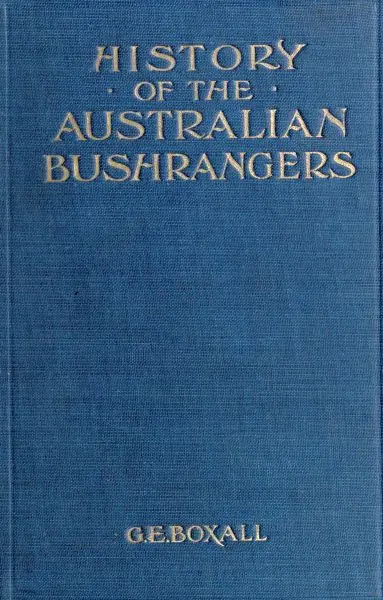
"History of the Australian Bushrangers" by George Boxall is a historical account written in the late 19th century. This work delves into the complex era of bushranging in Australia, examining the social and legal conditions that fostered the emergence of these outlaw groups. The narrative is rooted in the historical treatment of convicts and explores the motivations behind their descent into bushranging, shedding light on a significant period of Australian history. The opening of the text provides a foundational understanding of bushranging, highlighting its origins connected to the convict system in Australia. Boxall discusses how the harsh treatment and oppressive laws against convicts often pushed them to revolt against the system, leading many to take to the bush to escape their dire circumstances. He emphasizes that early bushrangers were often driven by desperation rather than inherent criminality and illustrates the grim realities they faced, including severe punitive measures like flogging. Boxall aims to present a comprehensive picture of bushranging and its implications for Australian society, suggesting that the bushrangers, despite their notorious actions, were products of their brutal environment.
Introduction adapted from the source catalogue; source summaries may be automatically generated.
Free to read · English · 150,077 words · No account needed
MAKE TIME FOR A GOOD BOOK
On by default. Untick to stop anonymous reading totals. Each page counts after 10 seconds in view. How this works.
Anonymous counting is on unless you have switched it off.
The prisoner listened throughout with an unmoved countenance, and when the Judge had finished he said he hoped his Honour would order that the small amount due as wages to the Barnetts should be paid. They were innocent of any complicity in the offence with which he had been charged, and he hoped they would soon be released from gaol. There was also £1 due to a boy who had been working on the farm, and he hoped this would also be paid. Whatever had happened at the farm it had happened before either the Barnetts or the boy went there, and they knew nothing about it. For some days after his sentence John Lynch continued to assert that he was innocent, but finding, as is supposed, that there was no hope of a reprieve, he asked to see the Rev. Mr. Sumner on the day before that fixed for his execution, and in the presence of the police magistrates and the minister, made a very extraordinary confession, of which the following is a brief summary:--
He arrived in the colony in 1832 in the Dunvegan Castle. The entry on his indent was:--"False pretences; sentence, life." This was wrong. He had only been sentenced to seven years' penal servitude. He had applied to the authorities at the Hyde Park Barracks for his free papers, but had been kept waiting a fortnight without getting any satisfaction. So he returned to the Berrima district, where he had been assigned. He went to John Mulligan for advice and assistance. Mulligan had a lot of goods and valuables, which Lynch is supposed to have stolen and left at the farm. He wanted to sell them, but Mulligan refused to give a fair price for them. Lynch had made up his mind to live honestly, but this treatment disgusted him. He complained bitterly of the dishonesty of men who were in a good position and who "ought to have known better." He left Mulligan's and went to T.B. Humphrey's farm at Oldbury and stole eight bullocks, which he had himself broken in, and started with them for Sydney, with the intention of selling them, so that he might "start honest." At Mount Razorback he fell in with a man named Ireland, who was in charge of a loaded team belonging to Mr. Thomas Cowper. The load was a valuable one, consisting of wheat, bacon, and other farm produce. Lynch thought it would pay him better to kill Ireland and take possession of the dray and its load than to sell Mr. Humphrey's bullocks. He therefore camped with Ireland that night, and "they were very friendly." In the morning a black boy who accompanied Ireland went to look for the bullocks, and Lynch followed and killed him. He returned to the camp without his absence having been noticed by Ireland, and watched for a chance. Ireland had no suspicion of foul play, and Lynch soon got near enough to him to strike him a blow with his tomahawk. Lynch hid the bodies in a cleft between two rocks, and piled stones over them. He remained at the camp two days. On the second day two other teams arrived at the camp in charge of men named Lee and Lagge, and they all agreed to travel together for company. When near Liverpool Mr. Cowper rode up and was surprised to find a stranger in charge of his dray. Lynch told him a plausible story to the effect that Ireland had been taken suddenly ill, and had asked him to take the team on. The black boy had stayed behind to nurse Ireland, and they were to follow as soon as Ireland got well enough. Mr. Cowper believed him and was satisfied, and after making enquiries as to where Ireland was stopping, arranged with Lynch where they should meet in Sydney. The time and place having been agreed on, Mr. Cowper rode away. Lee and Lagge were bound for Parramatta, and therefore, when they reached the junction of the Dog Trap Road with the Liverpool Road, they parted company with Lynch, who kept straight on. Left by himself, Lynch drove on night and day, reaching Sydney two days before the time appointed for him to meet Mr. Cowper. He hired a man who was half drunk to sell the loading, and as soon as he had received the money for the loading he started away with the team on the Illawarra Road. When near George's river he met Chief Constable McAlister, of Campbelltown, and fearing that he might have been recognised, he turned off the road on to a cross track leading towards the Berrima road. He knew there would soon be a hue and cry after him and feared that McAlister would report having met him on the Illawarra road. He travelled on until he came back to Razorback, near where the murder had been committed. Here he met the Frazers, father and son, driving a horse team owned by Mr. Bawten. He kept company with them and they camped together at Bargo Brush. Another horse team with which there were two men and their wives also camped there. After their supper Lynch was lying under his dray when a mounted trooper rode up and asked Frazer some questions about a dray which had been stolen, and which belonged to Mr. Cowper. The Frazers were unable to give him any information and the trooper rode away without noticing Lynch, who was lying under the very dray he was enquiring about. This narrow escape gave Lynch a terrible shock. He lay awake all night thinking of the danger he was running by keeping this dray. He "prayed to Almighty God to assist and enlighten" him in this emergency, and feeling much strengthened he resolved to kill the Frazers and take their dray. Having arrived at this decision he became calmer and thought out the details of his plan carefully. In the morning Lynch left the camp under the pretence that he was going to look for his bullocks, but in reality to drive them away. On his return he reported that he could not find them and spoke of the trouble bullocks gave by their wandering habits. He asked the Frazers to help him to pull his dray into the bush where he could leave it safely until he could return with another team of bullocks and take it home. There was nothing surprising in this, as bullocks frequently stray away home as soon as they are unyoked and will travel astonishing distances, even when hobbled, before morning. The Frazers, therefore, helped Lynch to drag the dray away from the road to where there was a clump of trees, and then yoked up their horses. Lynch put such few things as he had in the dray into Frazer's cart, and they all started together. That night they camped at Cordeaux Flat. In the morning young Frazer started to find the horses, and Lynch accompanied him. Lynch wore a coat because, he said, it was rather cold. As a fact, it was to hide his tomahawk. When they were in the bush, out of sight of the camp. Lynch found "no difficulty in settling him." He struck one blow, and "the young fellow fell like a log of wood." Lynch returned to the camp leading one horse, and said the lad was looking for the other. This made Frazer very uneasy, not on account of his son, but because he had never known the horses to part company before, and feared that some one must have stolen the other horse. He "fidgeted about" until Lynch, who had been watching for an opportunity, got behind him and "struck him one blow and killed him dead." Lynch buried the two bodies a little way off the road and remained at the camp all day. The next morning he drove through Berrima to Mulligan's farm. He told Mrs. Mulligan that the dray and horses belonged to a gentleman in Sydney. He asked her for the £30 which he said her husband owed him for the articles which he had left at the farm, and which he had obtained by burglary and highway robbery. Mrs. Mulligan assured him on oath that all she had in the house was £9. Lynch felt sure she was only "putting him off," and felt very much discouraged. He walked to Mr. Gray's, Black Horse Inn, about three miles down the road, and bought two bottles of rum. On his return he gave some to Mr. and Mrs. Mulligan, but "took very little" himself. He sat down on a log near the fence, and thought, "This man passed me by as if he didn't know me when I was in the iron gang in Berrima. He never offered me a shilling though he has made pounds out of me, and I risked my life to obtain it. It would be a judgment on him to take all he's got for the way he's treated a poor prisoner. Oh, Almighty God, assist me and direct me what to do." After praying he felt strengthened and returned to the hut. Mrs. Mulligan told him that she had dreamed that she had a baby and that he had taken it away and killed it. "It was all covered with blood and looked horrible." Lynch joked with her about this dream; but, at the same time, he "felt very frightened." He believed that "she could foretell things," and he knew that "she could toss balls and turn cups." He went away again and prayed to God to enlighten him, and at last made up his mind to "kill the lot." He returned to the hut and "talked pleasantly." Then he asked young Mulligan, who was about sixteen years of age, to "come and cut some wood" for the fire. The boy went with him, and as they walked along Lynch spoke to the lad of the fine property he would have "when the old man died;" adding, "Ah, Johnny, you don't know what's in store for you." They chopped up several sticks and then, when the boy was stooping, Lynch swung the axe round and "hit him on the head." He threw a few branches over the body, and then, picking up an armful of the wood they had cut walked back to the house. Mrs. Mulligan asked him where her boy was, and Lynch replied that he'd "gone to the paddock with the horses." Mrs. Mulligan was very uneasy and asked Lynch to fire his gun off, as a signal to the boy to return. Lynch said this might bring the police round and he didn't want them "to see that dray." Mulligan also objected to the gun being fired. Both Mulligan and his wife were greatly excited. The old man paced up and down in front of the house, while the old woman, after asking Lynch several times what he had done with her boy, started up the path to look for him. Then said Lynch, "I knew it was time for something to be done." He got his tomahawk without being seen, walked up to the old man and cried "Look!" Mulligan turned round and looked up the road where Lynch pointed, Lynch struck him "one tap" and he "fell like a log." Lynch then followed Mrs. Mulligan, tripped her up and killed her. He walked back to the hut and saw the daughter, a girl of fourteen, standing behind the table with a large butcher's knife in her hand. She was trembling violently. He said to her "Put down that knife," She hesitated to obey him, and he cried louder, "Put down that knife." Then she put it down. He walked round the table and took her hand. He said he did not wish to hurt her, but if he let her live she would "only put him away." He told her to "pray for her soul," as she had "only ten minutes to live." She sobbed bitterly and he tried to comfort her, talking very seriously, and telling her that life was full of trouble, and that she would be better dead. Then he took her into the inner room, and after having violated her, brought her out again and killed her with the tomahawk. He dragged the four bodies together, heaped firewood over them and set fire to the heap. "I never seen nothing like it," he said. "They burned as if they was bags of fat." He threw the greater part of their clothing on to the fire and burned it. He stayed at the farm all next day, and then, when he had "made things right," he went to Sydney. Here he inserted an advertisement in the Sydney Gazette to the effect that Mrs. Mulligan having left her home without his consent he would not be responsible for any debts she might contract. This was signed "John Mulligan." He returned to the farm and wrote letters to those people to whom he knew Mulligan owed money, informing them that he had sold the farm to John Dunleavy, who would pay their accounts. These letters he also signed "John Mulligan." Lynch then engaged Terence Barnett and his wife to work on the farm, and stayed there quietly for six months. The stories he told in the neighbourhood induced the belief that Mulligan had taken him in with regard to the farm, and that he had paid more for it than it was worth. At the end of six months Lynch paid another visit to Sydney, and on his return journey met with Kearns Landregan, who said he was looking for work. Lynch engaged him to put up some fencing. Landregan agreed and got into the cart. Lynch drove on until they were passing Crisp's Inn. Here Landregan crouched down as if to hide himself. Lynch asked him what he did that for. Landregan replied that he had summoned Crisp for stealing a bundle of clothes from him and didn't want a row about it then. Lynch felt sorry that he had engaged Landregan and determined to get rid of him. He decided to camp at Ironstone Bridge and, when Landregan was sitting on a log near the camp fire, Lynch crept up behind him and struck him with the tomahawk. In his confession Lynch was very particular in pointing out that in all his previous murders he had not struck any one of his victims more than one blow with the tomahawk or axe. Landregan, however, was a big powerful man, who boasted that he had never met his match in wrestling, and Lynch felt afraid of him. He therefore departed from his rule and struck Landregan twice. He attributed his "ill-luck" in being caught and convicted to this breach of the rule he had laid down for himself. Lynch seems to have persuaded himself that he was acting under Divine inspiration in committing his murders. He was very emphatic in his assertions that he never committed a murder, without having first prayed to Almighty God to assist and direct him, until he felt sufficiently strengthened to carry out his intentions. He appeared to believe that he was justified in taking life. Whatever may be thought of his confessions, however, there can be no doubt that the main facts were correct. After his death a search was made at the places where he said he had hidden or buried his victims, and in all cases the remains were found as he had stated they would be. With regard to the Mulligans, a large heap of ashes was searched and found to contain human remains. The confession only included his more serious crimes. He said nothing about the numerous robberies he had committed at various times, nor of his relations with other bushrangers, with whom it was known he was on cordial terms during at least a portion of his career. Lynch was hanged at Berrima on April 22nd, 1842. At that time he was only twenty-nine years of age. He was about five feet three and a half inches in height, of fair complexion, with brown hair and hazel eyes. There was nothing ferocious in his appearance.
Your reading position is saved on this browser. Take it to another device with a library code. Reading pages adapt to text, rather than matching a printed edition.
BEHIND THE BOOK
This eBook is for the use of anyone anywhere in the United States and most other parts of the world at no cost and with almost no restrictions whatsoever. You may copy it, give it away or re-use it under the terms of the Project Gutenberg License included with this eBook or online at www.gutenberg.org. If you are not located in the United States, you will have to check the laws of the country where you are located before using this eBook. Read the source licence.
The original source file, including credits and licence, is retained by this library. Request an original-format copy at no charge. Please include the book title and Project Gutenberg identifier #58799.
KEEP YOUR CURIOSITY GOING
Cécile Tormay

Moritz Busch
John L. Ransom
Frances Wright
Cécile Tormay

Mabel Potter Daggett