THE CLASSIC COLLECTION✦An outlaw’s diary: the CommuneCLASSIC FREE BOOKS
An outlaw’s diary: the Commune
Cécile Tormay
THE CLASSIC COLLECTION · 1908
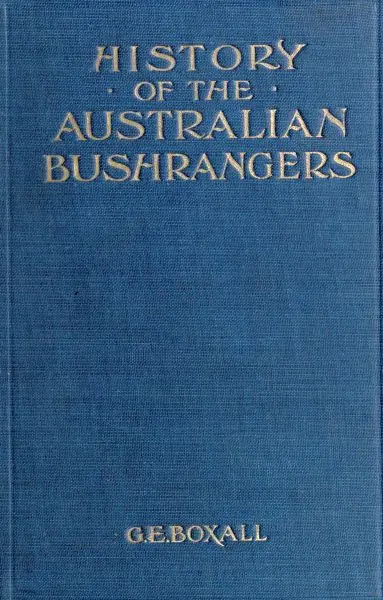
"History of the Australian Bushrangers" by George Boxall is a historical account written in the late 19th century. This work delves into the complex era of bushranging in Australia, examining the social and legal conditions that fostered the emergence of these outlaw groups. The narrative is rooted in the historical treatment of convicts and explores the motivations behind their descent into bushranging, shedding light on a significant period of Australian history. The opening of the text provides a foundational understanding of bushranging, highlighting its origins connected to the convict system in Australia. Boxall discusses how the harsh treatment and oppressive laws against convicts often pushed them to revolt against the system, leading many to take to the bush to escape their dire circumstances. He emphasizes that early bushrangers were often driven by desperation rather than inherent criminality and illustrates the grim realities they faced, including severe punitive measures like flogging. Boxall aims to present a comprehensive picture of bushranging and its implications for Australian society, suggesting that the bushrangers, despite their notorious actions, were products of their brutal environment.
Introduction adapted from the source catalogue; source summaries may be automatically generated.
Free to read · English · 150,077 words · No account needed
MAKE TIME FOR A GOOD BOOK
On by default. Untick to stop anonymous reading totals. Each page counts after 10 seconds in view. How this works.
Anonymous counting is on unless you have switched it off.
There has been much speculation in Sydney from time to time as to what became of the money stolen, and it has been reported that the thieves buried it somewhere on the shores of Snail's, or White Bay, or some other place on the opposite side of the Harbour to Sydney, but although several persons have searched for the hidden treasure, it has not yet been found. There is a somewhat similar legend of buried treasure at North Sydney. The story is, that a sum of money variously stated at one thousand and two thousand guineas, sent out in early times from England to pay the troops, was stolen from the ship while she lay at her anchor and was buried either near Mosman's Bay or Great Sirius Cove. This also has been searched for at various times but hitherto without success. What truth there is in these legends it is now impossible to say.
John Poole, James Ryan, and James Riley, assigned servants of Mr. John Larnack, son-in-law of Major James Mudie, of Castle Forbes estate, Patrick's Plains, Hunter River district, took to the bush on November 4th, 1833. Three other assigned servants, Anthony Hitchcock, alias Hath, Samuel Parrott or Powell, and David Jones, were sent away the following morning, in charge of constable Samuel Cook, to Maitland, under sentence of twelve months, in a chain gang for insubordination. About half-a-mile from Castle Forbes, Poole, Ryan, and Riley, and another man named John Perry, who had been in the bush for some time previously, met the constable and called on him to stand or they would shoot him. Cook only had a pistol with him and he snapped it at the robbers and then surrendered. The robbers took the pistol from him, led him some distance off the road and tied him to a tree. Parrott refused to go with the bushrangers and was tied to a tree near Cook. The robbers went back to Mr. Larnack's house which they reached about noon. They called upon Mrs. Larnack to stand, but she and one of the female servants jumped through a window and ran. Perry followed them and brought them back, threatening to blow Mrs. Larnack's brains out if she refused to do as she was told. The robbers took a double-barrelled gun which was always kept loaded in Mr. Larnack's room, and some guns and fowling pieces from the dining-room. Hitchcock brought the shearers from the shed, walking behind them and threatening to shoot any man who resisted. The robbers broke open the door of the store and put the shearers inside. They emptied a chest of tea into a bag, took bags of flour, sugar, and other provisions from the store, and fastened up the door leaving Perry on guard. They took a quantity of pork from the kitchen, a bucket of milk from the dairy, and the silver-plate and other valuables from the house. Then, having made the shearers secure in the store and locked Mrs. Larnack and the female servants in the kitchen, they went away after having told Mrs. Larnack that they were sorry "the old----," the Major, was not at home, as they wanted to settle him. One of them also expressed sorrow at the absence of Mr. Larnack, and added that when they could catch him they would "stick his head on the chimney for an ornament." As soon as the news of the robbery became known, a party was organised to follow the bushrangers. Mr. Robert Scott, mounted trooper Daniel Craddige, and a party of five came up with the robbers at Mr. Reid's station, Lamb's Valley. Some shots were exchanged and then Jones and Perry ran away. Constable Craddige followed them and called on them to stand, and they did so. He took them back and by that time Mr. Scott and the rest of the pursuing party had captured Hitchcock, Poole and Riley. The boy Ryan got away in the scrub but was discovered and caught next day. Alexander Flood, overseer to Messrs. Robert and Helenes Scott, with two constables, took charge of the prisoners, and conducted them safely to Maitland for trial. Mr. John Larnack then said that on the morning of the 5th of November before the attack was made on the house, he was at the sheep-wash. The prisoners came up and said to the washers, "Come out of the water, every---- one of you, or we'll blow your---- brains out." Larnack jumped into the water among the washers. Hitchcock fired at him shouting, "You'll never take me to court again, you----." He called on the washers to get out of the way and let him shoot the----. Poole also said, "I'll take care you never get another man flogged." Larnack scrambled out of the wash-pool on the opposite side to where the robbers were, and ran to the timber. He went on to Mr. Danger's farm, and remained there till next day. He was only ten yards distant when Hitchcock fired at him. Shots from the other bushrangers struck the water within twelve and eighteen inches of him, but none of them hit him. The robbers had four double-barrelled guns, two single-barrelled fowling pieces, a musket, and two pistols, when they were captured. When asked what they had to say in defence, Hitchcock called Ensign Zouch and other gentlemen to speak as to his character. It appears that until he was assigned to Major Mudie and Mr. Larnack, he had always been well behaved. The prisoners complained that they were given short rations, that the flour was mouldy and the meat bad, and that they were repeatedly flogged. Some of them had been flogged for refusing to work on Sunday. Hitchcock had been sentenced to work in an iron gang, for an offence of which he knew nothing. Whatever punishment was threatened by the master was sure to be inflicted by the Bench. Jones was acquitted of the capital offence, but was sent to Norfolk Island for life. The other five prisoners were sentenced to death, Hitchcock and Poole being hung at Maitland, and Ryan, Perry and Riley at Sydney. An enquiry was held as to the alleged illusage of their assigned servants, by Major Mudie and Mr. Larnack, and they were acquitted by Governor Bourke of the charges of tyranny and ill-treatment, but Major Mudie's name was removed from the Commission of the Peace. On his return to the station after the result of the enquiry had become known, he was greeted with cries of "No more fifties now, you bloody old tyrant."[33]
Your reading position is saved on this browser. Take it to another device with a library code. Reading pages adapt to text, rather than matching a printed edition.
BEHIND THE BOOK
This eBook is for the use of anyone anywhere in the United States and most other parts of the world at no cost and with almost no restrictions whatsoever. You may copy it, give it away or re-use it under the terms of the Project Gutenberg License included with this eBook or online at www.gutenberg.org. If you are not located in the United States, you will have to check the laws of the country where you are located before using this eBook. Read the source licence.
The original source file, including credits and licence, is retained by this library. Request an original-format copy at no charge. Please include the book title and Project Gutenberg identifier #58799.
KEEP YOUR CURIOSITY GOING
Cécile Tormay

Moritz Busch
John L. Ransom
Frances Wright
Cécile Tormay

Mabel Potter Daggett