THE CLASSIC COLLECTION✦An outlaw’s diary: the CommuneCLASSIC FREE BOOKS
An outlaw’s diary: the Commune
Cécile Tormay
THE CLASSIC COLLECTION · 1908
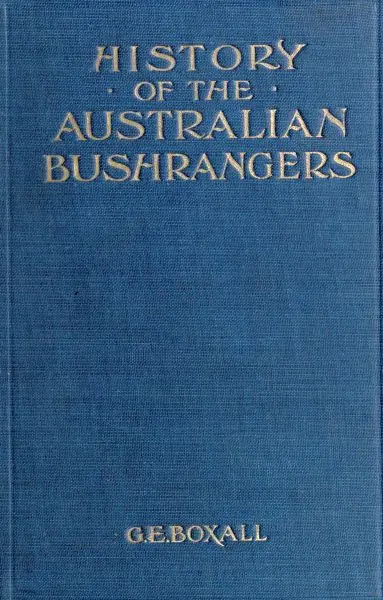
"History of the Australian Bushrangers" by George Boxall is a historical account written in the late 19th century. This work delves into the complex era of bushranging in Australia, examining the social and legal conditions that fostered the emergence of these outlaw groups. The narrative is rooted in the historical treatment of convicts and explores the motivations behind their descent into bushranging, shedding light on a significant period of Australian history. The opening of the text provides a foundational understanding of bushranging, highlighting its origins connected to the convict system in Australia. Boxall discusses how the harsh treatment and oppressive laws against convicts often pushed them to revolt against the system, leading many to take to the bush to escape their dire circumstances. He emphasizes that early bushrangers were often driven by desperation rather than inherent criminality and illustrates the grim realities they faced, including severe punitive measures like flogging. Boxall aims to present a comprehensive picture of bushranging and its implications for Australian society, suggesting that the bushrangers, despite their notorious actions, were products of their brutal environment.
Introduction adapted from the source catalogue; source summaries may be automatically generated.
Free to read · English · 150,077 words · No account needed
MAKE TIME FOR A GOOD BOOK
On by default. Untick to stop anonymous reading totals. Each page counts after 10 seconds in view. How this works.
Anonymous counting is on unless you have switched it off.
In July, 1864, a sensation was caused in the Kilmore district by a report which gained currency, that Gardiner and his gang had stuck up a number of people near Yea. A party of volunteers was speedily organised to assist the police in hunting down the bushrangers. The pursuers were divided into small parties, and on the evening of the 20th one of these, composed of Mr. Grant and Constable Buck, came upon three suspicious-looking characters camped on Pack Bullock Flat with a mob of horses. Constable Buck asked where they were going, when one replied "To Melbourne," and another "To the Jordan." Buck called on them to surrender, when one man sprang forward and clutched him by the throat. Another rushed at Grant, who was unarmed. Grant turned and ran to where they had left their horses, calling on Buck to come away, and Buck broke loose and joined him. Buck however lost his revolver in the struggle. They rode away to find help, and returned with Mr. Grant's brother, George Grant, and Mr. Walker. Grant shot one bushranger dead. Walker stunned a second with a blow on the head with the butt of his gun, while Buck captured the third after a smart run. The captured men were convicted of robbery by violence, and it was said that the horses they had with them had been stolen from various stations.
Robert Bourke was employed as cook at Mr. Broughton's, Humewood Station, on the Murrumbidgee River, New South Wales, and appears to have been suddenly affected with the bushranging mania. He ferried himself across the river, and with the assistance of a young lad named Quinn stuck up and robbed several people in the neighbourhood. He was said to "know every bulga from Barren Jack to Manaro," but did not stop long in that district, perhaps because it had already been "worked out" by the Brothers Clarke and other bushrangers. In September, 1868, he crossed the Murray River, and stuck up and robbed travellers on the road near Wodonga and Wangaratta, gradually working southwards. On October 4th he appeared at Mr. Hurst's station, Diamond Creek, about fifteen miles from Melbourne, where a daring attempt was made to capture him. The story is that Bourke called at William Horner's on the 2nd, and asked for a bed. He was told that there was none to spare, when he drew a revolver and cried "Bail up." Horner slammed the door in his face. Bourke fired, and the bullet passed through the door panel, but did no great injury. He tried to push the door open, but, failing in this, he began to "parley." He said he was hungry, and would go away quietly if he was given something to eat. Horner then opened the door and gave him a pannikin of tea and some bread and cold meat. He sat down on a log and made a good meal. When he had finished he asked for some "tucker for the road" and a horse, saddle, and bridle. Horner said that the horses were all down the paddock, and he did not intend to run them in until next morning, but he could have some "tucker." He then gave him a large piece of bread and some meat. They talked together very amicably. Bourke said, "I'm a bushranger from New South Wales, and I've come here to see if your police are as clever as you blow about them. They'll never take me alive." He went away, and, it is supposed, slept in the bush. On the morning of the 4th he went to Hurst's place and asked for some breakfast. Thinking he was an ordinary tramp, Miss Hurst gave him some bread and meat in the kitchen, but, as he sat at table, she noticed that he carried pistols in his belt. She went into another room and informed her brother Henry, who loaded a double-barrelled gun to be ready for any emergency. He walked into the kitchen, carrying the gun behind him, to have a look at their suspicious guest, and asked him where he came from and where he was going? "From Cape Schank to Kilmore," was the reply. "Then you're not travelling in the right direction," remarked young Hurst. Bourke jumped up from the table, as if in a passion, and cried "Do you doubt my word? Do you want to insult me?" He drew his revolver and Hurst brought his gun round and fired. He missed, and Bourke immediately shot him in the chest. Although he was severely wounded young Hurst rushed forward and grappled with the bushranger, while Mr. Abbott and two or three other men ran in to ascertain what the shooting was about. They secured the bushranger and carried young Hurst to bed, but, although every attention was paid to him, he died in a few hours. Bourke was identified by the police as a man who had been sentenced to three years' imprisonment for horse-stealing at Ararat. When he had served his term he was of course discharged and, as was surmised, went to New South Wales and obtained work on a station. He lived quietly for about eighteen months, when he started bushranging as related. He was twenty-five years of age at the date of his conviction for the murder of Henry Hurst.
Your reading position is saved on this browser. Take it to another device with a library code. Reading pages adapt to text, rather than matching a printed edition.
BEHIND THE BOOK
This eBook is for the use of anyone anywhere in the United States and most other parts of the world at no cost and with almost no restrictions whatsoever. You may copy it, give it away or re-use it under the terms of the Project Gutenberg License included with this eBook or online at www.gutenberg.org. If you are not located in the United States, you will have to check the laws of the country where you are located before using this eBook. Read the source licence.
The original source file, including credits and licence, is retained by this library. Request an original-format copy at no charge. Please include the book title and Project Gutenberg identifier #58799.
KEEP YOUR CURIOSITY GOING
Cécile Tormay

Moritz Busch
John L. Ransom
Frances Wright
Cécile Tormay

Mabel Potter Daggett