THE CLASSIC COLLECTION✦An outlaw’s diary: the CommuneCLASSIC FREE BOOKS
An outlaw’s diary: the Commune
Cécile Tormay
THE CLASSIC COLLECTION · 1908
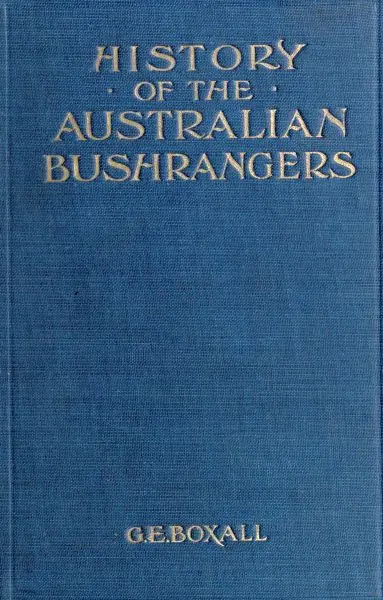
"History of the Australian Bushrangers" by George Boxall is a historical account written in the late 19th century. This work delves into the complex era of bushranging in Australia, examining the social and legal conditions that fostered the emergence of these outlaw groups. The narrative is rooted in the historical treatment of convicts and explores the motivations behind their descent into bushranging, shedding light on a significant period of Australian history. The opening of the text provides a foundational understanding of bushranging, highlighting its origins connected to the convict system in Australia. Boxall discusses how the harsh treatment and oppressive laws against convicts often pushed them to revolt against the system, leading many to take to the bush to escape their dire circumstances. He emphasizes that early bushrangers were often driven by desperation rather than inherent criminality and illustrates the grim realities they faced, including severe punitive measures like flogging. Boxall aims to present a comprehensive picture of bushranging and its implications for Australian society, suggesting that the bushrangers, despite their notorious actions, were products of their brutal environment.
Introduction adapted from the source catalogue; source summaries may be automatically generated.
Free to read · English · 150,077 words · No account needed
MAKE TIME FOR A GOOD BOOK
On by default. Untick to stop anonymous reading totals. Each page counts after 10 seconds in view. How this works.
Anonymous counting is on unless you have switched it off.
Emanating from such a source, this opinion carried great weight, and almost coincident with its publication, the Governor, Sir Hercules Robinson, afterwards Lord Rosmead, laid before the Executive Council six petitions signed by a number of well known and responsible persons in various parts of the colony praying for the release of the convict Gardiner. He said it was true that no hope of an absolute remission of his sentence had ever been held out to him, but in the Governor's minute of December 5th, 1872, it had been implied that if the prisoner continued to conduct himself well he might hope for remission at the end of ten years.
Official returns were laid on the table showing the number of prisoners still in penal servitude for highway robbery. The prisoner whose case attracted most attention next to Gardiner was William Brookman. His parents were said to be respectable. He was only seventeen years of age when he was charged on January 16th, 1868, with wounding with intent to murder. He was convicted and sentenced to death, but his sentence was commuted to fifteen years' penal servitude. It was said to have been his first and only attempt at highway robbery, and he had never previously been arrested or charged with any offence against the law. At the time of this enquiry he had served six and a-half years of his sentence.
The other bushrangers in gaol were:--Samuel Clarke, sentenced April 18th, 1866. Served five years, one month. No previous conviction.
Daniel Shea, sentenced November 6th, 1865. Served eight years, six months. Previously sentenced for two years for horse stealing.
William Willis, alias Dunkley, sentenced May 16th, 1866. Served eight years. Three previous convictions for horse stealing, of nine months, eighteen months, and six months respectively.
Alexander Fordyce, sentenced February 23rd, 1863. Served eleven years, nine months. No previous conviction.
John Payne, sentenced January 14th, 1868. Served six years, six months.
No previous conviction.
James Jones, sentenced March 31st, 1864. Served ten years, one month.
No previous conviction.
Robert Cotterall, alias Blue Cap, sentenced April 29th, 1868. Served six years, one month. No previous conviction.
James Boyd, alias McGrath, sentenced February 24th, 1864. Served nine years, three months. Previously sent to gaol for five years for horse stealing.
Thomas Cunningham, alias Smith, sentenced April 9th, 1867. Served seven years, one month. No previous conviction.
Charles Hugh Gough, alias Wyndham, alias Bennett, sentenced April 9th, 1867, served seven years, one month. Previously sentenced to three years for assault with intent to rob.
Thomas Dargue, sentenced March 28th, 1867. Served seven years, two months. No previous conviction.
Henry Dargue, sentenced March 28th, 1867. Served seven years, two months. No previous conviction.
Your reading position is saved on this browser. Take it to another device with a library code. Reading pages adapt to text, rather than matching a printed edition.
BEHIND THE BOOK
This eBook is for the use of anyone anywhere in the United States and most other parts of the world at no cost and with almost no restrictions whatsoever. You may copy it, give it away or re-use it under the terms of the Project Gutenberg License included with this eBook or online at www.gutenberg.org. If you are not located in the United States, you will have to check the laws of the country where you are located before using this eBook. Read the source licence.
The original source file, including credits and licence, is retained by this library. Request an original-format copy at no charge. Please include the book title and Project Gutenberg identifier #58799.
KEEP YOUR CURIOSITY GOING
Cécile Tormay

Moritz Busch
John L. Ransom
Frances Wright
Cécile Tormay

Mabel Potter Daggett