THE CLASSIC COLLECTION✦An outlaw’s diary: the CommuneCLASSIC FREE BOOKS
An outlaw’s diary: the Commune
Cécile Tormay
THE CLASSIC COLLECTION · 1908
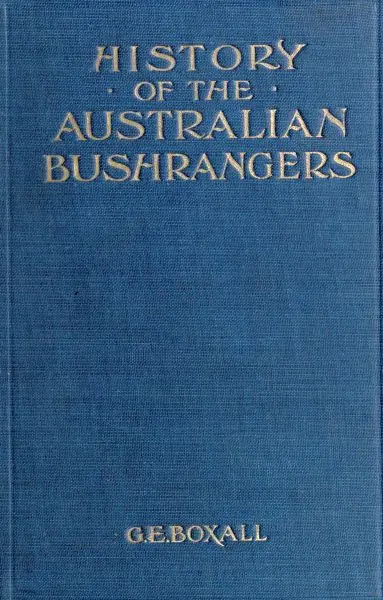
"History of the Australian Bushrangers" by George Boxall is a historical account written in the late 19th century. This work delves into the complex era of bushranging in Australia, examining the social and legal conditions that fostered the emergence of these outlaw groups. The narrative is rooted in the historical treatment of convicts and explores the motivations behind their descent into bushranging, shedding light on a significant period of Australian history. The opening of the text provides a foundational understanding of bushranging, highlighting its origins connected to the convict system in Australia. Boxall discusses how the harsh treatment and oppressive laws against convicts often pushed them to revolt against the system, leading many to take to the bush to escape their dire circumstances. He emphasizes that early bushrangers were often driven by desperation rather than inherent criminality and illustrates the grim realities they faced, including severe punitive measures like flogging. Boxall aims to present a comprehensive picture of bushranging and its implications for Australian society, suggesting that the bushrangers, despite their notorious actions, were products of their brutal environment.
Introduction adapted from the source catalogue; source summaries may be automatically generated.
Free to read · English · 150,077 words · No account needed
MAKE TIME FOR A GOOD BOOK
On by default. Untick to stop anonymous reading totals. Each page counts after 10 seconds in view. How this works.
Anonymous counting is on unless you have switched it off.
In September, 1866, John Carrol, Patrick Kennagh, Eneas McDonnell, and John Phegan were sent by the police authorities to the Braidwood district, to assist the police in the capture of the Clarke gang. Phegan had been mining in the district and was well acquainted with the ranges. He paid a visit to Mrs. Clarke, and was received with some suspicion as a stranger. On his second visit Mrs. Clarke and her two daughters became quite friendly, and asked Phegan to write out a petition in favour of her second son James, who was a prisoner on Cockatoo Island. The party camped as if engaged in surveying, and Phegan said that Kennagh knew more about writing out petitions than he did. He therefore took Kennagh to the place and introduced him to Mrs. Clarke. They wrote out the petition and left. During the next few days they saw the girls frequently. In the absence of their brothers these girls looked after the cattle, and were riding about the ranges every day. They passed the camp several times and spoke in a friendly manner. On the 4th of October, the party had been pretending to survey a flat, and under this pretence had searched a gunyah hidden among the timber. This gunyah was believed to be one of the rendezvous of the bushrangers, and was closely watched in the hopes that the bushrangers might visit it. On the day named, the special constables had finished their work and were standing round the camp fire, when a gun was fired, and the bullet passed between the men and struck the tree against which the fire was built. The party had their guns ready and returned the fire, although they could not see what they were shooting at. In the morning a flask half full of powder was picked up, but this gave no indication as to who had attacked the party. After this no pretence of friendship was made, and Carrol and the party under his charge openly took up the pursuit of the bushrangers, penetrating the mountains and searching everywhere where they thought it probable that the bushrangers might camp. In January, 1867, the bodies of the four men were found near their camp on the Jinden station in the Jingera ranges, in the Braidwood district. How or when they were shot is not known, but it is supposed that they were somehow drawn into an ambush and shot down. Carrol's body was lying on its back, and a handkerchief thrown across it with a one pound note pinned to it. The bodies of Carrol and Kennagh were close together, while the other two were half a mile away. Three revolvers were lying beside Phegan. One of the men had £14 on him, and another £19. The bodies were found by Mr. Edward Smith's stockman when riding through the ranges after cattle, on the 9th January, and as they were in an advanced state of decomposition, they must have been there for several days. The Governor, Sir John Young, immediately issued a proclamation, calling upon magistrates, freeholders, and all other of Her Majesty's subjects, resident in the police districts of Braidwood, Browlee, Queanbeyan, Eden, Bega, and Cooma to assist the police in the capture of the "notorious outlaw, Thomas Clarke, whose life is forfeit to the laws of his country." The Colonial Secretary, (Mr. afterwards Sir) Henry Parkes, offered a reward of £5000 for the capture of the persons guilty of murdering the four special constables. A free pardon was also offered to any accomplice, not being the actual murderer. Carrol, Kennagh, and Phegan had been warders in Darlinghurst gaol, and had volunteered to attempt the capture of the bushranger Clarke, and McDonnell was an ex-policeman who had accumulated a considerable sum of money in business, and was about to visit Ireland, his native country, but who volunteered to join this party before going home. The firing had been heard at Jinden station, three miles from the camp, but no notice had been taken, as it was attributed to opossum hunters. According to the medical evidence, the men were killed with rifle bullets fired at close range--not more than twenty yards. Phegan and McDonnell were first shot, McDonnell only having one wound, which was fatal. Phegan was shot in the right side, and appears to have turned over after falling, and to have been then shot on the other side to finish him. Carrol and Kennagh appear to have been kneeling when shot, and had perhaps surrendered. The ostentatious disregard of the money on the bodies shows, said the Sydney Morning Herald, that revenge and not plunder was the object of the murderers.
Your reading position is saved on this browser. Take it to another device with a library code. Reading pages adapt to text, rather than matching a printed edition.
BEHIND THE BOOK
This eBook is for the use of anyone anywhere in the United States and most other parts of the world at no cost and with almost no restrictions whatsoever. You may copy it, give it away or re-use it under the terms of the Project Gutenberg License included with this eBook or online at www.gutenberg.org. If you are not located in the United States, you will have to check the laws of the country where you are located before using this eBook. Read the source licence.
The original source file, including credits and licence, is retained by this library. Request an original-format copy at no charge. Please include the book title and Project Gutenberg identifier #58799.
KEEP YOUR CURIOSITY GOING
Cécile Tormay

Moritz Busch
John L. Ransom
Frances Wright
Cécile Tormay

Mabel Potter Daggett