THE CLASSIC COLLECTION✦An outlaw’s diary: the CommuneCLASSIC FREE BOOKS
An outlaw’s diary: the Commune
Cécile Tormay
THE CLASSIC COLLECTION · 1908
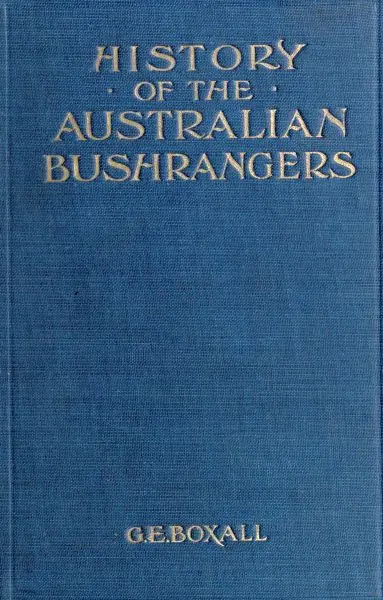
"History of the Australian Bushrangers" by George Boxall is a historical account written in the late 19th century. This work delves into the complex era of bushranging in Australia, examining the social and legal conditions that fostered the emergence of these outlaw groups. The narrative is rooted in the historical treatment of convicts and explores the motivations behind their descent into bushranging, shedding light on a significant period of Australian history. The opening of the text provides a foundational understanding of bushranging, highlighting its origins connected to the convict system in Australia. Boxall discusses how the harsh treatment and oppressive laws against convicts often pushed them to revolt against the system, leading many to take to the bush to escape their dire circumstances. He emphasizes that early bushrangers were often driven by desperation rather than inherent criminality and illustrates the grim realities they faced, including severe punitive measures like flogging. Boxall aims to present a comprehensive picture of bushranging and its implications for Australian society, suggesting that the bushrangers, despite their notorious actions, were products of their brutal environment.
Introduction adapted from the source catalogue; source summaries may be automatically generated.
Free to read · English · 150,077 words · No account needed
MAKE TIME FOR A GOOD BOOK
On by default. Untick to stop anonymous reading totals. Each page counts after 10 seconds in view. How this works.
Anonymous counting is on unless you have switched it off.
On October 17th, Mr. Robinson, of Robinson's Hotel, Canowindra, was awakened at about 1.30 a.m. by a loud knocking. He went to the door and asked, "Who's there?" The reply was, "The police." Robinson opened the door and was immediately ordered to "bail up." The visitors were Hall, Gilbert, and O'Meally, the bushrangers. Mr. Robinson gave them £3, which he took from a drawer, and said that was all the money he had in the house. He begged them to go away. They refused, and insisted on every one in the house getting up at once. After some delay the family and Mr. Kieran Cummings, a lodger, were collected in the dining-room. The bushrangers took charge and served out drinks all round. When time for opening the house came, the bushrangers stationed themselves, one at each end of the verandah and the third in the bar. They bailed up fourteen bullock-drivers who were camped near the township, and compelled them to leave their teams in the street as they arrived. The robbers took anything they required or fancied from the drays and marched the drivers into the dining-room of the hotel. During the morning, Messrs. Hibberson, Twaddell, and Kirkpatrick drove up to the hotel in a buggy. They were compelled to alight and go into the dining-room. Ben Hall, seeing that Mr. Kirkpatrick carried a revolver, requested him to "oblige by handing that thing over. Not that we want it, you know; but it might go off by accident." Mr. Kirkpatrick laughed, and gave him the weapon. Hall examined it carefully and said, "We've got better than that. We'll leave it for you at Louden's, at Grubbenbong, so that you may get it when you pass." Mrs. Robinson and the cook were released and ordered to get a "first-class dinner for the gentlemen, and we'll pay for it." The prisoners were well treated. Food was brought in at intervals, and bottles of brandy were placed on the table for all to help themselves as they pleased. Several boxes of cigars were ordered, and these were opened and the cigars thrown along the table. Robinson had promised not to "try any hanky panky," and was allowed to go to the bar. Everything ordered was paid for without delay or dispute. Gilbert walked to the lock-up, called out the solitary policeman who was stationed in the town, and made him march down to the hotel. Here he was given his musket, and ordered to pace up and down before the verandah as if on sentry duty. When they grew tired of showing their contempt for "the force" in this manner the gun was taken away and the policeman conducted into the dining-room and placed with the other prisoners to "enjoy himself like the rest." The robbers drank very little themselves. Occasionally they ordered a bottle of English beer, and drew the cork themselves after having examined it carefully to make sure that it had not been tampered with. On the Wednesday morning Mr. Hibberson begged hard to be allowed to go. He said that he and his friends had enjoyed themselves very much, and would have been willing to stay longer to oblige, but the river was beginning to rise, and if it came down as usual at that time of the year they might not be able to cross for a month. This would interfere seriously with their business. The bushrangers listened to this plea, and then withdrew. After a consultation which lasted several minutes, Hall came back, and said they thought it was "a fair thing." They were very much obliged to the gentlemen for their contributions towards the general amusement, and they graciously gave them permission to fetch their horses from the stable and start. An hour or so later the other persons in the dining-room were told that they might go. This spree must have been an expensive one. The bushrangers only took a few pounds to start with, while they paid for everything that was consumed by the crowd between 1.30 a.m. on Monday and noon on Wednesday. At first there had been a feeling of restraint, caused, perhaps, by fear or uncertainty, but this soon wore off, and the party ended by being a very merry one. Several games were started. Songs were sung, and one of the bullock-drivers had a concertina and played dance music; several of the members of the party danced. The women and children were allowed to go to bed, but the men had to sleep with their heads on the table. The bushrangers only slept for short naps in turn. On leaving Canowindra the bushrangers rode straight to Mr. Grant's place, at Balubula, called him out, and accused him of having given information to the police as to their movements. As a punishment they burned his house, stacks, and standing crop.
Your reading position is saved on this browser. Take it to another device with a library code. Reading pages adapt to text, rather than matching a printed edition.
BEHIND THE BOOK
This eBook is for the use of anyone anywhere in the United States and most other parts of the world at no cost and with almost no restrictions whatsoever. You may copy it, give it away or re-use it under the terms of the Project Gutenberg License included with this eBook or online at www.gutenberg.org. If you are not located in the United States, you will have to check the laws of the country where you are located before using this eBook. Read the source licence.
The original source file, including credits and licence, is retained by this library. Request an original-format copy at no charge. Please include the book title and Project Gutenberg identifier #58799.
KEEP YOUR CURIOSITY GOING
Cécile Tormay

Moritz Busch
John L. Ransom
Frances Wright
Cécile Tormay

Mabel Potter Daggett