THE CLASSIC COLLECTION✦An outlaw’s diary: the CommuneCLASSIC FREE BOOKS
An outlaw’s diary: the Commune
Cécile Tormay
THE CLASSIC COLLECTION · 1908
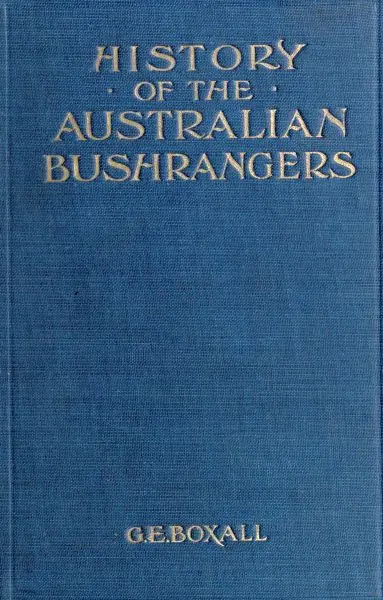
"History of the Australian Bushrangers" by George Boxall is a historical account written in the late 19th century. This work delves into the complex era of bushranging in Australia, examining the social and legal conditions that fostered the emergence of these outlaw groups. The narrative is rooted in the historical treatment of convicts and explores the motivations behind their descent into bushranging, shedding light on a significant period of Australian history. The opening of the text provides a foundational understanding of bushranging, highlighting its origins connected to the convict system in Australia. Boxall discusses how the harsh treatment and oppressive laws against convicts often pushed them to revolt against the system, leading many to take to the bush to escape their dire circumstances. He emphasizes that early bushrangers were often driven by desperation rather than inherent criminality and illustrates the grim realities they faced, including severe punitive measures like flogging. Boxall aims to present a comprehensive picture of bushranging and its implications for Australian society, suggesting that the bushrangers, despite their notorious actions, were products of their brutal environment.
Introduction adapted from the source catalogue; source summaries may be automatically generated.
Free to read · English · 150,077 words · No account needed
MAKE TIME FOR A GOOD BOOK
On by default. Untick to stop anonymous reading totals. Each page counts after 10 seconds in view. How this works.
Anonymous counting is on unless you have switched it off.
The indictment was a terrible one and was no doubt true, and the paper was perfectly justified in urging the Government to make more strenuous efforts to stamp out bushranging. Nevertheless the murders spoken of here belong to a bygone age, the perpetrators having probably been attracted, like the majority of their class, to the Victorian goldfields. That was the focus to which all such enterprising scoundrels were drawn, and there the majority met the fate they so richly deserved. A few robberies were committed on the roads in the Bathurst district and in other parts of the colony, but the greatest number of such crimes took place in the Manaro district and along the road leading to Victoria. The only bushranger in New South Wales who became notorious at this time was Thomas Willmore. He had been under butler to a gentleman in England, and at the age of fourteen was transported to "Botany Bay," for having stolen a number of silver spoons and other plate from his employer. He was first sent to Pentonville and was then sent to the colony as a reformed character, being among the last of the English convicts sent to New South Wales, where he and his companions were known as "Earl Grey's pets." He was granted a ticket-of-leave soon after landing and was assigned as servant to a settler in the Wellington district. Soon after reaching the place he quarrelled with a fellow servant and fired a pistol at him. The bullet struck a button and glanced off, and the man escaped, while Willmore, to avoid a trial, took to the bush. He gained a living by highway robbery for some months. One day he met Philip Alger, near Tomandra, on the Big River. Alger was riding a very fine horse and Willmore claimed it as one which had been stolen from him, and for which he said he had offered a reward. He demanded that the horse should be given to him at once. Alger swore he had purchased the horse honestly, and from a man whom he knew, and declined to part with it. Willmore ended the dispute summarily by drawing a pistol and shooting Alger in the stomach. Willmore was aware that Alger had a considerable quantity of gold on him, as the man had foolishly shown it in a hut where both had lodged during the previous night; but Willmore did not search the body and the gold was found on it when it was discovered. He seems to have been satisfied with the horse. He mounted it and rode towards Wellington. At Montefiore he bargained with Malachi Daly for a cart, offering for it a quantity of gold dust, which he had no doubt stolen from some other victim, in exchange. They could not come to an agreement, but continued their journey towards Wellington together the next day. At about nine miles from Wellington on the road to the Big River the road goes down a very steep hill, and both men dismounted to lead their horses down. Daly was just starting when Willmore stepped before him, pistol in hand, and demanded his money and gold. Daly protested that he had left it at his hut, and Willmore called him a "liar." They disputed for a few minutes, and then Willmore shot Daly through the head. On searching the body Willmore found only thirty shillings and a deposit receipt for £11, which was of no value to any one except the depositor. Later on Willmore boasted that he got £40 from Daly; but, in his last confession, he said he had only asserted that he had found £40 on Daly's body because he did not wish it to be known that he had "killed a man for thirty bob." Willmore was only just riding away from where Daly's body was lying when he was ordered to bail up by another bushranger. Instead of complying with this request Willmore drew his pistol and fired, both men shooting at the same time. Willmore's horse bolted, and ran for some considerable distance before he could pull him up. When he had once more brought him under control Willmore wheeled his horse round, and galloped back to the scene of the encounter. He tracked his late opponent for a mile or more. He felt certain that he had not missed, and expected to find the body lying somewhere in the bush. Gradually he became convinced that he had been mistaken, and that the bushranger had escaped, and gave up the search, feeling "very sorry" that he had not fired straighter. During the following three or four weeks he stuck up and robbed a number of people on the roads between Wellington and Mudgee, until at length it was resolved at a public meeting to hunt him down. A large party assembled by appointment, and this was divided into several smaller bands, each of which was to travel through the district by a specified route, and all were to meet again at a certain time and place and report. One party, under the leadership of Mr. Cornish, got on his track and followed it for two days. On the third day they discovered him asleep on Ponto Island in the Macquarie River, where he had made a camp among the scrub. He was conveyed to Bathurst, tried and convicted of murder and hung. Great satisfaction was expressed at his capture having been effected without further loss of life, and Mr. Cornish and the men under him were highly complimented for the skill they had shown in tracking him to his lair and their caution in effecting his capture without waking him, as it was highly improbable that he would have surrendered without a fight, and his skill and coolness were such as to make it almost certain that one man at least would have been shot. In reporting his trial the Sydney Morning Herald compared him with "that monster Lynch," and congratulated the colony on having got rid of "such a savage."
Your reading position is saved on this browser. Take it to another device with a library code. Reading pages adapt to text, rather than matching a printed edition.
BEHIND THE BOOK
This eBook is for the use of anyone anywhere in the United States and most other parts of the world at no cost and with almost no restrictions whatsoever. You may copy it, give it away or re-use it under the terms of the Project Gutenberg License included with this eBook or online at www.gutenberg.org. If you are not located in the United States, you will have to check the laws of the country where you are located before using this eBook. Read the source licence.
The original source file, including credits and licence, is retained by this library. Request an original-format copy at no charge. Please include the book title and Project Gutenberg identifier #58799.
KEEP YOUR CURIOSITY GOING
Cécile Tormay

Moritz Busch
John L. Ransom
Frances Wright
Cécile Tormay

Mabel Potter Daggett