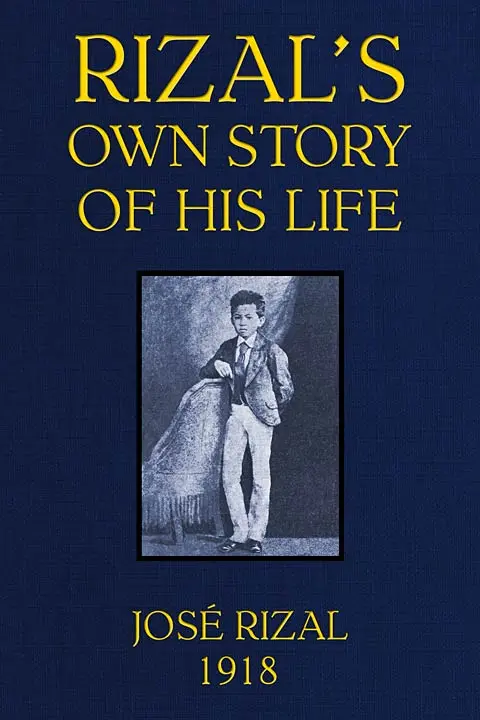
Rizal’s own story of his life
José Rizal
THE CLASSIC COLLECTION · 1900
"An Eagle Flight: A Filipino Novel Adapted from Noli Me Tangere" by José Rizal is a historical novel written in the late 19th century. This adaptation draws from Rizal's original work "Noli Me Tangere," addressing themes of colonialism, social injustice, and the struggle for identity in the Philippines. It features characters such as Crisóstomo Ibarra, who returns to his homeland after studying abroad and encounters the harsh realities of his society shaped by colonial rule. The opening of "An Eagle Flight" introduces us to Captain Tiago's lavish dinner party, which becomes the setting for a mixture of social and political dynamics among the guests, including the young returnee Crisóstomo Ibarra. As he navigates the complexities of reuniting with his culture and confronting the socio-political issues plaguing the Philippines, Ibarra's interactions with various characters reveal personal and national tensions. The atmosphere is charged with unspoken histories, as he learns of his father's unjust death in prison, setting the stage for Ibarra's personal quest for justice and reform.
Introduction adapted from the source catalogue; source summaries may be automatically generated.
Free to read · English · 69,277 words · No account needed
MAKE TIME FOR A GOOD BOOK
On by default. Untick to stop anonymous reading totals. Each page counts after 10 seconds in view. How this works.
Anonymous counting is on unless you have switched it off.
The little old man of the cemetery wandered absent-minded along
the streets.
He was a character of the pueblo. He had once been a student in philosophy, but abandoned his course at the demands of his mother. The good woman, finding that her son had talent, feared lest he become a savant and forget God; she let him choose, therefore, between studying for the priesthood and leaving the college of San Jose. He was in love, took the latter course, and married. Widowed and orphaned within a year, he found in books a deliverance from sadness, idleness, and the gallera. Unhappily he studied too much, bought too many books, neglected to care for his fortune, and came to financial ruin. Some people called him Don Astasio, or Tasio the philosopher; others, and by far the greater number, Tasio the fool.
The afternoon threatened a tempest. Pale flashes of lightning illumined the leaden sky; the atmosphere was heavy and close.
Arrived at the church door, Tasio entered and spoke to two little boys, one ten years old perhaps, the other seven.
"Coming with me?" he asked. "Your mother has ready a dinner fit
for curates."
"The head sacristan won't let us leave yet," said the elder. "We're going into the tower to ring the bells."
"Take care! don't go too near the bells in the storm," said Tasio, and, head down, he went off, thinking, toward the outskirts of the town.
Soon the rain came down in torrents, the thunder echoed clap on clap, each detonation preceded by an awful zig-zag of fire. The tempest grew in fury, and, scarce able to ride on the shifting wind, the plaintive voices of the bells rang out a lamentation.
The boys were in the tower, the younger, timid, in spite of his great black eyes, hugging close to his brother. They resembled one another, but the elder had the stronger and more thoughtful face. Their dress was poor, patched, and darned. The wind beat in the rain a little, where they were, and set the flame of their candle dancing.
"Pull your rope, Crispin," said the elder to his little brother.
Crispin pulled, and heard a feeble plaint, quickly silenced by a thunder crash. "If we were only home with mama," he mourned, "I shouldn't be afraid."
The other did not answer. He watched the candle melt, and seemed
thoughtful.
"At least, no one there would call me a thief; mama would not have it. If she knew they had beaten me----" The elder gave the great cord a sharp pull; a deep, sonorous tone trembled out.
"Pay what they say I stole! Pay it, brother!"
Your reading position is saved on this browser. Take it to another device with a library code. Reading pages adapt to text, rather than matching a printed edition.
BEHIND THE BOOK
This eBook is for the use of anyone anywhere in the United States and most other parts of the world at no cost and with almost no restrictions whatsoever. You may copy it, give it away or re-use it under the terms of the Project Gutenberg License included with this eBook or online at www.gutenberg.org. If you are not located in the United States, you will have to check the laws of the country where you are located before using this eBook. Read the source licence.
The original source file, including credits and licence, is retained by this library. Request an original-format copy at no charge. Please include the book title and Project Gutenberg identifier #27594.
KEEP YOUR CURIOSITY GOING
Cécile Tormay

Moritz Busch
Coulson Kernahan
John L. Ransom

Maurice Baring
Frances Wright