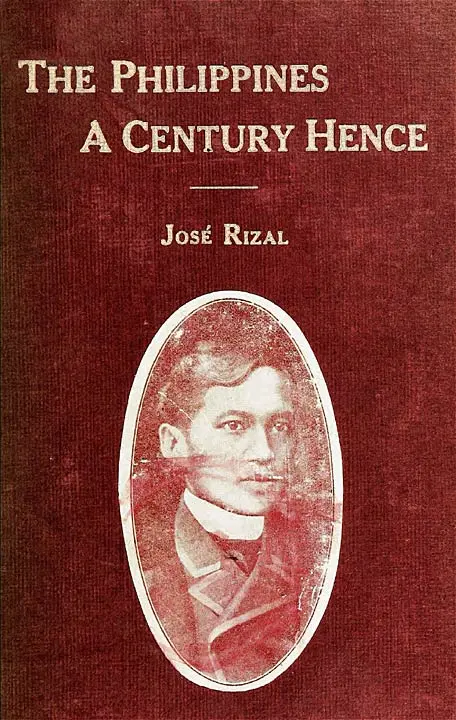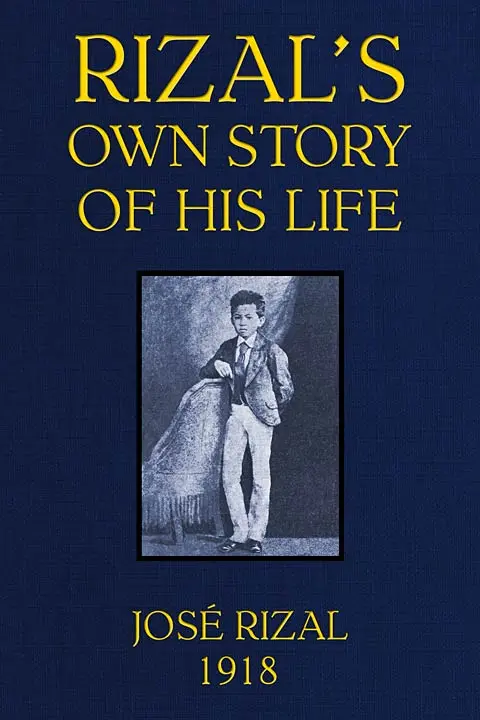
Rizal’s own story of his life
José Rizal
THE CLASSIC COLLECTION · 1900
"An Eagle Flight: A Filipino Novel Adapted from Noli Me Tangere" by José Rizal is a historical novel written in the late 19th century. This adaptation draws from Rizal's original work "Noli Me Tangere," addressing themes of colonialism, social injustice, and the struggle for identity in the Philippines. It features characters such as Crisóstomo Ibarra, who returns to his homeland after studying abroad and encounters the harsh realities of his society shaped by colonial rule. The opening of "An Eagle Flight" introduces us to Captain Tiago's lavish dinner party, which becomes the setting for a mixture of social and political dynamics among the guests, including the young returnee Crisóstomo Ibarra. As he navigates the complexities of reuniting with his culture and confronting the socio-political issues plaguing the Philippines, Ibarra's interactions with various characters reveal personal and national tensions. The atmosphere is charged with unspoken histories, as he learns of his father's unjust death in prison, setting the stage for Ibarra's personal quest for justice and reform.
Introduction adapted from the source catalogue; source summaries may be automatically generated.
Free to read · English · 69,277 words · No account needed
MAKE TIME FOR A GOOD BOOK
On by default. Untick to stop anonymous reading totals. Each page counts after 10 seconds in view. How this works.
Anonymous counting is on unless you have switched it off.
"Listen, senor, to the plan I have made," said Elias, as he pulled toward San Gabriel. "I will hide you, for the present, at the house of a friend of mine at Mandaluyong. I will bring you there your gold, that I hid in the tomb of your great-grandfather. You will leave the country----"
"To live among strangers?" interrupted Ibarra.
"To live in peace. You have friends in Spain; you may get amnesty."
Crisostomo did not reply; he reflected in silence.
They arrived at the Pasig, and the little bark began to go up stream. On the bridge was a horseman, hastening his course, and a whistle long and shrill was heard.
"Elias," said Ibarra at length, "your misfortunes are due to my family, and you have twice saved my life. I owe you both gratitude and restitution of property. You advise me to leave the country; well, come with me. We will live as brothers."
Elias shook his head.
"It is true that I can never be happy in my country, but I can live and die there, perhaps die for my country. That is always something. But you can do nothing for her, here and now. Perhaps some day----"
"Unless I, too, should become a tulisan," mused Ibarra.
"Senor, a month ago we sat in this same boat, under the light of this same moon. You could not have said such a thing then."
"No, Elias. Man seems to be an animal who varies with circumstances. I was blind then, unreasonable, I know not what. Now the bandage has been torn from my eyes; the wretchedness and solitude of my prison has taught me better. I see the cancer that is eating into our society; perhaps, after all, it must be torn out by violence."
They came in sight of the governor-general's palace, and thought they saw unusual movement among the guards.
"Your escape must have been discovered," said Elias. "Lie down, senor, so I can cover you with the zacate, for the sentinel at the magazine may stop us."
As Elias had anticipated, the sentinel challenged him, and asked him
where he came from.
"From Manila, with zacate for the iodores and curates," said he, imitating the accent of the people of Pandakan.
A sergeant came out.
"Sulung," said he to Elias, "I warn you not to take any one into your boat. A prisoner has just escaped. If you capture him and bring him to me, I will give you a fine reward."
"Good, senor; what is his description?"
"He wears a long coat, and speaks Spanish. Look out for him!"
The bark moved off. Elias turned and saw the sentinel still standing
by the bank.
Your reading position is saved on this browser. Take it to another device with a library code. Reading pages adapt to text, rather than matching a printed edition.
BEHIND THE BOOK
This eBook is for the use of anyone anywhere in the United States and most other parts of the world at no cost and with almost no restrictions whatsoever. You may copy it, give it away or re-use it under the terms of the Project Gutenberg License included with this eBook or online at www.gutenberg.org. If you are not located in the United States, you will have to check the laws of the country where you are located before using this eBook. Read the source licence.
The original source file, including credits and licence, is retained by this library. Request an original-format copy at no charge. Please include the book title and Project Gutenberg identifier #27594.
KEEP YOUR CURIOSITY GOING
Cécile Tormay

Moritz Busch
Coulson Kernahan
John L. Ransom

Maurice Baring
Frances Wright