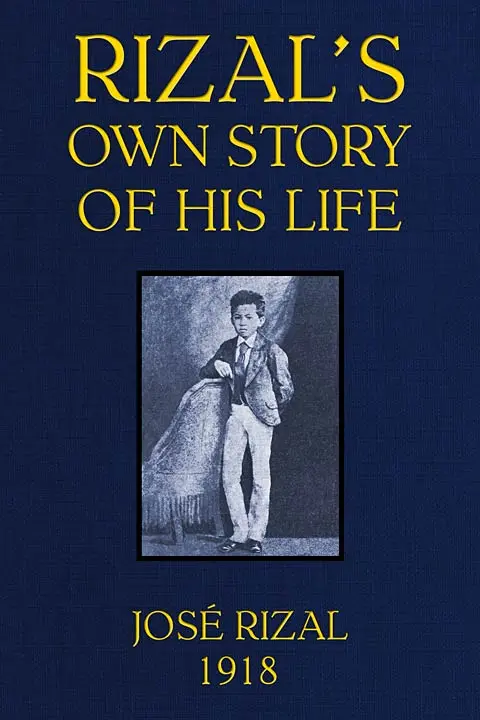
Rizal’s own story of his life
José Rizal
THE CLASSIC COLLECTION · 1900
"An Eagle Flight: A Filipino Novel Adapted from Noli Me Tangere" by José Rizal is a historical novel written in the late 19th century. This adaptation draws from Rizal's original work "Noli Me Tangere," addressing themes of colonialism, social injustice, and the struggle for identity in the Philippines. It features characters such as Crisóstomo Ibarra, who returns to his homeland after studying abroad and encounters the harsh realities of his society shaped by colonial rule. The opening of "An Eagle Flight" introduces us to Captain Tiago's lavish dinner party, which becomes the setting for a mixture of social and political dynamics among the guests, including the young returnee Crisóstomo Ibarra. As he navigates the complexities of reuniting with his culture and confronting the socio-political issues plaguing the Philippines, Ibarra's interactions with various characters reveal personal and national tensions. The atmosphere is charged with unspoken histories, as he learns of his father's unjust death in prison, setting the stage for Ibarra's personal quest for justice and reform.
Introduction adapted from the source catalogue; source summaries may be automatically generated.
Free to read · English · 69,277 words · No account needed
MAKE TIME FOR A GOOD BOOK
On by default. Untick to stop anonymous reading totals. Each page counts after 10 seconds in view. How this works.
Anonymous counting is on unless you have switched it off.
In vain the precious wedding presents heaped up; not the brilliants in their velvet cases, not embroideries of pina nor pieces of silk, drew the eyes of Maria Clara. She saw nothing but the journal in which was told the death of Ibarra, drowned in the lake.
Suddenly she felt two hands over her eyes, clasping her head, while
a merry voice said to her:
"Who is it? Who is it?"
Maria sprang up in fright.
"Little goose! Did I scare you, eh? You weren't expecting me, eh? Why, I've come from the province to be at your marriage----" And with a satisfied smile, Father Damaso gave her his hand to kiss. She took it, trembling, and carried it respectfully to her lips.
"What is it, Maria?" demanded the Franciscan, troubled, and losing his gay smile. "Your hand is cold, you are pale--are you ill, little girl?" And he drew her tenderly to him, took both her hands and questioned her with his eyes.
"Won't you confide in your godfather?" he asked in a tone of reproach. "Come, sit down here and tell me your griefs, as you used to do when you were little, and wanted some tapers to make wax dolls. You know I've always loved you--never scolded you----" and his voice became very tender. Maria began to cry.
"Why do you cry, my child? Have you quarrelled with Linares?"
Maria put her hands over her eyes.
"No; it's not about him--now!"
Father Damaso looked startled. "And you won't tell me your secrets? Have I not always tried to satisfy your slightest wish?"
Maria raised to him her eyes full of tears, looked at him a moment,
then sobbed afresh.
"My child!"
Maria came slowly to him, fell on her knees at his feet, and raising her face wet with tears, asked in a voice scarcely audible:
"Do you still love me?"
"Child!"
"Then--protect my father and make him break off my marriage." And she told him of her last interview with Ibarra, omitting everything about the secret of her birth.
Father Damaso could scarcely believe what he heard. She was talking
calmly now, without tears.
"So long as he lived," she went on, "I could struggle, I could hope, I had confidence; I wished to live to hear about him; but now--that they have killed him, I have no longer any reason to live and suffer."
"And--Linares----"
"If he had lived, I might have married--for my father's sake; but now that he is dead, I want the convent--or the grave."
"You loved him so?" stammered Father Damaso. Maria did not reply. The father bent his head on his breast.
Your reading position is saved on this browser. Take it to another device with a library code. Reading pages adapt to text, rather than matching a printed edition.
BEHIND THE BOOK
This eBook is for the use of anyone anywhere in the United States and most other parts of the world at no cost and with almost no restrictions whatsoever. You may copy it, give it away or re-use it under the terms of the Project Gutenberg License included with this eBook or online at www.gutenberg.org. If you are not located in the United States, you will have to check the laws of the country where you are located before using this eBook. Read the source licence.
The original source file, including credits and licence, is retained by this library. Request an original-format copy at no charge. Please include the book title and Project Gutenberg identifier #27594.
KEEP YOUR CURIOSITY GOING
Cécile Tormay

Moritz Busch
Coulson Kernahan
John L. Ransom

Maurice Baring
Frances Wright