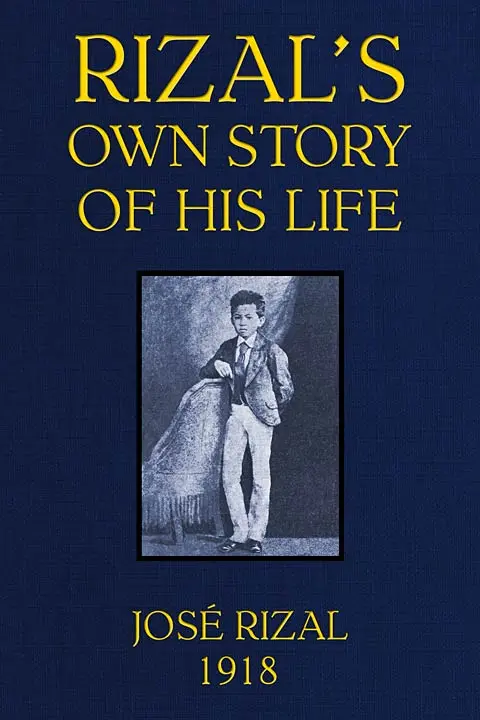
Rizal’s own story of his life
José Rizal
THE CLASSIC COLLECTION · 1900
"An Eagle Flight: A Filipino Novel Adapted from Noli Me Tangere" by José Rizal is a historical novel written in the late 19th century. This adaptation draws from Rizal's original work "Noli Me Tangere," addressing themes of colonialism, social injustice, and the struggle for identity in the Philippines. It features characters such as Crisóstomo Ibarra, who returns to his homeland after studying abroad and encounters the harsh realities of his society shaped by colonial rule. The opening of "An Eagle Flight" introduces us to Captain Tiago's lavish dinner party, which becomes the setting for a mixture of social and political dynamics among the guests, including the young returnee Crisóstomo Ibarra. As he navigates the complexities of reuniting with his culture and confronting the socio-political issues plaguing the Philippines, Ibarra's interactions with various characters reveal personal and national tensions. The atmosphere is charged with unspoken histories, as he learns of his father's unjust death in prison, setting the stage for Ibarra's personal quest for justice and reform.
Introduction adapted from the source catalogue; source summaries may be automatically generated.
Free to read · English · 69,277 words · No account needed
MAKE TIME FOR A GOOD BOOK
On by default. Untick to stop anonymous reading totals. Each page counts after 10 seconds in view. How this works.
Anonymous counting is on unless you have switched it off.
The noise of the affair spread rapidly. At first no one believed it, but when there was no longer room for doubt, each made his comments, according to the degree of his moral elevation.
"Father Damaso is dead," said some. "When he was carried away, his face was congested with blood, and he no longer breathed."
"May he rest in peace, but he has only paid his debt!" said a young
stranger.
"Why do you say that?"
"One of us students who came from Manila for the fete left the church when the sermon in Tagalo began, saying it was Greek to him. Father Damaso sent for him afterward, and they came to blows."
"Are we returning to the times of Nero?" asked another student.
"You mistake," replied the first. "Nero was an artist, and Father Damaso is a jolly poor preacher!"
The men of more years talked otherwise.
"To say which was wrong and which right is not easy," said the gobernadorcillo, "and yet, if Senor Ibarra had been more moderate----"
"You probably mean, if Father Damaso had shown half the moderation of Senor Ibarra," interrupted Don Filipo. "The pity is that the roles were interchanged: the youth conducted himself like an old man, and the old man like a youth."
"And you say nobody but the daughter of Captain Tiago came between them? Not a monk, nor the alcalde?" asked Captain Martin. "I wouldn't like to be in the young man's shoes. None of those who were afraid of him will ever forgive him. Hah, that's the worst of it!"
"You think so?" demanded Captain Basilio, with interest.
"I hope," said Don Filipo, exchanging glances with Captain Basilio, "that the pueblo isn't going to desert him. His friends at least----"
"But, senores," interrupted the gobernadorcillo, "what can we
do? What can the pueblo? Whatever happens, the monks are always in
the right----"
"They are always in the right, because we always say they're in the right. Let us say we are in the right for once, and then we shall have something to talk about!"
The gobernadorcillo shook his head.
"Ah, the young blood!" he said. "You don't seem to know what country you live in; you don't know your compatriots. The monks are rich; they are united; we are poor and divided. Try to defend him and you will see how you are left to compromise yourself alone!"
"Yes," cried Don Filipo bitterly, "and it will be so as long as fear and prudence are supposed to be synonymous. Each thinks of himself, nobody of any one else; that is why we are weak!"
Your reading position is saved on this browser. Take it to another device with a library code. Reading pages adapt to text, rather than matching a printed edition.
BEHIND THE BOOK
This eBook is for the use of anyone anywhere in the United States and most other parts of the world at no cost and with almost no restrictions whatsoever. You may copy it, give it away or re-use it under the terms of the Project Gutenberg License included with this eBook or online at www.gutenberg.org. If you are not located in the United States, you will have to check the laws of the country where you are located before using this eBook. Read the source licence.
The original source file, including credits and licence, is retained by this library. Request an original-format copy at no charge. Please include the book title and Project Gutenberg identifier #27594.
KEEP YOUR CURIOSITY GOING
Cécile Tormay

Moritz Busch
Coulson Kernahan
John L. Ransom

Maurice Baring
Frances Wright