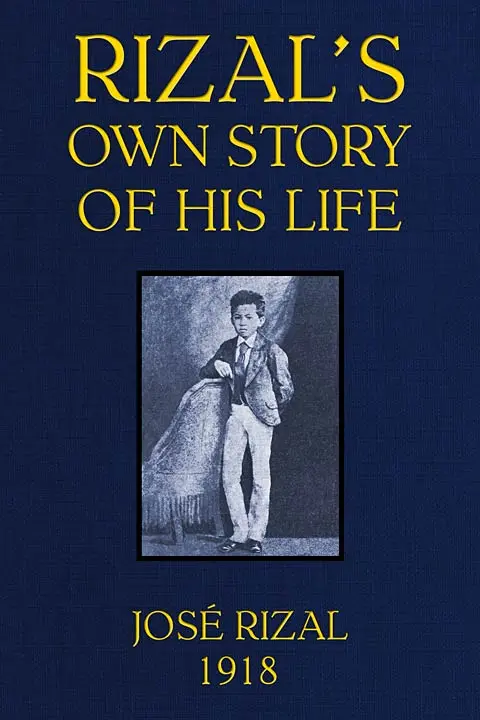
Rizal’s own story of his life
José Rizal
THE CLASSIC COLLECTION · 1900
"An Eagle Flight: A Filipino Novel Adapted from Noli Me Tangere" by José Rizal is a historical novel written in the late 19th century. This adaptation draws from Rizal's original work "Noli Me Tangere," addressing themes of colonialism, social injustice, and the struggle for identity in the Philippines. It features characters such as Crisóstomo Ibarra, who returns to his homeland after studying abroad and encounters the harsh realities of his society shaped by colonial rule. The opening of "An Eagle Flight" introduces us to Captain Tiago's lavish dinner party, which becomes the setting for a mixture of social and political dynamics among the guests, including the young returnee Crisóstomo Ibarra. As he navigates the complexities of reuniting with his culture and confronting the socio-political issues plaguing the Philippines, Ibarra's interactions with various characters reveal personal and national tensions. The atmosphere is charged with unspoken histories, as he learns of his father's unjust death in prison, setting the stage for Ibarra's personal quest for justice and reform.
Introduction adapted from the source catalogue; source summaries may be automatically generated.
Free to read · English · 69,277 words · No account needed
MAKE TIME FOR A GOOD BOOK
On by default. Untick to stop anonymous reading totals. Each page counts after 10 seconds in view. How this works.
Anonymous counting is on unless you have switched it off.
"Are you mad, Crispin? Mama would have nothing to eat; they say you stole two onces, and two onces make thirty-two pesos."
The little fellow counted thirty-two on his fingers.
"Six hands and two fingers. And each finger makes a peso, and each
peso how many cuartos?"
"A hundred sixty."
"And how much is a hundred sixty?"
"Thirty-two hands."
Crispin regarded his little paws.
"Thirty-two hands," he said, "and each finger a cuarto! O mama! how many cuartos! and with them one could buy shoes, and a hat for the sun, and an umbrella for the rain, and clothes for mama."
Crispin became pensive.
"What I'm afraid of is that mama will be angry with you when she
hears about it."
"You think so?" said Crispin, surprised. "But I've never had a cuarto except the one they gave me at Easter. Mama won't believe I stole; she won't believe it!"
"But if the curate says so----"
Crispin began to cry, and said through his sobs:
"Then go alone, I won't go. Tell mama I'm sick."
"Crispin, don't cry," said his brother. "If mama seems to believe what they say, you'll tell her that the sacristan lies, that the curate believes him, that they say we are thieves because our father----"
A head came out of the shadows in the little stairway, and as if it had been Medusa's, it froze the words on the children's lips.
The head was long and lean, with a shock of black hair. Blue glasses concealed one sightless eye. It was the chief sacristan who had thus stolen upon the children.
"You, Basilio, are fined two reales for not ringing regularly. And you, Crispin, stay to-night till you find what you've stolen."
"We have permission," began Basilio; "our mother expects us at nine."
"You won't go at nine o'clock either; you shall stay till ten."
"But, senor, after nine one can't pass through the streets----"
"Are you trying to dictate to me?" demanded the sacristan, and he
seized Crispin's arm.
"Senor, we have not seen our mother for a week," entreated Basilio, taking hold of his brother as if to protect him.
With a stroke on the cheek the sacristan made him let go, and dragged off Crispin, who commenced to cry, let himself fall, tried to cling to the floor, and besought Basilio to keep him. But the sacristan, dragging the child, disappeared in the shadows.
Basilio stood mute. He heard his little brother's body strike against the stairs; he heard a cry, blows, heart-rending words, growing fainter and fainter, lost at last in the distance.
"When shall I be strong enough?" he murmured, and dashed down the
stairs.
Your reading position is saved on this browser. Take it to another device with a library code. Reading pages adapt to text, rather than matching a printed edition.
BEHIND THE BOOK
This eBook is for the use of anyone anywhere in the United States and most other parts of the world at no cost and with almost no restrictions whatsoever. You may copy it, give it away or re-use it under the terms of the Project Gutenberg License included with this eBook or online at www.gutenberg.org. If you are not located in the United States, you will have to check the laws of the country where you are located before using this eBook. Read the source licence.
The original source file, including credits and licence, is retained by this library. Request an original-format copy at no charge. Please include the book title and Project Gutenberg identifier #27594.
KEEP YOUR CURIOSITY GOING
Cécile Tormay

Moritz Busch
Coulson Kernahan
John L. Ransom

Maurice Baring
Frances Wright