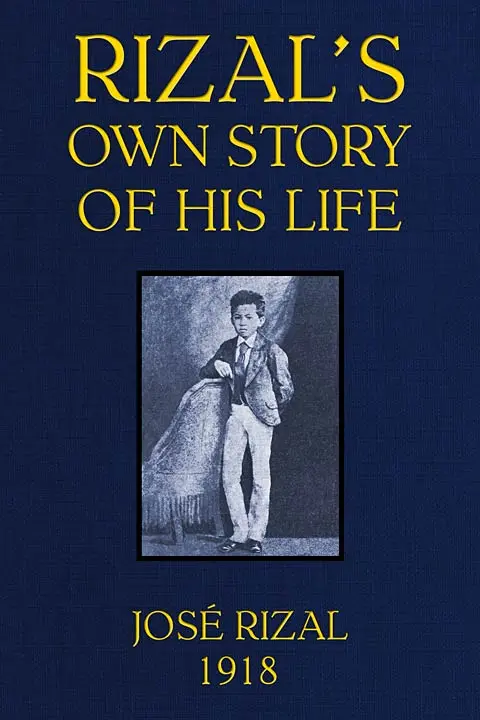
Rizal’s own story of his life
José Rizal
THE CLASSIC COLLECTION · 1900
"An Eagle Flight: A Filipino Novel Adapted from Noli Me Tangere" by José Rizal is a historical novel written in the late 19th century. This adaptation draws from Rizal's original work "Noli Me Tangere," addressing themes of colonialism, social injustice, and the struggle for identity in the Philippines. It features characters such as Crisóstomo Ibarra, who returns to his homeland after studying abroad and encounters the harsh realities of his society shaped by colonial rule. The opening of "An Eagle Flight" introduces us to Captain Tiago's lavish dinner party, which becomes the setting for a mixture of social and political dynamics among the guests, including the young returnee Crisóstomo Ibarra. As he navigates the complexities of reuniting with his culture and confronting the socio-political issues plaguing the Philippines, Ibarra's interactions with various characters reveal personal and national tensions. The atmosphere is charged with unspoken histories, as he learns of his father's unjust death in prison, setting the stage for Ibarra's personal quest for justice and reform.
Introduction adapted from the source catalogue; source summaries may be automatically generated.
Free to read · English · 69,277 words · No account needed
MAKE TIME FOR A GOOD BOOK
On by default. Untick to stop anonymous reading totals. Each page counts after 10 seconds in view. How this works.
Anonymous counting is on unless you have switched it off.
The two monks finding themselves near the head of the table, like two candidates for a vacant office, began politely resigning in each other's favor.
"This is your place, Brother Damaso."
"No, yours, Brother Sibyla."
"You are so much the older friend of the family."
"But you are the curate of the quarter."
This polite contention settled, the guests sat down, no one but Ibarra seeming to think of the master of the house.
"What," said he, "you're not to be with us, Don Santiago?"
But there was no place: Lucullus was not dining with Lucullus.
"Don't trouble yourself," said Captain Tiago, laying his hand on the young man's shoulder. "This feast is a thank-offering for your safe return. Ho, there! bring the tinola! I've ordered the tinola expressly for you, Crisostomo."
"When did you leave the country?" Laruja asked Ibarra.
"Seven years ago."
"Then you must have almost forgotten it."
"On the contrary, it has been always in my thoughts; but my country
seems to have forgotten me."
"Why do you say that?" asked the old lieutenant.
"Because for several months I have had no news, so that I do not even know how and when my father died."
The lieutenant could not repress a groan.
"And where were you that they couldn't telegraph you?" asked Dona Victorina. "When we were married, we sent despatches to the peninsula."
"Senora, I was in the far north," said Ibarra.
"You have travelled much," said the blond provincial; "which of the European countries pleased you most?"
"After Spain, my second country, the nations that are free."
"And what struck you as most interesting, most surprising, in the
general life of nations--the genius of each, so to put it?" asked
Laruja.
Ibarra reflected.
"Before visiting a country I carefully studied its history, and, except the different motives for national pride, there seems to me nothing surprisingly characteristic in any nation. Given its history, everything appears natural; each people's wealth and misery seem in direct proportion to its freedom and its prejudices, and in consequence, in proportion to the self-sacrifice or selfishness of its progenitors."
"Did you discover nothing more startling than that?" demanded the Franciscan, with a mocking laugh. "It was hardly worth while squandering money for so slight returns. Not a schoolboy but knows as much."
The guests eyed one another, fearful of what might follow. Ibarra, astonished, remained silent a moment, then said quietly:
Your reading position is saved on this browser. Take it to another device with a library code. Reading pages adapt to text, rather than matching a printed edition.
BEHIND THE BOOK
This eBook is for the use of anyone anywhere in the United States and most other parts of the world at no cost and with almost no restrictions whatsoever. You may copy it, give it away or re-use it under the terms of the Project Gutenberg License included with this eBook or online at www.gutenberg.org. If you are not located in the United States, you will have to check the laws of the country where you are located before using this eBook. Read the source licence.
The original source file, including credits and licence, is retained by this library. Request an original-format copy at no charge. Please include the book title and Project Gutenberg identifier #27594.
KEEP YOUR CURIOSITY GOING
Cécile Tormay

Moritz Busch
Coulson Kernahan
John L. Ransom

Maurice Baring
Frances Wright