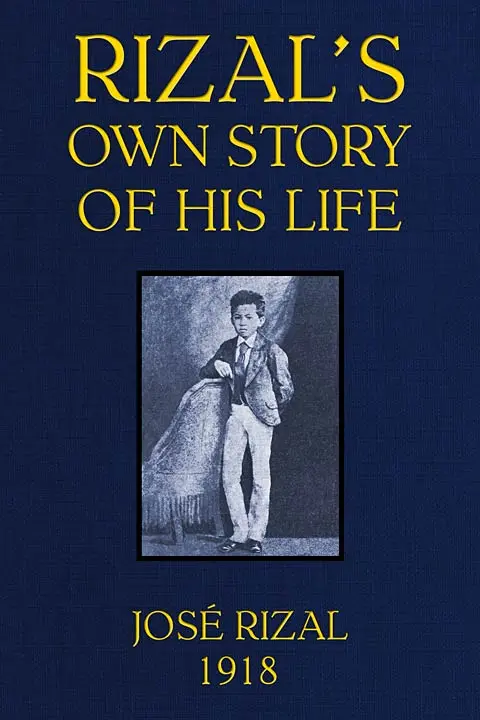
Rizal’s own story of his life
José Rizal
THE CLASSIC COLLECTION · 1900
"An Eagle Flight: A Filipino Novel Adapted from Noli Me Tangere" by José Rizal is a historical novel written in the late 19th century. This adaptation draws from Rizal's original work "Noli Me Tangere," addressing themes of colonialism, social injustice, and the struggle for identity in the Philippines. It features characters such as Crisóstomo Ibarra, who returns to his homeland after studying abroad and encounters the harsh realities of his society shaped by colonial rule. The opening of "An Eagle Flight" introduces us to Captain Tiago's lavish dinner party, which becomes the setting for a mixture of social and political dynamics among the guests, including the young returnee Crisóstomo Ibarra. As he navigates the complexities of reuniting with his culture and confronting the socio-political issues plaguing the Philippines, Ibarra's interactions with various characters reveal personal and national tensions. The atmosphere is charged with unspoken histories, as he learns of his father's unjust death in prison, setting the stage for Ibarra's personal quest for justice and reform.
Introduction adapted from the source catalogue; source summaries may be automatically generated.
Free to read · English · 69,277 words · No account needed
MAKE TIME FOR A GOOD BOOK
On by default. Untick to stop anonymous reading totals. Each page counts after 10 seconds in view. How this works.
Anonymous counting is on unless you have switched it off.
One was the original of the portrait in oil, and he led by the hand a young man in deep black. "Good evening, senores; good evening, fathers," said Captain Tiago, kissing the hands of the priests, "I have the honor of presenting to you Don Crisostomo Ibarra."
At the name of Ibarra there were smothered exclamations. The lieutenant, forgetting to salute the master of the house, surveyed the young man from head to foot. Brother Damaso seemed petrified. The arrival was evidently unexpected. Senor Ibarra exchanged the usual phrases with members of the group. Nothing marked him from other guests save his black attire. His fine height, his manner, his movements, denoted sane and vigorous youth. His face, frank and engaging, of a rich brown, and lightly furrowed--trace of Spanish blood--was rosy from a sojourn in the north.
"Ah!" he cried, surprised and delighted, "my father's old friend,
Brother Damaso!"
All eyes turned toward the Franciscan, who did not stir.
"Pardon," said Ibarra, puzzled. "I am mistaken."
"You are not mistaken," said the priest at last, in an odd voice; "but your father was not my friend."
Ibarra, astonished, drew slowly back the hand he had offered, and
turned to find himself facing the lieutenant, whose eyes had never
left him.
"Young man, are you the son of Don Rafael Ibarra?"
Crisostomo bowed.
"Then welcome to your country! I knew your father well, one of the most honorable men of the Philippines."
"Senor," replied Ibarra, "what you say dispels my doubts as to his fate, of which as yet I know nothing."
The old man's eyes filled with tears. He turned away to hide them,
and moved off into the crowd.
The master of the house had disappeared. Ibarra was left alone in the middle of the room. No one presented him to the ladies. He hesitated a moment, then went up to them and said:
"Permit me to forget formalities, and salute the first of my countrywomen I have seen for years."
No one spoke, though many eyes regarded him with interest. Ibarra turned away, and a jovial man, in native dress, with studs of brilliants down his shirt-front, almost ran up to say:
"Senor Ibarra, I wish to know you. I am Captain Tinong, and live near you at Tondo. Will you honor us at dinner to-morrow?"
"Thank you," said Ibarra, pleased with the kindness, "but to-morrow
I must leave for San Diego."
"What a pity! Well then, on your return----"
"Dinner is served," announced a waiter of the Cafe La Campana.
Your reading position is saved on this browser. Take it to another device with a library code. Reading pages adapt to text, rather than matching a printed edition.
BEHIND THE BOOK
This eBook is for the use of anyone anywhere in the United States and most other parts of the world at no cost and with almost no restrictions whatsoever. You may copy it, give it away or re-use it under the terms of the Project Gutenberg License included with this eBook or online at www.gutenberg.org. If you are not located in the United States, you will have to check the laws of the country where you are located before using this eBook. Read the source licence.
The original source file, including credits and licence, is retained by this library. Request an original-format copy at no charge. Please include the book title and Project Gutenberg identifier #27594.
KEEP YOUR CURIOSITY GOING
Cécile Tormay

Moritz Busch
Coulson Kernahan
John L. Ransom

Maurice Baring
Frances Wright