
Jocelyn
John Galsworthy
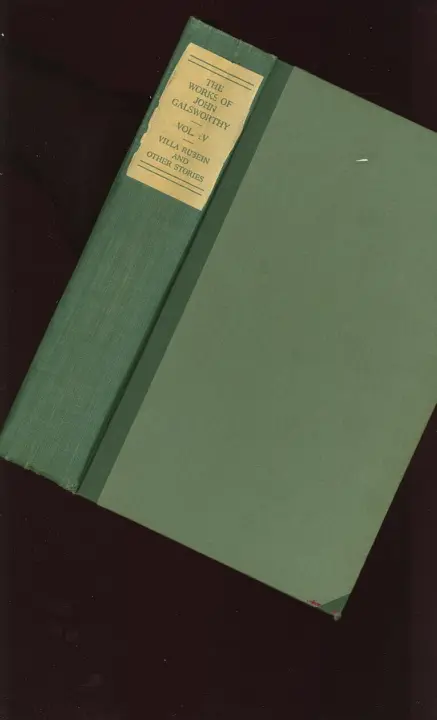
THE CLASSIC COLLECTION · 1920
"Villa Rubein and Other Stories" by John Galsworthy is a collection of short stories likely written during the early 20th century. The stories explore themes of human emotion and the complexity of relationships, often set against a backdrop of social dynamics and individual aspirations. The opening story introduces the central character, Harz, a painter who is deeply engaged in his creative process and his interactions with a mixed household at Villa Rubein, highlighting the contrasts between artistic ambition and societal expectations. The opening of the story unfolds with Harz, an artist, as he navigates his daily life in Botzen, where he meets Edmund Dawney, a doctor; their conversations reveal contrasting views on passion and duty towards their respective professions. Harz is depicted as passionate and driven by a desire to create, while Dawney is practical and focused on social success. When Harz's isolation in his creative pursuits is interrupted by interactions with the family at Villa Rubein—including the innocent and curious young girl Greta- an unexpected warmth begins to bloom. The narrative transitions into deeper explorations of relationships and the philosophical underpinnings of art and life, setting the stage for both personal and artistic growth throughout the collection.
Introduction adapted from the source catalogue; source summaries may be automatically generated.
Free to read · English · 96,246 words · No account needed
MAKE TIME FOR A GOOD BOOK
On by default. Untick to stop anonymous reading totals. Each page counts after 10 seconds in view. How this works.
Anonymous counting is on unless you have switched it off.
“We wondered if you would still be here, Christian. I am sorry to interrupt you—I was not aware that you knew Mr. Herr—”
“Harz is my name—we were just talking”
“About my sketch. Oh, Greta, you do tickle! Will you come and have breakfast with us to-day, Herr Harz? It's our turn, you know.”
Harz, glancing at his dusty clothes, excused himself.
But Greta in a pleading voice said: “Oh! do come! Scruff likes you. It is so dull when there is nobody for breakfast but ourselves.”
Miss Naylor's mouth began to twist. Harz hurriedly broke in:
“Thank you. I will come with pleasure; you don't mind my being dirty?”
“Oh no! we do not mind; then we shall none of us wash, and afterwards I shall show you my rabbits.”
Miss Naylor, moving from foot to foot, like a bird on its perch,
exclaimed:
“I hope you won't regret it, not a very good meal—the girls are so impulsive—such informal invitation; we shall be very glad.”
But Greta pulled softly at her sister's sleeve, and Christian, gathering her things, led the way.
Harz followed in amazement; nothing of this kind had come into his life before. He kept shyly glancing at the girls; and, noting the speculative innocence in Greta's eyes, he smiled. They soon came to two great poplar-trees, which stood, like sentinels, one on either side of an unweeded gravel walk leading through lilac bushes to a house painted dull pink, with green-shuttered windows, and a roof of greenish slate. Over the door in faded crimson letters were written the words, “Villa Rubein.”
“That is to the stables,” said Greta, pointing down a path, where some pigeons were sunning themselves on a wall. “Uncle Nic keeps his horses there: Countess and Cuckoo—his horses begin with C, because of Chris—they are quite beautiful. He says he could drive them to Kingdom-Come and they would not turn their hair. Bow, and say 'Good-morning' to our house!”
Harz bowed.
“Father said all strangers should, and I think it brings good luck.” From the doorstep she looked round at Harz, then ran into the house.
A broad, thick-set man, with stiff, brushed-up hair, a short, brown, bushy beard parted at the chin, a fresh complexion, and blue glasses across a thick nose, came out, and called in a bluff voice:
“Ha! my good dears, kiss me quick—prrt! How goes it then this morning? A good walk, hein?” The sound of many loud rapid kisses followed.
“Ha, Fraulein, good!” He became aware of Harz's figure standing in the doorway: “Und der Herr?”
Miss Naylor hurriedly explained.
Your reading position is saved on this browser. Take it to another device with a library code. Reading pages adapt to text, rather than matching a printed edition.
John Galsworthy
John Galsworthy
John Galsworthy

John Galsworthy
BEHIND THE BOOK
This eBook is for the use of anyone anywhere in the United States and most other parts of the world at no cost and with almost no restrictions whatsoever. You may copy it, give it away or re-use it under the terms of the Project Gutenberg License included with this eBook or online at www.gutenberg.org. If you are not located in the United States, you will have to check the laws of the country where you are located before using this eBook. Read the source licence.
The original source file, including credits and licence, is retained by this library. Request an original-format copy at no charge. Please include the book title and Project Gutenberg identifier #2639.
KEEP YOUR CURIOSITY GOING
Coulson Kernahan

Maurice Baring
Frances Wright
Cécile Tormay

Frederic Jesup Stimson

W. H. P. (William Henry Pope) Jarvis