THE CLASSIC COLLECTION✦The Egregious EnglishCLASSIC FREE BOOKS
The Egregious English
T. W. H. (Thomas William Hodgson) Crosland
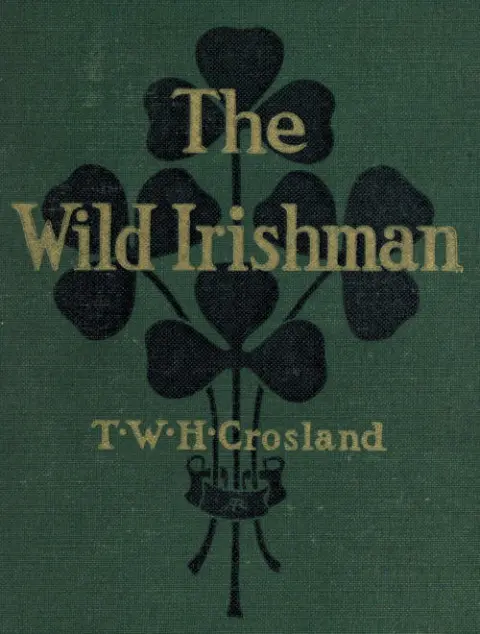
THE CLASSIC COLLECTION · 1905
"The Wild Irishman" by T. W. H. Crosland is a commentary on Irish identity and culture, written in the early 20th century. This work delves into various aspects of Irish life, weaving together social observations, critiques of political sentiments, and reflections on the Irish character and conditions. It also sheds light on the effects of emigration and the Irish experience in America, aiming to provide a perspective on Ireland's ongoing struggles and the resilience of its people. The opening of the text establishes a critical tone as it reflects on the so-called "Irish question," exploring its historical context and current relevance. Crosland discusses the contrasting perspectives of the Irish towards England and America, portraying America as a "promised land" for many Irish. He provides a detailed analysis of the social and economic distress in Ireland, emphasizing the resilience and unique culture of the Irish people amidst prevailing hardships. The preference for addressing serious cultural issues with humor and wit becomes apparent, indicating the author's broader critique of both Irish and English society while setting the stage for an exploration of Irish customs, history, and identity.
Introduction adapted from the source catalogue; source summaries may be automatically generated.
Free to read · English · 32,428 words · No account needed
MAKE TIME FOR A GOOD BOOK
On by default. Untick to stop anonymous reading totals. Each page counts after 10 seconds in view. How this works.
Anonymous counting is on unless you have switched it off.
… “O here,
Will I set up my everlasting rest
And shake the yoke of inauspicious stars
From this world-weary flesh?”
Shakespeare is for all time and more and more for the closet. Blake is a greater poet than the critical are disposed to admit, even in this age of tender enthusiasms. And Mr. Yeats is a poet, not because he is Irish or Keltic, but in so far and precisely as far as he has had the good sense to take Blake for his master. For Kelticism as it is understood by its professors, Shakespeare abounds in it.
1st Lady. Come, my gracious lord,
Shall I be your playfellow?
Mam. No, I’ll none of you.
1st Lady. Why, my sweet lord?
Mam. You’ll kiss me hard, and speak to me as if I were a baby still.—I love you better.
2nd Lady. And why so, my lord?
Mam. Not for because Your brows are blacker; yet black brows, they say, Become some women best, so that there be not Too much hair there, but in a semi-circle Or half-moon made with a pen.
2nd Lady. Who taught you this?
Mam. I learnt it out of women’s faces.—Pray now
What color are your eyebrows?
1st Lady. Blue, my lord.
Mam. Nay, there’s a mock. I have seen a lady’s nose That has been blue, but not her eyebrows.
2nd Lady. Hark ye;
The queen your mother rounds apace; we shall
Present our service to a fine new prince
One of these days; and then you’d wanton with us,
If we would have you.
1st Lady. She is spread of late Into a goodly bulk. Good time encounter her!
Her. What wisdom stirs amongst you?—Come, sir, now
I am for you again. Pray you, sit by us,
And tell’s a tale.
Mam. Merry or sad shall’t be?
Her. As merry as you will.
Mam. A sad tale’s best for winter: I have one of sprites and goblins.
Her. Let’s have that, good sir, Come on, sit down. Come on, and do your best, To fright me with your sprites, you’re powerful at it.
Mam. There was a man—
Her. Nay, come sit down; then on.
Mam. Dwelt by a churchyard—I will tell it softly; Yond crickets shall not hear it.
Her. Come on then,
And give’t in mine ear.
Your reading position is saved on this browser. Take it to another device with a library code. Reading pages adapt to text, rather than matching a printed edition.
T. W. H. (Thomas William Hodgson) Crosland
T. W. H. (Thomas William Hodgson) Crosland
T. W. H. (Thomas William Hodgson) Crosland
BEHIND THE BOOK
This eBook is for the use of anyone anywhere in the United States and most other parts of the world at no cost and with almost no restrictions whatsoever. You may copy it, give it away or re-use it under the terms of the Project Gutenberg License included with this eBook or online at www.gutenberg.org. If you are not located in the United States, you will have to check the laws of the country where you are located before using this eBook. Read the source licence.
The original source file, including credits and licence, is retained by this library. Request an original-format copy at no charge. Please include the book title and Project Gutenberg identifier #57838.
KEEP YOUR CURIOSITY GOING

David Patterson (Spirit) Hatch

David Patterson (Spirit) Hatch

David Patterson (Spirit) Hatch
Cécile Tormay

Moritz Busch
John L. Ransom