
The Yoke of the Thorah
Henry Harland
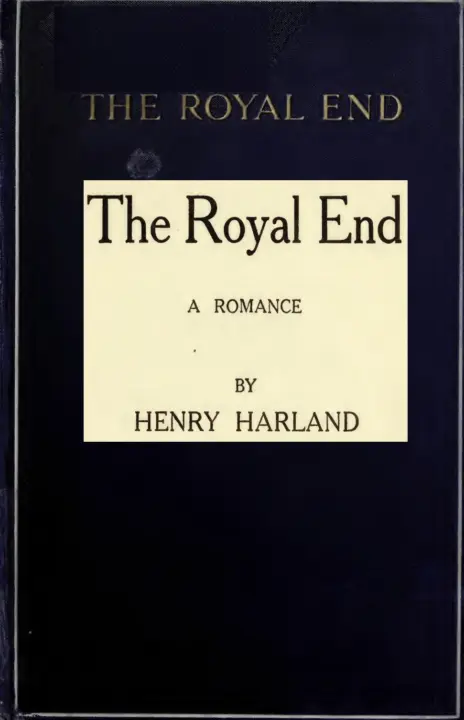
THE CLASSIC COLLECTION · 1909
"The Royal End: A Romance" by Henry Harland is a novel written in the early 20th century. The story is set in Venice and follows the intricate lives of its main characters, specifically Lucilla Dor and her companion Ruth Adgate, as they encounter a charming man named Bertram and navigate romantic entanglements amid social expectations. As Balzatore, the dog, flits through scenes of flirtation and adventure, themes of admiration, social status, and identity come to the forefront, evoking the challenges of love against a backdrop of societal intrigue. At the start of the novel, the setting is established as Lucilla and Ruth dine at a hotel in Venice, where they unknowingly attract the attention of Bertram and his canine companion, Balzatore. This signals the beginning of a romantic entanglement fueled by misunderstandings and societal norms. As the characters interact against the enchanting backdrop of the city, the narrative delves into their personalities, exploring Lucilla's flirtatiousness and Ruth's contrasting reserve. Their evening takes a turn when they find themselves stranded on the Lido, ultimately leading to Bertram's gallant intervention. The opening sets a tone rich with fascination and sharp social commentary as the characters' complexities begin to intertwine.
Introduction adapted from the source catalogue; source summaries may be automatically generated.
Free to read · English · 55,898 words · No account needed
MAKE TIME FOR A GOOD BOOK
On by default. Untick to stop anonymous reading totals. Each page counts after 10 seconds in view. How this works.
Anonymous counting is on unless you have switched it off.
“You women,” growled Pontycroft, extracting a cigarette from his cigarette case, “are so relentlessly cautious! You have no faith in the unexpected! That's why you'll never know the supreme content of throwing your bonnets over the mills, regardless of consequences.”
“The Consequences!” Lucilla retorted, “they're too obvious. We should be left bareheaded, et voilà tout!”
“Ah, well--there you are,” replied Ponty, and touched a match to his
cigarette.
Yes, we may believe that the newspapers were read with interest at the Villa Santa Cecilia and that they gave the man there occasion for what his sister called “a prodigious deal of jawing.”
“Well, my poor Ariadne,” he commiserated, “ginger is still hot in the mouth, and Naxos is still a comfortable place of sojourn. Our star has been snatched from us and borne aloft to its high orbit in the heavens; we from our lowly coigne of earth can watch and unselfishly rejoice at its high destiny. Of course, the one thing to regret is that you didn't nail him when you had him. Nail the wild star to its track in the half climbed Zodiac,” he advised, sententious.
And in spirit ripe for mischief, Ponty bethought him of a long-forgotten poem, and he went all the way down to Vieusseux to procure a volume of the works of Wordsworth. Henceforth, dreamily, from time to time, he would fall to repeating favourite lines. For nearly a day Ruth bore, with equanimity tempered by repartee, a volley of verse:
“He was a lovely youth, I guess”
said Ponty,
“The panther in the wilderness
Was not so fair as he.”
“I cannot dispute it. He was good-looking,” Ruth suavely returned.
“But,”--this he let fall from the terrace an hour later, to Ruth engaged below in snipping dead leaves from Lucilla's clambering rose bushes,--
“But, when his father called, the youth
Deserted his poor bride, and Ruth
Could never find him more.”
“Fathers make, like mothers, I imagine, a poor substitute for brides,” said Ruth. She glanced at him with amusement. “Never, my nurse used to tell me, is a good while. Did that foolish youth find his bride?” she added, absorbed apparently in her occupation, “when he came back to claim her? As he did at last, you may rest assured.”
Pontycroft made no reply to this question, but he placed his book on the table and prepared to descend the steps:
“God help thee, Ruth,”
he exclaimed.
“Such pains she had
That she in half a year went mad.”
Your reading position is saved on this browser. Take it to another device with a library code. Reading pages adapt to text, rather than matching a printed edition.
Henry Harland

Henry Harland

Henry Harland

Henry Harland
BEHIND THE BOOK
This eBook is for the use of anyone anywhere in the United States and most other parts of the world at no cost and with almost no restrictions whatsoever. You may copy it, give it away or re-use it under the terms of the Project Gutenberg License included with this eBook or online at www.gutenberg.org. If you are not located in the United States, you will have to check the laws of the country where you are located before using this eBook. Read the source licence.
The original source file, including credits and licence, is retained by this library. Request an original-format copy at no charge. Please include the book title and Project Gutenberg identifier #51980.
KEEP YOUR CURIOSITY GOING
Coulson Kernahan

Maurice Baring
Frances Wright
Cécile Tormay

Frederic Jesup Stimson

W. H. P. (William Henry Pope) Jarvis