
Life of Edwin Forrest, the American Tragedian. Volume 2 (of 2)
William Rounseville Alger & Horatio, Jr. Alger
THE CLASSIC COLLECTION · 1869
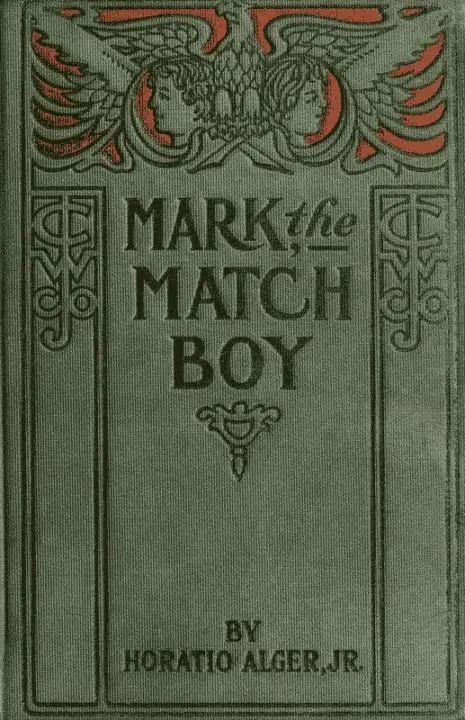
"Mark the Match Boy; or, Richard Hunter's Ward" by Horatio Alger, Jr. is a novel written in the late 19th century. This story follows a young boy named Mark, who sells matches on the streets of New York City while enduring hardships and abuse from his caregiver, Mother Watson. As Mark navigates his struggles, themes of resilience, friendship, and the hope for a better life are prevalent throughout the narrative. At the start of the book, we are introduced to Mark, a thinly-clad boy deeply affected by hunger and the harsh realities of street life. He returns home after a long day of trying to sell matches but is met with hostility and threats from Mother Watson, who only cares about the money he brings in. As he contemplates his situation, Mark begins to consider breaking free from this abusive arrangement. His fate takes a turn when he unexpectedly receives some money while resting on a ferryboat, igniting a spark of independence. This opening sets the stage for Mark's journey toward self-sufficiency as he ponders his future and contemplates the possibility of escaping his current life.
Introduction adapted from the source catalogue; source summaries may be automatically generated.
Free to read · English · 48,243 words · No account needed
MAKE TIME FOR A GOOD BOOK
On by default. Untick to stop anonymous reading totals. Each page counts after 10 seconds in view. How this works.
Anonymous counting is on unless you have switched it off.
"Rest is most important of all. That, with nourishing food and freedom from exposure, will soon bring him round again."
"He shall have all these."
"I suppose you know him, as you take so much interest in him?"
"No, I never saw him but once before to-day, but I am able to befriend him, and he has no other friends."
"There are not many young men who would take all this trouble about a poor match boy," said the doctor.
"It's because they don't know how hard it is to be friendless and neglected," said Dick. "I've known that feeling, and it makes me pity those who are in the same condition I once was."
"I wish there were more like you, Mr. Hunter," said Dr. Pemberton. "There would be less suffering in the world. As to our little patient here, I have no doubt he will do well, and soon be on his legs again."
Indeed Mark was already looking better and feeling better. The rest which he had obtained during the day, and the refreshment he had just taken, were precisely what he needed. He soon fell asleep, and Richard and Fosdick, lighting the gas lamp on the centre-table, sat down to their evening studies.
In a few days Mark was decidedly better, but it was thought best that he should still keep the room. He liked it very well in the evening when Dick and Fosdick were at home, but he felt rather lonesome in the daytime. Richard Hunter thought of this one day, and said, "Can you read, Mark?"
"Yes," said the match boy.
"Who taught you? Not Mother Watson, surely."
"No, she couldn't read herself. It was my mother who taught me."
"I think I must get you two or three books of stories to read while we
are away in the daytime."
"You are spending too much money for me, Mr Hunter."
"Remember I am your guardian, and it is my duty to take care of you."
The next morning on his way down town, Richard Hunter stepped into a retail bookstore on Broadway. As he entered, a boy, if indeed it be allowable to apply such a term to a personage so consequential in his manners, came forward.
"What, Roswell Crawford, are you here?" asked Richard Hunter, in
surprise.
Roswell, who has already been mentioned in this story, and who figured considerably in previous volumes of this series, answered rather stiffly to this salutation.
"Yes," he said. "I am here for a short time. I came in to oblige Mr.
Baker."
"You were always very obliging, Roswell," said Richard, good-humoredly.
Your reading position is saved on this browser. Take it to another device with a library code. Reading pages adapt to text, rather than matching a printed edition.
William Rounseville Alger & Horatio, Jr. Alger

William Rounseville Alger & Horatio, Jr. Alger

Horatio, Jr. Alger

Horatio, Jr. Alger
BEHIND THE BOOK
This eBook is for the use of anyone anywhere in the United States and most other parts of the world at no cost and with almost no restrictions whatsoever. You may copy it, give it away or re-use it under the terms of the Project Gutenberg License included with this eBook or online at www.gutenberg.org. If you are not located in the United States, you will have to check the laws of the country where you are located before using this eBook. Read the source licence.
The original source file, including credits and licence, is retained by this library. Request an original-format copy at no charge. Please include the book title and Project Gutenberg identifier #53071.
KEEP YOUR CURIOSITY GOING
Coulson Kernahan

Maurice Baring
Frances Wright
Cécile Tormay

Frederic Jesup Stimson

W. H. P. (William Henry Pope) Jarvis