
Life of Edwin Forrest, the American Tragedian. Volume 2 (of 2)
William Rounseville Alger & Horatio, Jr. Alger
THE CLASSIC COLLECTION · 1869
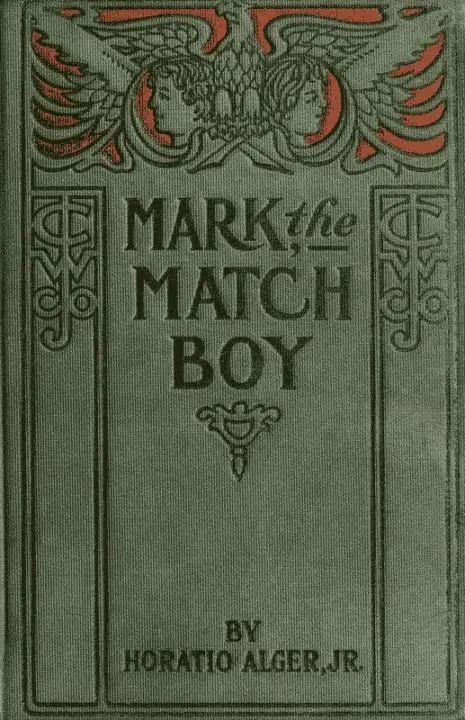
"Mark the Match Boy; or, Richard Hunter's Ward" by Horatio Alger, Jr. is a novel written in the late 19th century. This story follows a young boy named Mark, who sells matches on the streets of New York City while enduring hardships and abuse from his caregiver, Mother Watson. As Mark navigates his struggles, themes of resilience, friendship, and the hope for a better life are prevalent throughout the narrative. At the start of the book, we are introduced to Mark, a thinly-clad boy deeply affected by hunger and the harsh realities of street life. He returns home after a long day of trying to sell matches but is met with hostility and threats from Mother Watson, who only cares about the money he brings in. As he contemplates his situation, Mark begins to consider breaking free from this abusive arrangement. His fate takes a turn when he unexpectedly receives some money while resting on a ferryboat, igniting a spark of independence. This opening sets the stage for Mark's journey toward self-sufficiency as he ponders his future and contemplates the possibility of escaping his current life.
Introduction adapted from the source catalogue; source summaries may be automatically generated.
Free to read · English · 48,243 words · No account needed
MAKE TIME FOR A GOOD BOOK
On by default. Untick to stop anonymous reading totals. Each page counts after 10 seconds in view. How this works.
Anonymous counting is on unless you have switched it off.
Ben led the way to a cheap restaurant, where for eighteen cents each of the boys got a breakfast, which to their not very fastidious tastes proved very satisfactory.
"There," said Ben, with a sigh of satisfaction, as they rose from the table, "now I feel like work; I'll pay up that money afore night."
"All right," said Mark.
"What are you goin' to do?"
"I don't know," said Mark, irresolutely.
"You're a match boy,--aint you?"
"Yes."
"Where's your matches?"
"In Mother Watson's room."
"You might go and get 'em when she's out."
"No," said Mark, shaking his head. "I won't do that."
"Why not? You aint afraid to go round there,--be you?"
"It isn't that,--but the matches are hers, not mine."
"What's the odds?"
"I won't take anything of hers."
"Well, you can buy some of your own, then. You've got money enough."
"So I will," said Mark. "It's lucky that money came to me in my sleep."
"That's a lucky boat. I guess I'll go there and sleep to-night."
Mark did as he proposed. With the money he had he was able to purchase a good supply of matches, and when it became light enough he began to vend them.
Hitherto he had not been very fortunate in the disposal of his wares, being timid and bashful; but then he was working for Mother Watson, and expected to derive very little advantage for himself from his labors. Now he was working for himself, and this seemed to put new spirit and courage into him. Then again he felt that he had shaken off the hateful thraldom in which Mother Watson had held him, and this gave him a hopefulness which he had not before possessed.
The consequence was that at noon he found that he had earned forty cents in addition to his investment. At that time, too, Ben was ready to pay him his loan, so that Mark found himself twenty-two cents better off than he had been in the morning, having a capital of a dollar and thirty cents, out of which, however, he must purchase his dinner.
While he is getting on in such an encouraging manner we must go back to
Mother Watson.
When Mark did not return the night before she grumbled considerably, but no thought of his intentional desertion dawned upon her. Indeed, she counted upon his timidity and lack of courage, knowing well that a more spirited boy would have broken her chain long before. She only thought, therefore, that he had not got the twenty-five cents, and did not dare to come back, especially as she had forbidden him to do so.
Your reading position is saved on this browser. Take it to another device with a library code. Reading pages adapt to text, rather than matching a printed edition.
William Rounseville Alger & Horatio, Jr. Alger

William Rounseville Alger & Horatio, Jr. Alger

Horatio, Jr. Alger

Horatio, Jr. Alger
BEHIND THE BOOK
This eBook is for the use of anyone anywhere in the United States and most other parts of the world at no cost and with almost no restrictions whatsoever. You may copy it, give it away or re-use it under the terms of the Project Gutenberg License included with this eBook or online at www.gutenberg.org. If you are not located in the United States, you will have to check the laws of the country where you are located before using this eBook. Read the source licence.
The original source file, including credits and licence, is retained by this library. Request an original-format copy at no charge. Please include the book title and Project Gutenberg identifier #53071.
KEEP YOUR CURIOSITY GOING
Coulson Kernahan

Maurice Baring
Frances Wright
Cécile Tormay

Frederic Jesup Stimson

W. H. P. (William Henry Pope) Jarvis