
Life of Edwin Forrest, the American Tragedian. Volume 2 (of 2)
William Rounseville Alger & Horatio, Jr. Alger
THE CLASSIC COLLECTION · 1869
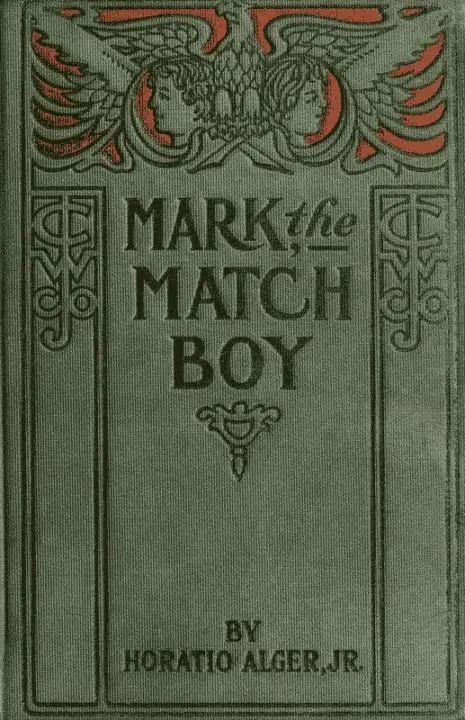
"Mark the Match Boy; or, Richard Hunter's Ward" by Horatio Alger, Jr. is a novel written in the late 19th century. This story follows a young boy named Mark, who sells matches on the streets of New York City while enduring hardships and abuse from his caregiver, Mother Watson. As Mark navigates his struggles, themes of resilience, friendship, and the hope for a better life are prevalent throughout the narrative. At the start of the book, we are introduced to Mark, a thinly-clad boy deeply affected by hunger and the harsh realities of street life. He returns home after a long day of trying to sell matches but is met with hostility and threats from Mother Watson, who only cares about the money he brings in. As he contemplates his situation, Mark begins to consider breaking free from this abusive arrangement. His fate takes a turn when he unexpectedly receives some money while resting on a ferryboat, igniting a spark of independence. This opening sets the stage for Mark's journey toward self-sufficiency as he ponders his future and contemplates the possibility of escaping his current life.
Introduction adapted from the source catalogue; source summaries may be automatically generated.
Free to read · English · 48,243 words · No account needed
MAKE TIME FOR A GOOD BOOK
On by default. Untick to stop anonymous reading totals. Each page counts after 10 seconds in view. How this works.
Anonymous counting is on unless you have switched it off.
It was growing dark, though yet scarcely six o'clock, for the day was one of the shortest in the year, when a small boy, thinly clad, turned down Frankfort Street on the corner opposite French's Hotel. He had come up Nassau Street, passing the "Tribune" Office and the old Tammany Hall, now superseded by the substantial new "Sun" building.
He had a box of matches under his arm, of which very few seemed to have been sold. He had a weary, spiritless air, and walked as if quite tired. He had been on his feet all day, and was faint with hunger, having eaten nothing but an apple to sustain his strength. The thought that he was near his journey's end did not seem to cheer him much. Why this should be so will speedily appear.
He crossed William Street, passed Gold Street, and turned down Vandewater Street, leading out of Frankfort's Street on the left. It is in the form of a short curve, connecting with that most crooked of all New York avenues, Pearl Street. He paused in front of a shabby house, and went upstairs. The door of a room on the third floor was standing ajar. He pushed it open, and entered, not without a kind of shrinking.
A coarse-looking woman was seated before a scanty fire. She had just thrust a bottle into her pocket after taking a copious draught therefrom, and her flushed face showed that this had long been a habit with her.
"Well, Mark, what luck to-night?" she said, in a husky voice.
"I didn't sell much," said the boy.
"Didn't sell much? Come here," said the woman, sharply.
Mark came up to her side, and she snatched the box from him, angrily.
"Only three boxes gone?" she repeated. "What have you been doing all
day?"
She added to the question a coarse epithet which I shall not repeat.
"I tried to sell them, indeed I did, Mother Watson, indeed I did," said the boy, earnestly, "but everybody had bought them already."
"You didn't try," said the woman addressed as Mother Watson. "You're too lazy, that's what's the matter. You don't earn your salt. Now give me the money."
Mark drew from his pocket a few pennies, and handed to her.
She counted them over, and then, looking up sharply, said, with a frown, "There's a penny short. Where is it?"
"I was so hungry," pleaded Mark, "that I bought an apple,--only a
little one."
"You bought an apple, did you?" said the woman, menacingly. "So that's the way you spend my money, you little thief?"
"I was so faint and hungry," again pleaded the boy.
Your reading position is saved on this browser. Take it to another device with a library code. Reading pages adapt to text, rather than matching a printed edition.
William Rounseville Alger & Horatio, Jr. Alger

William Rounseville Alger & Horatio, Jr. Alger

Horatio, Jr. Alger

Horatio, Jr. Alger
BEHIND THE BOOK
This eBook is for the use of anyone anywhere in the United States and most other parts of the world at no cost and with almost no restrictions whatsoever. You may copy it, give it away or re-use it under the terms of the Project Gutenberg License included with this eBook or online at www.gutenberg.org. If you are not located in the United States, you will have to check the laws of the country where you are located before using this eBook. Read the source licence.
The original source file, including credits and licence, is retained by this library. Request an original-format copy at no charge. Please include the book title and Project Gutenberg identifier #53071.
KEEP YOUR CURIOSITY GOING
Coulson Kernahan

Maurice Baring
Frances Wright
Cécile Tormay

Frederic Jesup Stimson

W. H. P. (William Henry Pope) Jarvis