
Life of Edwin Forrest, the American Tragedian. Volume 2 (of 2)
William Rounseville Alger & Horatio, Jr. Alger
THE CLASSIC COLLECTION · 1869
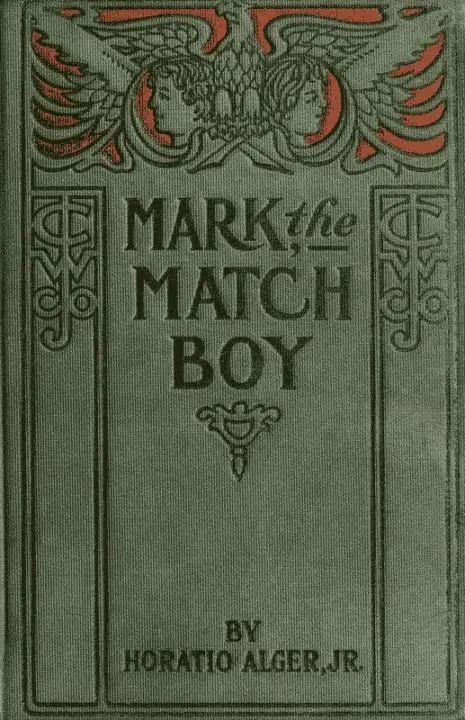
"Mark the Match Boy; or, Richard Hunter's Ward" by Horatio Alger, Jr. is a novel written in the late 19th century. This story follows a young boy named Mark, who sells matches on the streets of New York City while enduring hardships and abuse from his caregiver, Mother Watson. As Mark navigates his struggles, themes of resilience, friendship, and the hope for a better life are prevalent throughout the narrative. At the start of the book, we are introduced to Mark, a thinly-clad boy deeply affected by hunger and the harsh realities of street life. He returns home after a long day of trying to sell matches but is met with hostility and threats from Mother Watson, who only cares about the money he brings in. As he contemplates his situation, Mark begins to consider breaking free from this abusive arrangement. His fate takes a turn when he unexpectedly receives some money while resting on a ferryboat, igniting a spark of independence. This opening sets the stage for Mark's journey toward self-sufficiency as he ponders his future and contemplates the possibility of escaping his current life.
Introduction adapted from the source catalogue; source summaries may be automatically generated.
Free to read · English · 48,243 words · No account needed
MAKE TIME FOR A GOOD BOOK
On by default. Untick to stop anonymous reading totals. Each page counts after 10 seconds in view. How this works.
Anonymous counting is on unless you have switched it off.
It was about half-past five o'clock in the afternoon when the carriage containing Richard Hunter and the match boy stopped in front of his boarding-place in St. Mark's Place. Richard helped the little boy out, saying, cheerfully, "Well, we've got home."
"Is this where you live?" asked Mark, faintly.
"Yes. How do you like it?"
"It's a nice place. I am afraid you are taking too much trouble about
me."
"Don't think of that. Come in."
Richard had ascended the front steps, after paying the hackman, and taking out his night-key opened the outside door.
"Come upstairs," he said.
They ascended two flights of stairs, and Richard threw open the door of his room. A fire was already burning in the grate, and it looked bright and cheerful.
"Do you feel tired?" asked Richard.
"Yes, a little."
"Then lie right down on the bed. You are hungry too,--are you not?"
"A little."
"I will have something sent up to you."
Just then Fosdick, who, it will be remembered, was Richard Hunter's room-mate, entered the room. He looked with surprise at Mark, and then inquiringly at Richard.
"It is a little match boy," explained the latter, "who fell in a fainting-fit in front of our office. I think the poor fellow is going to be sick, so I brought him home, and mean to take care of him till he is well."
"You must let me share the expense, Dick," said Fosdick.
"No, but I'll let you share the care of him. That will do just as well."
"But I would rather share the expense. He reminds me of the way I was situated when I fell in with you. What is your name?"
"Mark Manton," said the match boy.
"I've certainly seen him somewhere before," said Fosdick, reflectively. "His face looks familiar to me."
"So it does to me. Perhaps I've seen him about the streets somewhere."
"I have it," said Fosdick, suddenly; "don't you remember the boy we saw sleeping in the cabin of the Fulton Ferry-boat?"
"Yes."
"I think he is the one. Mark," he continued, turning to the match boy, "didn't you sleep one night on a Brooklyn ferry-boat about three months ago?"
"Yes," said Mark.
"And did you find anything in your vest-pocket in the morning?"
"Yes," said the match boy with interest. "I found a dollar, and didn't know where it came from. Was it you that put it in?"
"He had a hand in it," said Fosdick, pointing with a smile to his
room-mate.
Your reading position is saved on this browser. Take it to another device with a library code. Reading pages adapt to text, rather than matching a printed edition.
William Rounseville Alger & Horatio, Jr. Alger

William Rounseville Alger & Horatio, Jr. Alger

Horatio, Jr. Alger

Horatio, Jr. Alger
BEHIND THE BOOK
This eBook is for the use of anyone anywhere in the United States and most other parts of the world at no cost and with almost no restrictions whatsoever. You may copy it, give it away or re-use it under the terms of the Project Gutenberg License included with this eBook or online at www.gutenberg.org. If you are not located in the United States, you will have to check the laws of the country where you are located before using this eBook. Read the source licence.
The original source file, including credits and licence, is retained by this library. Request an original-format copy at no charge. Please include the book title and Project Gutenberg identifier #53071.
KEEP YOUR CURIOSITY GOING
Coulson Kernahan

Maurice Baring
Frances Wright
Cécile Tormay

Frederic Jesup Stimson

W. H. P. (William Henry Pope) Jarvis