
Life of Edwin Forrest, the American Tragedian. Volume 2 (of 2)
William Rounseville Alger & Horatio, Jr. Alger
THE CLASSIC COLLECTION · 1869
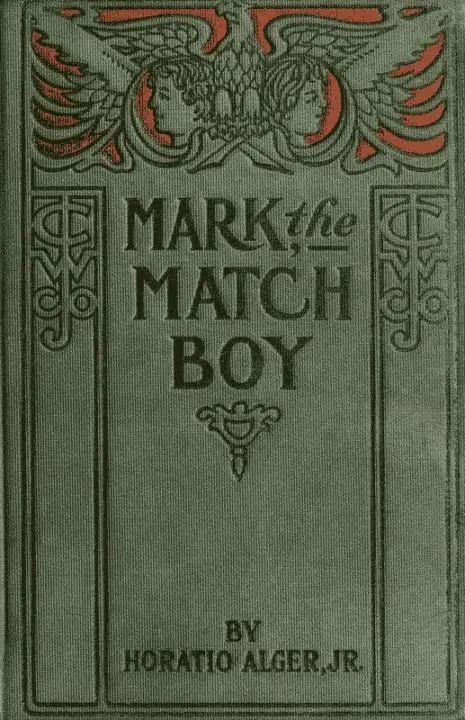
"Mark the Match Boy; or, Richard Hunter's Ward" by Horatio Alger, Jr. is a novel written in the late 19th century. This story follows a young boy named Mark, who sells matches on the streets of New York City while enduring hardships and abuse from his caregiver, Mother Watson. As Mark navigates his struggles, themes of resilience, friendship, and the hope for a better life are prevalent throughout the narrative. At the start of the book, we are introduced to Mark, a thinly-clad boy deeply affected by hunger and the harsh realities of street life. He returns home after a long day of trying to sell matches but is met with hostility and threats from Mother Watson, who only cares about the money he brings in. As he contemplates his situation, Mark begins to consider breaking free from this abusive arrangement. His fate takes a turn when he unexpectedly receives some money while resting on a ferryboat, igniting a spark of independence. This opening sets the stage for Mark's journey toward self-sufficiency as he ponders his future and contemplates the possibility of escaping his current life.
Introduction adapted from the source catalogue; source summaries may be automatically generated.
Free to read · English · 48,243 words · No account needed
MAKE TIME FOR A GOOD BOOK
On by default. Untick to stop anonymous reading totals. Each page counts after 10 seconds in view. How this works.
Anonymous counting is on unless you have switched it off.
"I was very glad to get it," said Mark. "I only had eight cents besides, and that gave me enough to buy some matches. That was at the time I ran away."
"Who did you run away from?"
"From Mother Watson."
"Mother Watson?" repeated Dick. "I wonder if I don't know her. She is a very handsome old lady, with a fine red complexion, particularly about the nose."
"Yes," said Mark, with a smile.
"And she takes whiskey when she can get it?"
"Yes."
"How did you fall in with her?"
"She promised to take care of me when my mother died, but instead of that she wanted me to earn money for her."
"Yes, she was always a very disinterested old lady. So it appears you didn't like her as a guardian?"
"No."
"Then suppose you take me. Would you like to be my ward?"
"I think I would, but I don't know what it means," said Mark.
"It means that I'm to look after you," said Dick, "just as if I was your uncle or grandfather. You may call me grandfather if you want to."
"Oh, you're too young," said Mark, amused in spite of his weakness.
"Then we won't decide just at present about the name. But I forgot all
about your being hungry."
"I'm not very hungry."
"At any rate you haven't had anything to eat since morning, and need something. I'll go down and see Mrs. Wilson about it."
Richard Hunter soon explained matters to Mrs. Wilson, to whom he offered to pay an extra weekly sum for Mark, and arranged that a small single bed should be placed in one corner of the room temporarily in which the match boy should sleep. He speedily reappeared with a bowl of broth, a cup of tea, and some dry toast. The sight of these caused the match boy's eyes to brighten, and he was able to do very good justice to all.
"Now," said Richard Hunter, "I will call in a doctor, and find out what is the matter with my little ward."
In the course of the evening Dr. Pemberton, a young dispensary physician, whose acquaintance Richard had casually made, called at his request and looked at the patient.
"He is not seriously sick," he pronounced. "It is chiefly debility that troubles him, brought on probably by exposure, and over-exertion in this languid spring weather."
"Then you don't think he is going to have a fever?" said Dick.
"No, not if he remains under your care. Had he continued in the street, I think he would not have escaped one."
"What shall we do for him?"
Your reading position is saved on this browser. Take it to another device with a library code. Reading pages adapt to text, rather than matching a printed edition.
William Rounseville Alger & Horatio, Jr. Alger

William Rounseville Alger & Horatio, Jr. Alger

Horatio, Jr. Alger

Horatio, Jr. Alger
BEHIND THE BOOK
This eBook is for the use of anyone anywhere in the United States and most other parts of the world at no cost and with almost no restrictions whatsoever. You may copy it, give it away or re-use it under the terms of the Project Gutenberg License included with this eBook or online at www.gutenberg.org. If you are not located in the United States, you will have to check the laws of the country where you are located before using this eBook. Read the source licence.
The original source file, including credits and licence, is retained by this library. Request an original-format copy at no charge. Please include the book title and Project Gutenberg identifier #53071.
KEEP YOUR CURIOSITY GOING
Coulson Kernahan

Maurice Baring
Frances Wright
Cécile Tormay

Frederic Jesup Stimson

W. H. P. (William Henry Pope) Jarvis