
Life of Edwin Forrest, the American Tragedian. Volume 2 (of 2)
William Rounseville Alger & Horatio, Jr. Alger
THE CLASSIC COLLECTION · 1869
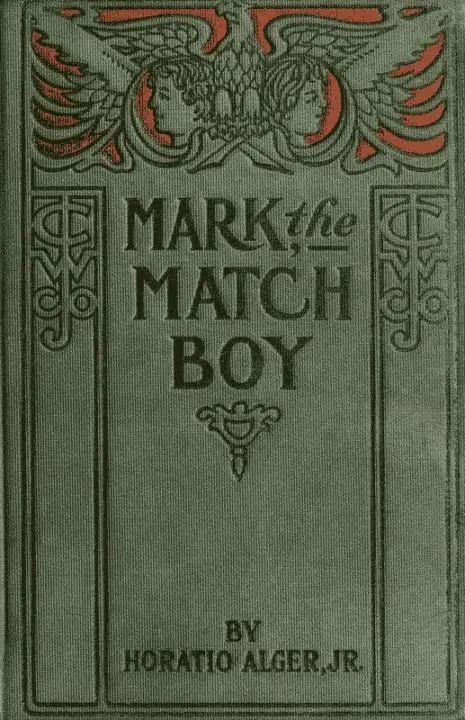
"Mark the Match Boy; or, Richard Hunter's Ward" by Horatio Alger, Jr. is a novel written in the late 19th century. This story follows a young boy named Mark, who sells matches on the streets of New York City while enduring hardships and abuse from his caregiver, Mother Watson. As Mark navigates his struggles, themes of resilience, friendship, and the hope for a better life are prevalent throughout the narrative. At the start of the book, we are introduced to Mark, a thinly-clad boy deeply affected by hunger and the harsh realities of street life. He returns home after a long day of trying to sell matches but is met with hostility and threats from Mother Watson, who only cares about the money he brings in. As he contemplates his situation, Mark begins to consider breaking free from this abusive arrangement. His fate takes a turn when he unexpectedly receives some money while resting on a ferryboat, igniting a spark of independence. This opening sets the stage for Mark's journey toward self-sufficiency as he ponders his future and contemplates the possibility of escaping his current life.
Introduction adapted from the source catalogue; source summaries may be automatically generated.
Free to read · English · 48,243 words · No account needed
MAKE TIME FOR A GOOD BOOK
On by default. Untick to stop anonymous reading totals. Each page counts after 10 seconds in view. How this works.
Anonymous counting is on unless you have switched it off.
"The secretary will read the journal of the last meeting," said
President Brandon.
Tracy rose, and read a brief report, which was accepted, according to
form.
"Is there any business to come before the club?" inquired the president.
"I would like to nominate a friend of mine as a member of the club,"
said Burgess.
"What's his name?" inquired a member.
"Henry Drayton."
"Will Mr. Burgess give some account of his friend, so that the members can vote intelligently on his election?" requested Brandon.
"He's a jolly sort of fellow, and a good singer," said Burgess. "He'll help make our meetings lively. He's about my age--"
"In his second childhood," suggested Wilmot.
This produced a laugh at the expense of Burgess, who took it
good-naturedly.
"Has he got five dollars?" inquired another member.
"His father is a rich man," said Burgess. "There will be no fear about his not paying his assessments."
"That's the principal thing," said Wilmot. "I second the nomination."
A vote was taken which was unanimously affirmative.
"Mr. Drayton is unanimously elected a member of the Madison Club," announced the president. "Notification will be duly sent him by the secretary. Is there any other business to come before the club?"
As there appeared to be none, Brandon added, "Then we will proceed to the more agreeable duties which have brought us hither."
He rang a small bell.
Jackson answered the summons.
"Jackson, is the punch ready?" inquired the president.
"Yes, sir," said Jackson.
"Then bring it in. I appoint Wilmot and Burgess to lend you the
necessary aid."
A large flagon of hot whiskey punch was brought in and placed on a table. Glasses were produced from a closet in the corner of the room, and it was served out to the members.
"How do you like it, Roswell?" inquired Ralph Graham.
"It's--rather strong," said Roswell, coughing.
"Oh, you'll soon be used to it. The fellows will begin to be jolly after they've drunk a glass or two."
"Do they ever get tight?" whispered Roswell.
"A little lively,--that's all."
The effect predicted soon followed.
"Wilmot, give us a song," said Burgess.
"What will you have?" said Wilmot, whose flushed face showed that the punch had begun to affect him.
"Oh, you can give us an air from one of the operas."
"Villikens and his Dinah?" suggested Tracy.
"Very good," said Wilmot.
Wilmot was one of those, who, with no voice or musical ear, are under the delusion that they are admirable singers. He executed the song in his usual style, and was rewarded with vociferous applause, which appeared to gratify him.
Your reading position is saved on this browser. Take it to another device with a library code. Reading pages adapt to text, rather than matching a printed edition.
William Rounseville Alger & Horatio, Jr. Alger

William Rounseville Alger & Horatio, Jr. Alger

Horatio, Jr. Alger

Horatio, Jr. Alger
BEHIND THE BOOK
This eBook is for the use of anyone anywhere in the United States and most other parts of the world at no cost and with almost no restrictions whatsoever. You may copy it, give it away or re-use it under the terms of the Project Gutenberg License included with this eBook or online at www.gutenberg.org. If you are not located in the United States, you will have to check the laws of the country where you are located before using this eBook. Read the source licence.
The original source file, including credits and licence, is retained by this library. Request an original-format copy at no charge. Please include the book title and Project Gutenberg identifier #53071.
KEEP YOUR CURIOSITY GOING
Coulson Kernahan

Maurice Baring
Frances Wright
Cécile Tormay

Frederic Jesup Stimson

W. H. P. (William Henry Pope) Jarvis