
Life of Edwin Forrest, the American Tragedian. Volume 2 (of 2)
William Rounseville Alger & Horatio, Jr. Alger
THE CLASSIC COLLECTION · 1869
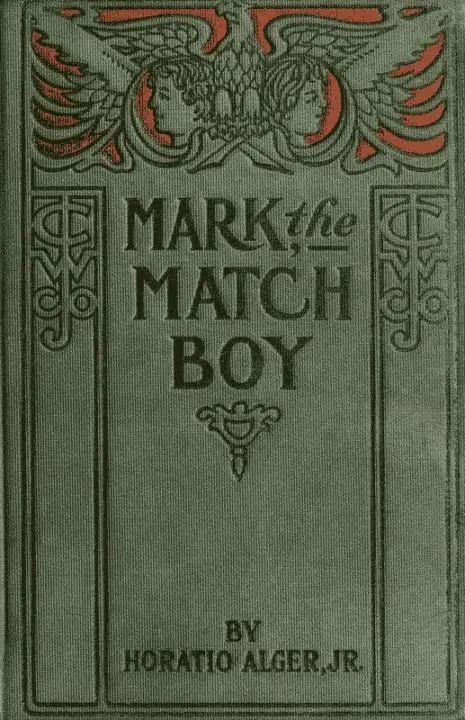
"Mark the Match Boy; or, Richard Hunter's Ward" by Horatio Alger, Jr. is a novel written in the late 19th century. This story follows a young boy named Mark, who sells matches on the streets of New York City while enduring hardships and abuse from his caregiver, Mother Watson. As Mark navigates his struggles, themes of resilience, friendship, and the hope for a better life are prevalent throughout the narrative. At the start of the book, we are introduced to Mark, a thinly-clad boy deeply affected by hunger and the harsh realities of street life. He returns home after a long day of trying to sell matches but is met with hostility and threats from Mother Watson, who only cares about the money he brings in. As he contemplates his situation, Mark begins to consider breaking free from this abusive arrangement. His fate takes a turn when he unexpectedly receives some money while resting on a ferryboat, igniting a spark of independence. This opening sets the stage for Mark's journey toward self-sufficiency as he ponders his future and contemplates the possibility of escaping his current life.
Introduction adapted from the source catalogue; source summaries may be automatically generated.
Free to read · English · 48,243 words · No account needed
MAKE TIME FOR A GOOD BOOK
On by default. Untick to stop anonymous reading totals. Each page counts after 10 seconds in view. How this works.
Anonymous counting is on unless you have switched it off.
When Roswell rose the next morning he felt cross and out of sorts. His head still ached a little, and he wished he were not obliged to go to the store. But it was out of the question to remain at home, so he started about half an hour after the usual time, and of course arrived late.
"You are late this morning," said Mr. Baker. "You must be more particular about being here in good season."
Roswell muttered something about not feeling quite well.
Putting his hand into his pocket by chance, his fingers came in contact with the key which he had made to open the cash drawer. Just as he was passing Mark, he drew it out and let it drop into the side-pocket of his jacket. So, if suspicion were excited, the key would be found on Mark, not on him.
The critical moment came sooner than he had anticipated.
A Mr. Gay, one of the regular customers of the bookstore, entered a few
minutes later.
"Good-morning, Mr. Baker," he said. "Have you got a 'Tribune' this
morning?"
"Yes, here is one. By the way, you are just the man I wanted to see."
"Indeed, I feel complimented."
"Wait till you hear what I am going to say. You bought a copy of
'Corinne' here on Monday?"
"Yes."
"And handed me a five-dollar bill on the Park Bank?"
"Yes."
"Well, I find the bill was a skilfully executed counterfeit."
"Indeed! I didn't examine it very closely. But I know where I took it, and will give you a good bill in exchange for it."
"I locked it up lest it should get out," said Mr. Baker.
He went to the drawer which Roswell had opened. Roswell listened to this conversation with dismay. He realized that he was in a tight place, for it was undoubtedly the five-dollar counterfeit which he had taken, and paid to the Secretary of the Madison Club. He awaited nervously the result of Mr. Baker's examination.
"Don't you find it?" asked Mr. Gay.
"It is very strange," said Mr. Baker. "I placed it at the top of a pile of bills, and now it is gone."
"Look through the pile. Perhaps your memory is at fault," said Mr. Gay.
Mr. Baker did so.
"No," he said, "the bill has disappeared."
"Do you miss anything else?"
"No. The money is just five dollars short."
"Perhaps you forget yourself, and paid it away to a customer."
"Impossible; I always make change out of this drawer."
"Well, when you find it, I will make it right. I am in a hurry this
morning."
Mr. Gay went out.
Your reading position is saved on this browser. Take it to another device with a library code. Reading pages adapt to text, rather than matching a printed edition.
William Rounseville Alger & Horatio, Jr. Alger

William Rounseville Alger & Horatio, Jr. Alger

Horatio, Jr. Alger

Horatio, Jr. Alger
BEHIND THE BOOK
This eBook is for the use of anyone anywhere in the United States and most other parts of the world at no cost and with almost no restrictions whatsoever. You may copy it, give it away or re-use it under the terms of the Project Gutenberg License included with this eBook or online at www.gutenberg.org. If you are not located in the United States, you will have to check the laws of the country where you are located before using this eBook. Read the source licence.
The original source file, including credits and licence, is retained by this library. Request an original-format copy at no charge. Please include the book title and Project Gutenberg identifier #53071.
KEEP YOUR CURIOSITY GOING
Coulson Kernahan

Maurice Baring
Frances Wright
Cécile Tormay

Frederic Jesup Stimson

W. H. P. (William Henry Pope) Jarvis