
Life of Edwin Forrest, the American Tragedian. Volume 2 (of 2)
William Rounseville Alger & Horatio, Jr. Alger
THE CLASSIC COLLECTION · 1869
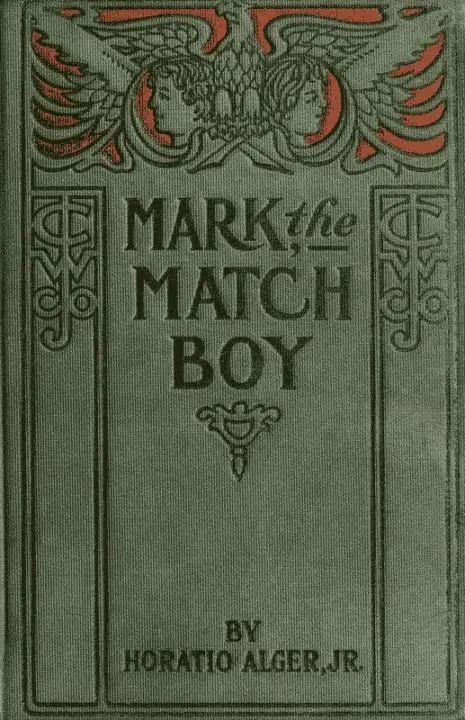
"Mark the Match Boy; or, Richard Hunter's Ward" by Horatio Alger, Jr. is a novel written in the late 19th century. This story follows a young boy named Mark, who sells matches on the streets of New York City while enduring hardships and abuse from his caregiver, Mother Watson. As Mark navigates his struggles, themes of resilience, friendship, and the hope for a better life are prevalent throughout the narrative. At the start of the book, we are introduced to Mark, a thinly-clad boy deeply affected by hunger and the harsh realities of street life. He returns home after a long day of trying to sell matches but is met with hostility and threats from Mother Watson, who only cares about the money he brings in. As he contemplates his situation, Mark begins to consider breaking free from this abusive arrangement. His fate takes a turn when he unexpectedly receives some money while resting on a ferryboat, igniting a spark of independence. This opening sets the stage for Mark's journey toward self-sufficiency as he ponders his future and contemplates the possibility of escaping his current life.
Introduction adapted from the source catalogue; source summaries may be automatically generated.
Free to read · English · 48,243 words · No account needed
MAKE TIME FOR A GOOD BOOK
On by default. Untick to stop anonymous reading totals. Each page counts after 10 seconds in view. How this works.
Anonymous counting is on unless you have switched it off.
So, determining to give him a taste of the leather strap in the morning, she went to bed, first taking a fresh potation from the whiskey bottle, which was her constant companion.
Late in the morning Mother Watson woke, feeling as usual, at that hour of the day, cross and uncomfortable, and with a strong desire to make some one else uncomfortable. But Mark, whom she usually made to bear the burden of her temper, was still away. For the first time the old woman began to feel a little apprehensive that he had deserted her. This was far from suiting her, as she found his earnings very convenient, and found it besides pleasant to have somebody to scold.
She hastily dressed, without paying much attention to her toilet. Indeed, to do Mother Watson justice, her mind was far from being filled with the vanity of dress, and if she erred on that subject it was in the opposite extreme.
When her simple toilet was accomplished she went downstairs, and knocked at Mrs. Flanagan's door.
"Come in!" said a hearty voice.
Mrs. Flanagan was hard at work at her wash-tub, and had been for a good couple of hours. She raised her good-natured face as the old woman entered.
"The top of the morning to you, Mother Watson," she said. "I hope you're in fine health this morning, mum." "Then you'll be disappointed," said Mrs. Watson. "I've got a bad feeling at my stomach, and have it most every morning."
"It's the whiskey," thought Mrs. Flanagan; but she thought it best not to intimate as much, as it might lead to hostilities.
"Better take a cup of tea," said she.
"I haven't got any," said the old woman. "I wouldn't mind a sup if
you've got some handy."
"Sit down then," said Mrs. Flanagan, hospitably. "I've got some left from breakfast, only it's cold, but if you'll wait a bit, I'll warm it over for you."
Nothing loth, Mother Watson sank into a chair, and began to give a full account of her ailments to her neighbor, who tried hard to sympathize with her, though, knowing the cause of the ailments, she found this rather difficult.
"Have you seen anything of my boy this morning?" she asked after a
while.
"What, Mark?" said Mrs. Flanagan. "Didn't he come home last night?"
"No," said the old woman, "and he isn't home yet. When he does come I'll give him a dose of the strap. He's a bad, lazy, shiftless boy, and worries my life out."
"You're hard on the poor boy, Mother Watson. You must remember he's but a wisp of a lad, and hasn't much strength."
Your reading position is saved on this browser. Take it to another device with a library code. Reading pages adapt to text, rather than matching a printed edition.
William Rounseville Alger & Horatio, Jr. Alger

William Rounseville Alger & Horatio, Jr. Alger

Horatio, Jr. Alger

Horatio, Jr. Alger
BEHIND THE BOOK
This eBook is for the use of anyone anywhere in the United States and most other parts of the world at no cost and with almost no restrictions whatsoever. You may copy it, give it away or re-use it under the terms of the Project Gutenberg License included with this eBook or online at www.gutenberg.org. If you are not located in the United States, you will have to check the laws of the country where you are located before using this eBook. Read the source licence.
The original source file, including credits and licence, is retained by this library. Request an original-format copy at no charge. Please include the book title and Project Gutenberg identifier #53071.
KEEP YOUR CURIOSITY GOING
Coulson Kernahan

Maurice Baring
Frances Wright
Cécile Tormay

Frederic Jesup Stimson

W. H. P. (William Henry Pope) Jarvis