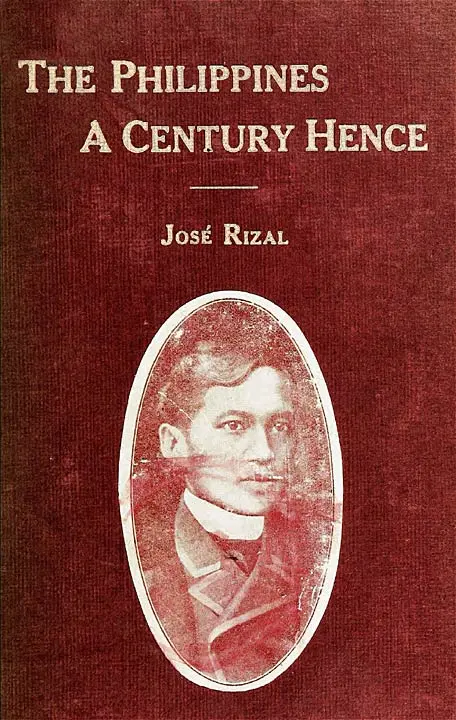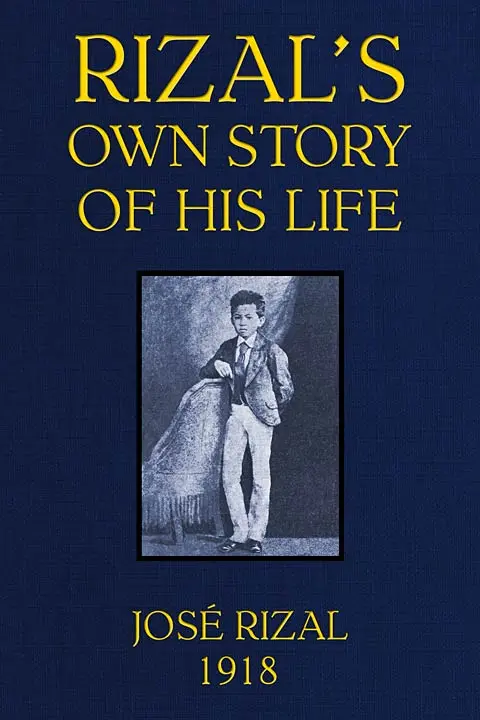
Rizal’s own story of his life
José Rizal
THE CLASSIC COLLECTION · 1900
"An Eagle Flight: A Filipino Novel Adapted from Noli Me Tangere" by José Rizal is a historical novel written in the late 19th century. This adaptation draws from Rizal's original work "Noli Me Tangere," addressing themes of colonialism, social injustice, and the struggle for identity in the Philippines. It features characters such as Crisóstomo Ibarra, who returns to his homeland after studying abroad and encounters the harsh realities of his society shaped by colonial rule. The opening of "An Eagle Flight" introduces us to Captain Tiago's lavish dinner party, which becomes the setting for a mixture of social and political dynamics among the guests, including the young returnee Crisóstomo Ibarra. As he navigates the complexities of reuniting with his culture and confronting the socio-political issues plaguing the Philippines, Ibarra's interactions with various characters reveal personal and national tensions. The atmosphere is charged with unspoken histories, as he learns of his father's unjust death in prison, setting the stage for Ibarra's personal quest for justice and reform.
Introduction adapted from the source catalogue; source summaries may be automatically generated.
Free to read · English · 69,277 words · No account needed
MAKE TIME FOR A GOOD BOOK
On by default. Untick to stop anonymous reading totals. Each page counts after 10 seconds in view. How this works.
Anonymous counting is on unless you have switched it off.
"Nevertheless," said the alcalde, as Ibarra was silent, "when certain buildings are in question, like a school, for example, an expert is needed----"
"An expert!" cried the father, with sarcasm. "One needs be more stupid than the Indians, who build their own houses, not to know how to raise four walls and put a roof on them. Nothing else is needed for a school!"
Every one looked at Ibarra, but, though he grew a little pale, he pursued his conversation with Maria Clara.
"But does your reverence consider----"
"See here!" continued the Franciscan, again cutting off the alcalde. "See how one of our lay brothers, the most stupid one we have, built a hospital. He paid the workmen eight cuartos a day, and got them from other pueblos, too. Not much like these young feather-brains who ruin workmen, paying them three or four reales!"
"Does your reverence say he paid but eight cuartos? Impossible!" said the alcalde, hoping to change the course of the conversation.
"Yes, senor, and so should those do who pride themselves upon being good Spaniards. Since the opening of the Suez Canal, corruption has reached even here! When the Cape had to be doubled, not so many ruined men came here, and fewer went abroad to ruin themselves!"
"But Father Damaso----"
"You know the Indian; as soon as he has learned anything, he takes a title. All these beardless youths who go to Europe----"
"But, your reverence, listen----" began the alcalde, alarmed by the
harshness of these words.
"Finish as they merit," continued the priest. "The hand of God is in it; he is blind who does not see that. Already even the fathers of these reptiles receive their chastisement; they die in prison! Ah----"
He did not finish. Ibarra, livid, had been watching him. At these words he rose, gave one bound, and struck out with his strong hand. The monk, stunned by the blow, fell backward.
Surprised and terrified, not one of the spectators moved.
"Let no one come near!" said the young man in a terrible voice, drawing his slender blade, and holding the neck of the priest with his foot. "Let no one come, unless he wishes to die."
Ibarra was beside himself, his whole body trembled, his threatening eyes were big with rage. Father Damaso, regaining his senses, made an effort to rise, but Crisostomo, grasping his neck, shook him till he had brought him to his knees.
"Senor de Ibarra! Senor de Ibarra!" stammered one and another. But nobody, not even the alferez, risked a movement. They saw the knife glitter; they calculated Crisostomo's strength, unleashed by anger; they were paralyzed.
Your reading position is saved on this browser. Take it to another device with a library code. Reading pages adapt to text, rather than matching a printed edition.
BEHIND THE BOOK
This eBook is for the use of anyone anywhere in the United States and most other parts of the world at no cost and with almost no restrictions whatsoever. You may copy it, give it away or re-use it under the terms of the Project Gutenberg License included with this eBook or online at www.gutenberg.org. If you are not located in the United States, you will have to check the laws of the country where you are located before using this eBook. Read the source licence.
The original source file, including credits and licence, is retained by this library. Request an original-format copy at no charge. Please include the book title and Project Gutenberg identifier #27594.
KEEP YOUR CURIOSITY GOING
Cécile Tormay

Moritz Busch
Coulson Kernahan
John L. Ransom

Maurice Baring
Frances Wright