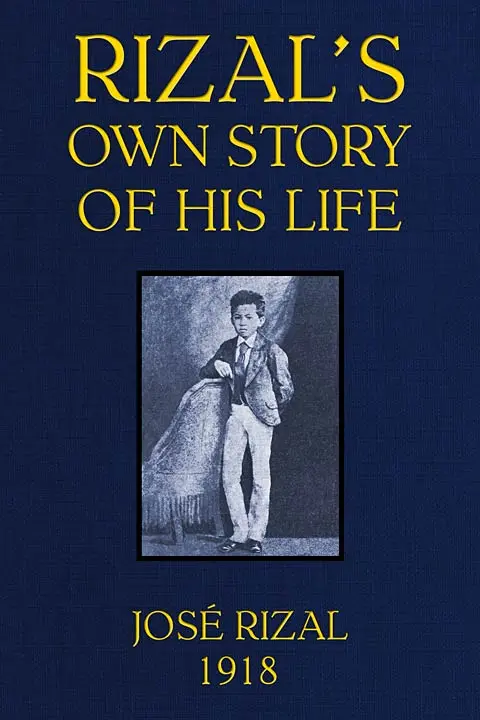
Rizal’s own story of his life
José Rizal
THE CLASSIC COLLECTION · 1900
"An Eagle Flight: A Filipino Novel Adapted from Noli Me Tangere" by José Rizal is a historical novel written in the late 19th century. This adaptation draws from Rizal's original work "Noli Me Tangere," addressing themes of colonialism, social injustice, and the struggle for identity in the Philippines. It features characters such as Crisóstomo Ibarra, who returns to his homeland after studying abroad and encounters the harsh realities of his society shaped by colonial rule. The opening of "An Eagle Flight" introduces us to Captain Tiago's lavish dinner party, which becomes the setting for a mixture of social and political dynamics among the guests, including the young returnee Crisóstomo Ibarra. As he navigates the complexities of reuniting with his culture and confronting the socio-political issues plaguing the Philippines, Ibarra's interactions with various characters reveal personal and national tensions. The atmosphere is charged with unspoken histories, as he learns of his father's unjust death in prison, setting the stage for Ibarra's personal quest for justice and reform.
Introduction adapted from the source catalogue; source summaries may be automatically generated.
Free to read · English · 69,277 words · No account needed
MAKE TIME FOR A GOOD BOOK
On by default. Untick to stop anonymous reading totals. Each page counts after 10 seconds in view. How this works.
Anonymous counting is on unless you have switched it off.
"Citizens of San Diego, long live the king! Long live Spain! Long live the religious orders! Long live the Catholic church!"
"Long live the Senor Alcalde!" replied many voices.
Then the high official descended majestically, to the strains of the orchestras, put his trowel of cement on the stone, and came back as majestically as he had gone down.
The Government clerks applauded.
Ibarra offered the trowel to the curate, who descended slowly in his turn. In the middle of the staircase he raised his eyes to the great stone suspended above, but he stopped only a second, and continued the descent. This time the applause was a little warmer, Captain Tiago and the monks adding theirs to that of the clerks.
The notary followed. He gallantly offered the trowel to Maria Clara, but she refused, with a smile. The monks, the alferez, and others descended in turn, Captain Tiago not being forgotten.
Ibarra was left. He had ordered the stone to be lowered when the
curate remembered him.
"You do not put on your trowelful, Senor Ibarra?" said the curate, with a familiar and jocular air.
"I should be Juan Palomo, who made the soup and then ate it," replied Crisostomo in the same light tone.
"You go down, of course," said the alcalde, taking him by the arm in friendly fashion. "If not, I shall order that the stone be kept suspended, and we shall stay here till the Day of Judgment!"
Such a menace forced Ibarra to obey. He exchanged the silver trowel for a larger one of iron, as some people noticed, and started out calmly. Elias gave him an indefinable look; his whole being seemed in it. The Mongol's eyes were on the abyss at his feet.
Ibarra, after glancing rapidly at the block over his head, at Elias, and at the Mongol, said to Senor Juan, in a voice that trembled:
"Give me the tray and bring me the other trowel."
He stood alone. Elias no longer looked at him, his eyes were riveted on the hands of the Mongol, who, bending over, was anxiously following the movements of Ibarra. Then the sound of Ibarra's trowel was heard, accompanied by the low murmur of the clerks' voices as they felicitated the alcalde on his speech.
Suddenly a frightful noise rent the air. A pulley attached to the base of the crane sprang out, dragging after it the capstan, which struck the crane like a lever. The beams tottered, the cables broke, and the whole fabric collapsed with a deafening roar and in a whirlwind of dust.
Your reading position is saved on this browser. Take it to another device with a library code. Reading pages adapt to text, rather than matching a printed edition.
BEHIND THE BOOK
This eBook is for the use of anyone anywhere in the United States and most other parts of the world at no cost and with almost no restrictions whatsoever. You may copy it, give it away or re-use it under the terms of the Project Gutenberg License included with this eBook or online at www.gutenberg.org. If you are not located in the United States, you will have to check the laws of the country where you are located before using this eBook. Read the source licence.
The original source file, including credits and licence, is retained by this library. Request an original-format copy at no charge. Please include the book title and Project Gutenberg identifier #27594.
KEEP YOUR CURIOSITY GOING
Cécile Tormay

Moritz Busch
Coulson Kernahan
John L. Ransom

Maurice Baring
Frances Wright